
Washington National Cathedral
Gothic Revival Episcopal cathedral in Washington, D.C., built 1907–1990; major national ceremonial site, noted for architecture, conservation needs and damage from the 2011 earthquake.
Overview
The Washington National Cathedral is a prominent cathedral located in Washington, D.C.. It serves as a house of worship for the Episcopal Church in the United States and functions also as a national civic shrine and venue for public ceremonies. Constructed in a Gothic Revival idiom, the building is commonly cited among the larger modern cathedrals in the world, and it is a frequent destination for visitors to the capital.
Image gallery
10 Images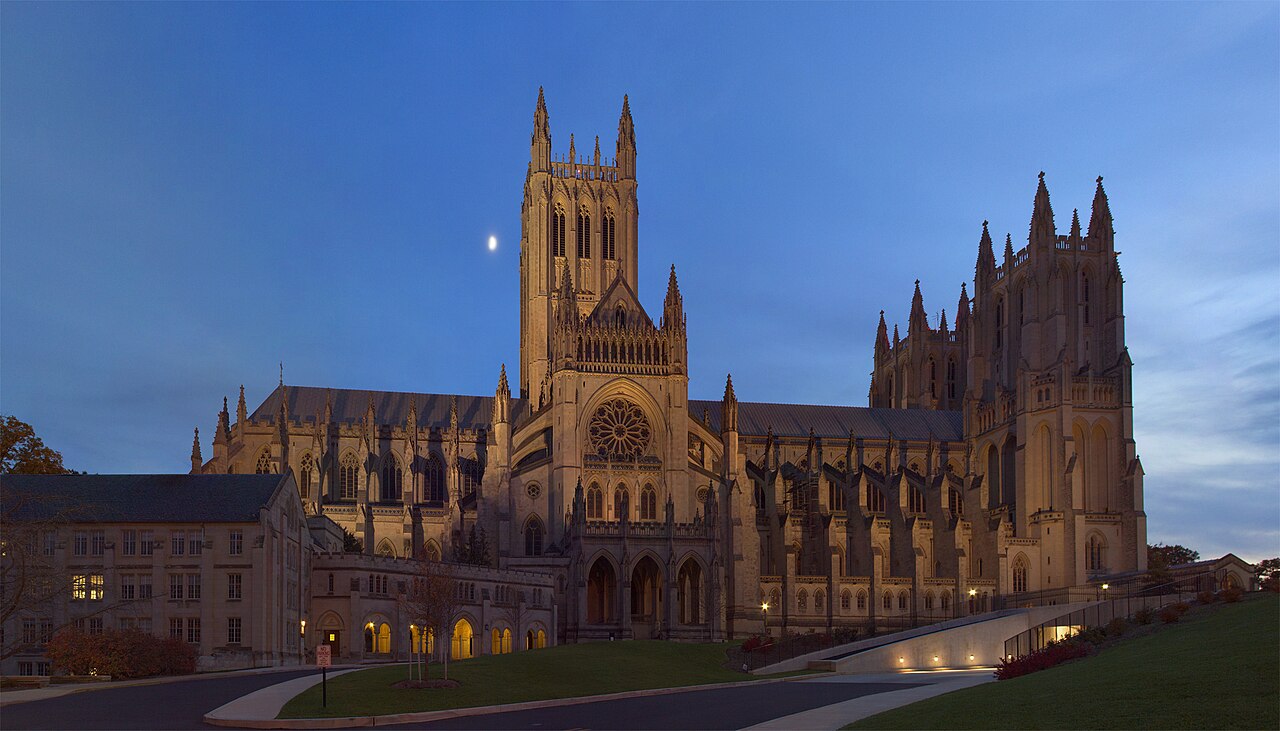


Architecture and features
Designed with reference to medieval English and French Gothic models, the cathedral combines traditional stone carving and vaulting with 20th-century structural techniques. The plan centers on a long nave, multiple chapels, choir spaces, and a monumental central tower. Exterior decoration includes pinnacles, carved grotesques and detailed tracery; the building’s facing of limestone requires long-term conservation to address weathering and cracked masonry (limestone) and to preserve sculptural detail. Internally, the cathedral houses large pipe organs, bell towers, and extensive stained glass windows arranged to serve liturgical, memorial and educational functions.
History and construction
Planning and construction began in the early 20th century and continued through the late 20th century, with major phases occurring between 1907 and 1990. The lengthy building period reflects incremental funding and the labor-intensive nature of carved stone work. Craftsmen, donors, architects and church leaders contributed across generations, shaping the cathedral’s form and decorative program while adapting to evolving construction practices.
2011 earthquake and repairs
On August 23, 2011, a magnitude 5.8 earthquake centered in northern Virginia produced visible damage to the cathedral’s central tower and ornamental stonework. Several cross-shaped finial stones were dislodged and at least one pinnacle was observed to lean; finials are the decorative terminals placed atop pinnacles and towers. Although the interior largely avoided catastrophic structural collapse, the exterior developed numerous cracks and losses of carved detail that required careful stabilization, scaffolding and multi-year restoration. Officials reported significant repair expenses and noted that some costs were not covered by conventional insurance. During the immediate aftermath, staff also monitored severe weather threats such as Hurricane Irene to prevent additional deterioration.
Role in national life
The cathedral regularly hosts services of national significance, interfaith gatherings and commemorations. Its scale and location make it a frequent choice for events that blend religious observance with civic ritual. The building has been used for state-level memorials and high-profile public services, and it continues to function as a setting for important moments of national mourning and thanksgiving.
Presidential funerals and memorials
State funerals and memorial services have taken place at the cathedral for several American leaders. Notable examples include formal state services and commemorative ceremonies; the site has been used for the public state funerals and memorial observances for prominent American Presidents. For instance, the cathedral hosted ceremonies when Dwight D. Eisenhower lay in repose there prior to other honors and in the commemoration of leaders who subsequently lay in state at other locations. Funeral or memorial services for Presidents such as Ronald Reagan and Gerald Ford were major national events conducted at the cathedral.
Other memorial services
- The cathedral has also been the site of memorial services and commemorations for earlier presidents and national figures; these have included services remembering leaders such as Warren G. Harding and Calvin Coolidge, among others, as part of its broader ceremonial role.
Conservation, funding and access
Ongoing conservation work addresses stone repair, stained glass maintenance, and structural monitoring; such programs require sustained fundraising and technical expertise. Repairs after major incidents have relied on a mix of private donations, foundation grants and targeted campaigns rather than sole reliance on insurance. The cathedral remains open to worship, education and tourism, offering guided visits, musical events and opportunities for prayer while balancing public access with preservation needs.
Visitor information and legacy
As a landmark of both religious and civic life, the Washington National Cathedral continues to be valued for its architectural ambition, ceremonial function and role in national remembrance. Visitors typically encounter the cathedral through guided tours, services and concerts; those interested in architectural detail, liturgical art or national history will find the site illustrative of 20th-century approaches to constructing a monumental ecclesiastical building in the capital. For further reading and official visitor details consult the cathedral’s published guides and interpretive materials provided on site and through institutional resources.
References and further reading
This article summarizes widely known aspects of the cathedral’s history, architecture and role. Readers seeking primary documentation, conservation reports or detailed chronologies are encouraged to consult institutional archives and specialist publications for in-depth study.
Questions and answers
Q: What is the Washington National Cathedral?
A: The Washington National Cathedral is a cathedral of the Episcopal Church in the United States located in Washington, D.C., the capital of the United States. It is the sixth largest cathedral in the world and second largest in the United States.
Q: When was it built?
A: The Washington National Cathedral was built between 1907 and 1990.
Q: How was it damaged?
A: On Tuesday, August 23, 2011, a 5.8-magnitude earthquake struck northern Virginia about 135 km (84 mi) from Washington D.C., damaging the central tower on the Cathedral by knocking off some of its cross-shaped finial stones and causing one pinnacle to lean to one side.
Q: Was there any damage inside?
A: No, there was no serious damage to the interior of the cathedral from the earthquake.
Q: How much will repairs cost?
A: Officials have stated that it will cost millions of dollars to repair all ofthe damage caused by thee earthquake; however, these costs are not covered by insurance.
Q: Did hurricane Irene cause additional damage?
A: There were concerns that hurricane Irene would cause more damage but luckily it did not cause any additional damage tothe cathedral .
Q: What presidents have had funerals or memorial services at this cathedral ?
A: State funerals for four American Presidents have been held at this cathedral - Dwight Eisenhower (1969), Ronald Reagan (2004), Gerald Ford (2007) and George H W Bush (2018). Memorial services were also held for presidents Warren G Harding , William Taft , Calvin Coolidge , Harry S Truman , and Richard M Nixon .
Related articles
Author
AlegsaOnline.com Washington National Cathedral Leandro Alegsa
URL: https://en.alegsaonline.com/art/106712
Sources
- cathedral.org : WNC: Facts and Figures
- nationalcathedral.org : "Cathedral Timeline"
- earthquake.usgs.gov : "Magnitude 5.8 - VIRGINIA"
- online.wsj.com : "Washington National Cathedral Damaged by Quake"
- washingtonpost.com : "Washington National Cathedral damaged in earthquake"
- theatlantic.com : "At National Cathedral, Concerns About Damage From Hurricane Irene"
- washingtonpost.com : "Damaged by earthquake, National Cathedral has fallen trees, no major damage from hurricane"
- nationalcathedral.org : "Services Following Deaths of American Presidents"
- nationalcathedral.org : State Funeral for President Ronald W. Reagan June 11, 2004
- commons.wikimedia.org : Washington National Cathedral