
Stairs: design, types, history, uses and safety
An overview of stairs (staircases): their components, common forms, historical development, uses in buildings and transport, and basic safety and accessibility considerations.
Overview
Stairs, also called a staircase, stairway, stairwell or flight of stairs, are built structures that connect different vertical levels by dividing a large elevation change into a sequence of smaller, negotiable steps. A stair assembly typically combines horizontal surfaces to place the foot and vertical surfaces that determine the change in height. The term covers everything from short residential flights to monumental architectural staircases and industrial stair towers. For other moving solutions that serve the same purpose, see examples like escalators and fixed ladders such as ladders.
Image gallery
10 Images




Main components
A typical stair has several named parts that affect comfort, safety and appearance. Key components include:
- Tread: the horizontal part you step on.
- Riser: the vertical face between treads (sometimes omitted in open-riser designs).
- Stringer: the structural member that supports treads and risers.
- Handrail and balusters: elements that provide guidance and fall protection.
- Landing: an intermediate flat area used to change direction or rest.
Common forms and variations
Stairs may be straight, angled, curved or spiral. Common configurations include:
- Straight flight: single, uninterrupted run.
- L-shaped (quarter-turn) and U-shaped (half-turn) stairs: incorporate landings and change direction.
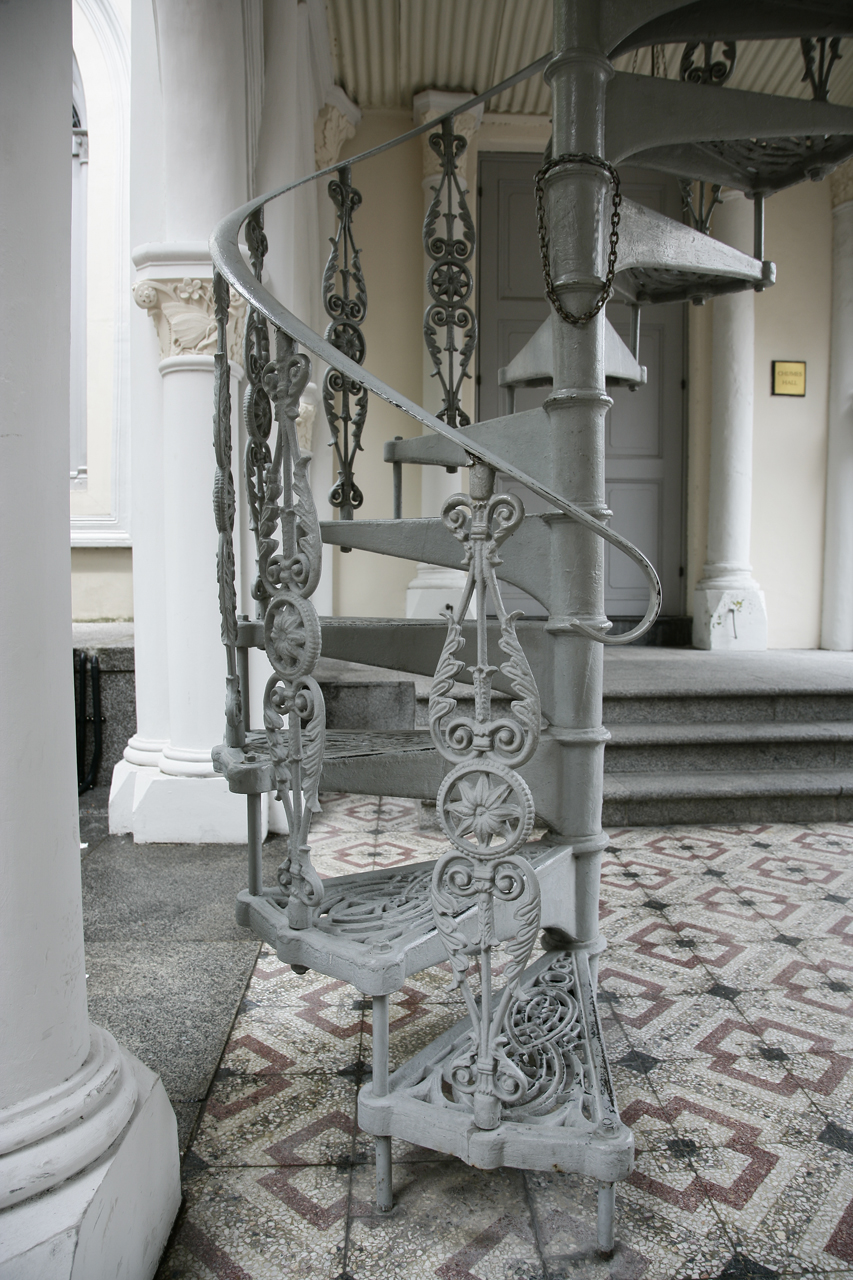
- Spiral and helical stairs: wind around a central axis and save floor area.
- Winder stairs: use wedge-shaped treads to turn without a landing.
- Floating or open-riser designs: emphasize a light, modern appearance.
History and development
Stairs have existed since prehistoric times as simple steps cut into slopes. As architecture developed, stairs evolved from functional access to expressive elements in palaces, temples and civic buildings. Classical, medieval and modern periods each introduced new materials and ornament: stone and timber constructions gave way to iron, steel and reinforced concrete, enabling longer spans and more daring forms. In many public buildings, stairs remain focal features of design.
Uses, regulations and safety
Stairs are essential in residences, workplaces, transportation hubs and emergency egress routes. Building codes specify dimensions such as riser height, tread depth, headroom and handrail requirements to reduce trip and fall risk. Accessible design considerations may favor ramps or lifts; where stairs are used, consistent step geometry and visible nosings improve safety. For mechanical or alternative vertical transport see elevators and inclined walkways. Technical guidance and local codes define precise limits and are consulted by designers and builders; general users should prefer well-lit, unobstructed flights and use handrails where available.
Notable points and distinctions
Architecturally, stairs can be both utilitarian and sculptural. Distinct from ladders, which are steeper and intended for intermittent use, stairs are designed for comfortable, repeated passage. In urban planning and public health discussions, stair access affects mobility and can encourage incidental exercise. For general information on the concept and variations see broader references under terms such as staircase.
Questions and answers
Q: What are stairs?
A: Stairs are constructions designed to bridge a large vertical distance by dividing it into smaller vertical distances called steps.
Q: What are the different names used for stairs?
A: Staircase, stairway, stairwell, and flight of stairs are the different names used for stairs.
Q: How can stairways be designed?
A: Stairways can be designed straight, round, or may consist of two or more straight pieces connected at angles.
Q: What are some special stairways?
A: Escalators and ladders are some special stairways.
Q: What are the alternatives to stairways?
A: Elevators and inclined moving sidewalks are the alternatives to stairways.
Q: What is the purpose of stairs?
A: The purpose of stairs is to bridge a large vertical distance by dividing it into smaller vertical distances, called steps.
Q: What do you call the smaller vertical distances in stairs?
A: The smaller vertical distances in stairs are called steps.
Related articles
Author
AlegsaOnline.com Stairs: design, types, history, uses and safety Leandro Alegsa
URL: https://en.alegsaonline.com/art/93270