
Travertine: formation, properties, history and uses
Travertine is a terrestrial carbonate rock formed by rapid precipitation of calcium carbonate from groundwater or hot springs. It has distinct porosity, historic architectural use, and modern applications as a decorative stone.
Travertine is a terrestrial sedimentary rock composed mainly of calcium carbonate. It forms where carbonate-rich waters lose carbon dioxide and deposit mineral layers, producing a dense aggregate of crystalline carbonate grains often dominated by calcite or aragonite. This precipitation can occur in a variety of settings, including springs, riverine outflows and geothermal vents.
Image gallery
10 Images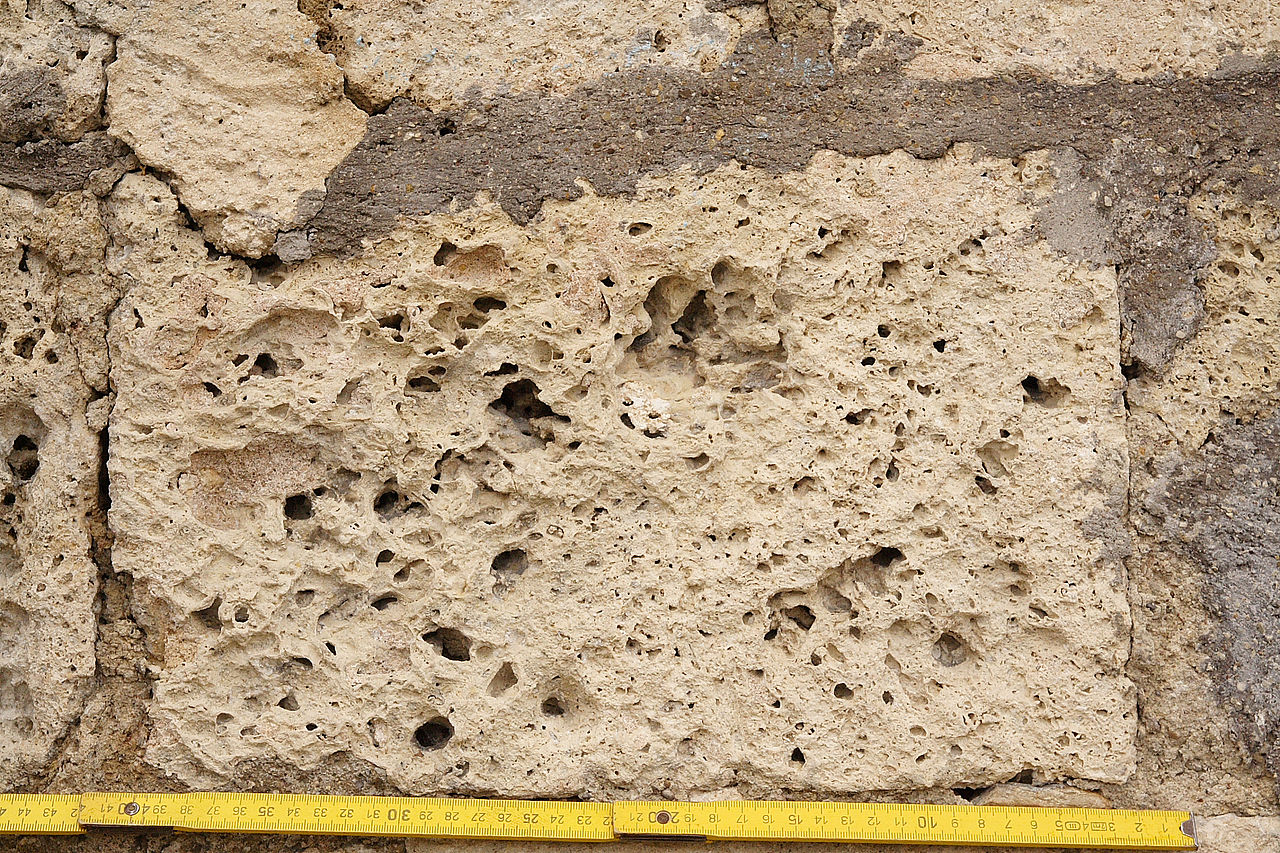


Characteristics and formation
Travertine typically shows banding, layering and a range of porosities from dense to highly vesicular. Its texture results from rapid deposition of carbonate from solution when water degasses or cools. The color palette ranges from creamy whites and tans to rusty browns, influenced by trapped organic matter and iron oxides. Unlike speleothems that form inside caves, travertine commonly grows at or near the surface and can create terraces, dams and mounds.
Geochemically it is a chemical precipitate, and deposition is sensitive to water chemistry, temperature and biological activity. Some deposits are associated with hot springs, where thermal waters promote rapid carbonate deposition, while other deposits resemble tufa but differ by typical density and formation temperature.
History, notable sites and distinctions
Travertine has been prized as a building material for millennia. The ancient Colosseum in Rome and many other Roman monuments were constructed from quarried travertine supplied to builders by the Romans. Natural terraces at places such as Pamukkale and travertine cascades at geothermal areas worldwide illustrate the stone's role in landscape formation as well as its aesthetic appeal.
Distinctions to note: travertine is not the same as limestone (typically lithified from sediment) or marble (metamorphosed carbonate). It is also different from very porous tufa and from cave-deposited speleothems, although all are carbonate minerals formed by precipitation.
Uses, treatment and conservation
- Historic and modern building stone: cladding, flooring, and decorative facings.
- Architectural finishes: tiles, vanity tops and paving; available in honed, polished or filled varieties.
- Maintenance needs: its porosity makes sealing advisable to reduce staining; acids can etch the surface because of carbonate chemistry.
- Environmental considerations: quarrying can alter local landscapes and requires management to preserve notable natural travertine formations.
When selecting travertine for construction or restoration, consider porosity, finish and the intended exposure. Properly detailed and maintained, travertine remains a durable and visually distinctive material that links modern design with geological and cultural history.
More on sedimentary rocks · Chemical precipitation processes · Carbonate minerals · Calcite · Aragonite · Hot spring deposits · Tufa comparison · Colosseum · Roman building stone · Pamukkale terraces
Related articles
Author
AlegsaOnline.com Travertine: formation, properties, history and uses Leandro Alegsa
URL: https://en.alegsaonline.com/art/101260