
Sedimentary rock
Sedimentary rock: rocks formed by accumulation and lithification of sediment; types, formation processes, common examples, environments, uses, and how they differ from igneous and metamorphic rocks.
Overview
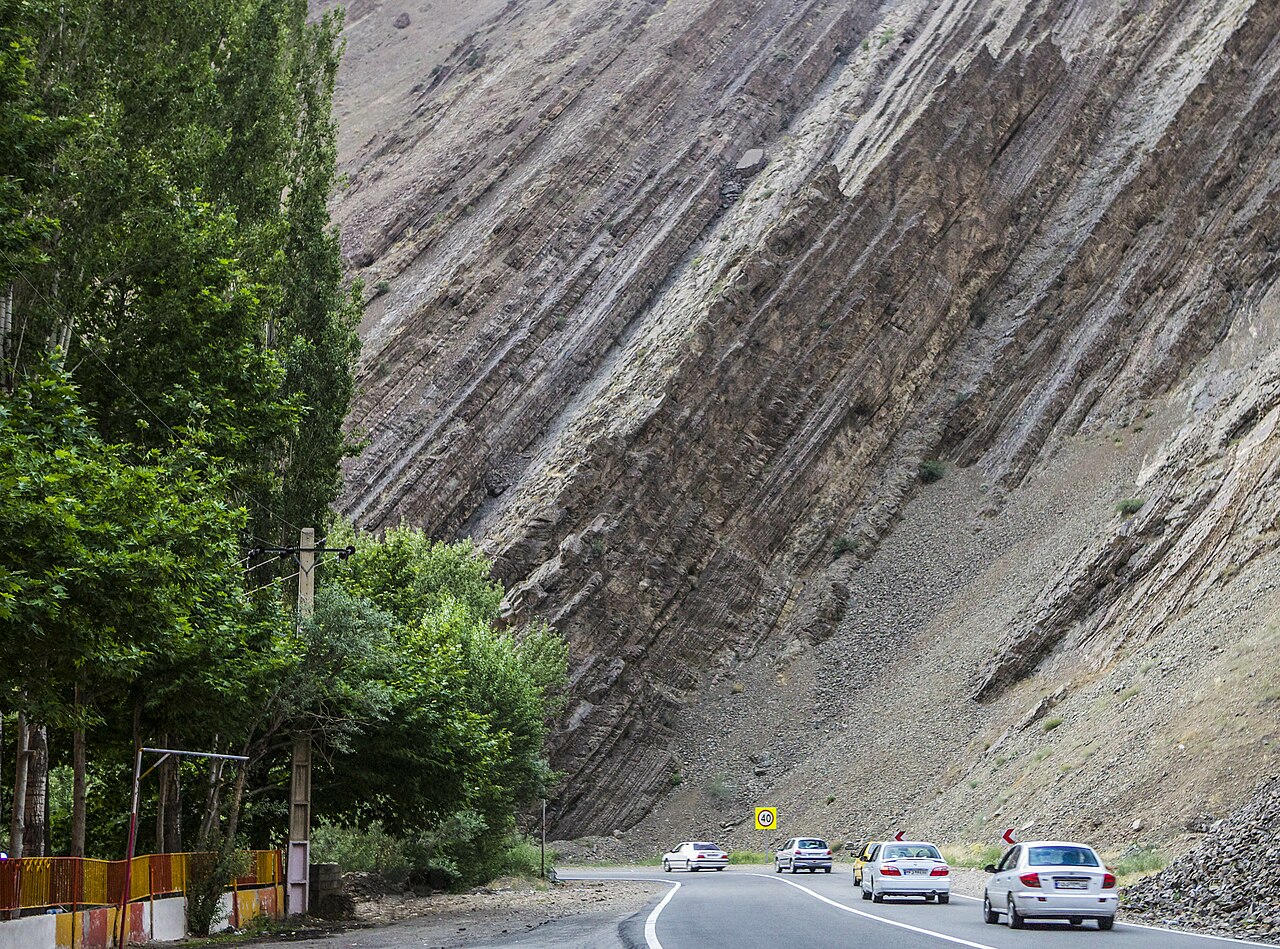
Sedimentary rocks are types of rock produced by the accumulation, compaction and cementation of loose particles and precipitates. In geologic descriptions they are often referred to as sedimentary rocks formed from sediment, and they commonly preserve layering visible in cliffs and road cuts. They form one of the three major rock groups alongside igneous rock and metamorphic rock, and play a central role in recording Earth’s surface environments over time.
Image gallery
10 Images



Formation and composition
Sediments arrive at depositional sites by physical transport and biological accumulation. Weathered mineral grains, fragments of older rocks and shells are carried by water, wind and ice into basins such as oceans and lakes. Organic debris from plants and animals (organic material) also contributes, while dissolved minerals may precipitate directly from solution (inorganic precipitates). Over time, the deposited material is buried, compacted and bound by mineral cements in a process called lithification, transforming loose sediment into solid rock.
Common types and their characteristics
Mineral and textural differences produce distinct sedimentary rocks. Some of the best known are limestone, sandstone and shale, but the group also includes conglomerate, siltstone, coal and evaporites. Broadly, sedimentary rocks are classified as clastic (made of fragments), chemical (precipitated from solution) or organic (derived from biological matter). Typical features include bedding or stratification, fossils, ripple marks, cross-bedding and varying grain sizes that reflect transport energy.
Environments of deposition
- Continental settings: rivers, floodplains, deserts and glacial outwash.
- Transitional settings: deltas, beaches and tidal flats.
- Marine settings: continental shelves, slopes and deep-sea basins.
Each environment favors particular rock types and sedimentary structures. For example, high-energy river channels commonly produce coarse-grained conglomerates and sandstones, while low-energy deep-sea basins accumulate fine clay that becomes shale.
Distribution, importance and uses
Sedimentary rocks cover a large fraction of Earth's land surface—most continents are mantled by sedimentary deposits—even though they represent a relatively small portion of the planet’s volume beneath the surface: a thin outer layer compared with the deeper igneous and metamorphic rocks of the crust and mantle. Because they preserve fossils and ancient depositional features, sedimentary rocks are primary archives for paleontology and Earth history. They are also economically important as sources of groundwater, coal, oil and natural gas, and as building stone and aggregate.
Distinguishing features and notable facts
Unlike igneous rocks that crystallize from molten magma, or metamorphic rocks that have been chemically and structurally altered by heat and pressure, sedimentary rocks record processes active at or near Earth’s surface. They often form in layers that can be read like pages of a book, revealing changes in climate, sea level and life through time. Although they may seem fragile, many sedimentary rocks such as well-cemented sandstone and some limestones are durable and widely used in construction.
For further introductory material and visual examples, see resources on terminology, sedimentary structures and common rock types (overview, sediment processes, exposures, rock types, comparisons, marine deposition, lacustrine deposition, organic sources, chemical precipitates, limestone examples, sandstone examples, shale examples, crustal distribution).
Questions and answers
Q: What are sedimentary rocks?
A: Sedimentary rocks are rocks formed from sediment that has accumulated over time.
Q: How are sedimentary rocks formed?
A: Sedimentary rocks are formed from matter that falls to the bottom of oceans and lakes, including tiny pieces of other rocks, dead animals, plants, microorganisms, and inorganic chemicals that may be precipitated from water solutions.
Q: What are the other types of rocks?
A: The other types of rocks are igneous rock and metamorphic rock.
Q: What are the most common sedimentary rocks?
A: The three most common sedimentary rocks are limestone, sandstone, and shale.
Q: How much of the Earth's land area is covered by sedimentary rocks?
A: Sedimentary rocks cover 75-80% of the Earth's land area.
Q: What percentage of the Earth's crust do sedimentary rocks make up?
A: Sedimentary rocks make up only 5% of the Earth's crust.
Q: What are the relative abundances of the different types of sedimentary rocks?
A: The most abundant sedimentary rocks are limestone, followed by sandstone and shale.
Related articles
Author
AlegsaOnline.com Sedimentary rock Leandro Alegsa
URL: https://en.alegsaonline.com/art/88517
Sources
- lib.utexas.edu : Petrology of sedimentary rocks PDF version
- csmres.jmu.edu : Basic sedimentary rock classification
- commons.wikimedia.org : Sedimentary rock