
Triassic Period
First period of the Mesozoic Era (251.9–201.3 Ma). Marked recovery after the greatest mass extinction, origin of dinosaurs, early mammals and marine reptiles, and the breakup of Pangaea.
Overview
The Triassic Period is the opening interval of the Mesozoic Era and a major chapter in Phanerozoic time. It extends from about 251.9 million to 201.3 million years ago and lasted roughly 50.6 million years. The Triassic follows the Permian and precedes the Jurassic, and it records a global recovery from the Permian–Triassic extinction, the largest biotic crisis of the past half-billion years. The name "Triassic" reflects the three-part subdivision of its rock sequences.
Image gallery
10 Images




Geology and climate
Throughout most of the Triassic the continents were assembled into the supercontinent Pangaea, producing extensive continental interiors, broad coastlines and strong seasonal contrasts. Climate was generally hot and dry across many continental interiors, with monsoonal patterns and humid coastal belts. In the Late Triassic, rifting began to fragment Pangaea, setting the stage for ocean basins and the opening of the Atlantic. Large volcanic events toward the end of the period are linked to environmental stress at the Triassic–Jurassic boundary.
Life and ecosystems
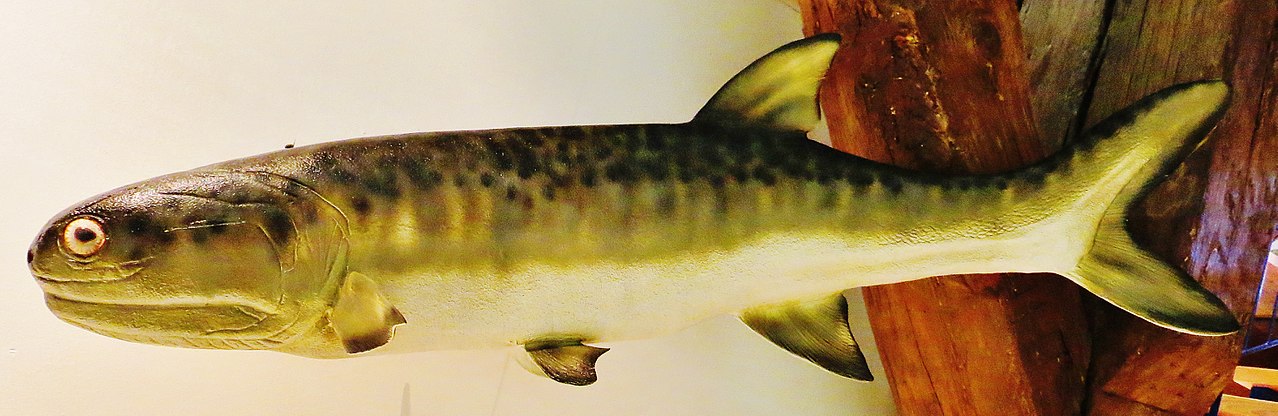
Life in the Triassic shows both recovery and innovation. Terrestrial ecosystems were populated by archosaurian reptiles, early relatives of crocodiles, and the first true dinosaurs. Small, nocturnal mammaliforms appeared alongside diverse synapsids. Flying reptiles (pterosaurs) took to the skies, while oceans hosted ichthyosaurs and plesiosaurs. Plant communities were dominated by gymnosperms such as conifers, cycads, ginkgophytes and extensive fern understories, producing the habitats that supported evolving faunas.
Subdivisions and notable groups
The Triassic is conventionally divided into Early, Middle and Late epochs. Stages include (among others) the Induan and Olenekian in the Early Triassic; the Anisian and Ladinian in the Middle Triassic; and the Carnian, Norian and Rhaetian in the Late Triassic. Key vertebrate groups that first appear or diversify during this time include:
- Early dinosaurs and diverse archosaurs
- Proto-mammals and the first true mammals
- Pterosaurs and other aerial reptiles
- Marine reptiles such as ichthyosaurs and plesiosaurs
End of the Triassic and legacy
The close of the Triassic is marked by a significant extinction episode that removed many marine and terrestrial groups and allowed dinosaurs to become the dominant terrestrial vertebrates in the Jurassic. The geological and biological changes of the Triassic — from the recovery after the Permian collapse to the breakup of Pangaea and the rise of new vertebrate groups — make it a pivotal interval in Earth history.
Related topics
Questions and answers
Q: What is the name of the geological period before the Triassic?
A: The geological period before the Triassic was the Permian period, which was the last period in the Palaeozoic era.
Q: How long did the Triassic period last?
A: The Triassic period lasted 50.6 million years.
Q: What date did the Triassic period begin and end?
A: The Triassic period began 251.9 million years ago and ended 201.3 million years ago.
Q: Which new groups arose during this time?
A: During this time, many new groups arose including the first dinosaurs, mammals, pterodactyls, ichthyosaurs and plesiosaurs
Related articles
Author
AlegsaOnline.com Triassic Period Leandro Alegsa
URL: https://en.alegsaonline.com/art/101448
Sources
- stratigraphy.org : "International Chronostratigraphic Chart"
- stratigraphy.org : "ICS - Chart/Time Scale"
- britannica.com : "Triassic Period"
- journals.royalsociety.org : "Recovery from the most profound mass extinction of all time"
- doi.org : 10.1098/rspb.2007.1370