
Colosseum (Flavian Amphitheatre)
Ancient Roman amphitheatre in Rome, built in the 1st century AD; an architectural, cultural and historical landmark used for games, spectacles and public events, now a major tourist site and symbol of the city.
Overview
The Colosseum, also called the Flavian Amphitheatre, is an ancient stone amphitheatre in the centre of Rome. Construction began under Emperor Vespasian in about 70–72 AD and the structure was largely complete by the opening under his son Titus around 80 AD; later modifications were made during the reign of Domitian. It is the largest surviving amphitheatre built by the Roman Empire and could accommodate roughly fifty thousand spectators for public spectacles. The Latin name Amphitheatrum Flavium recalls the Flavian dynasty that commissioned the project.
Image gallery
10 Images





Design and principal parts
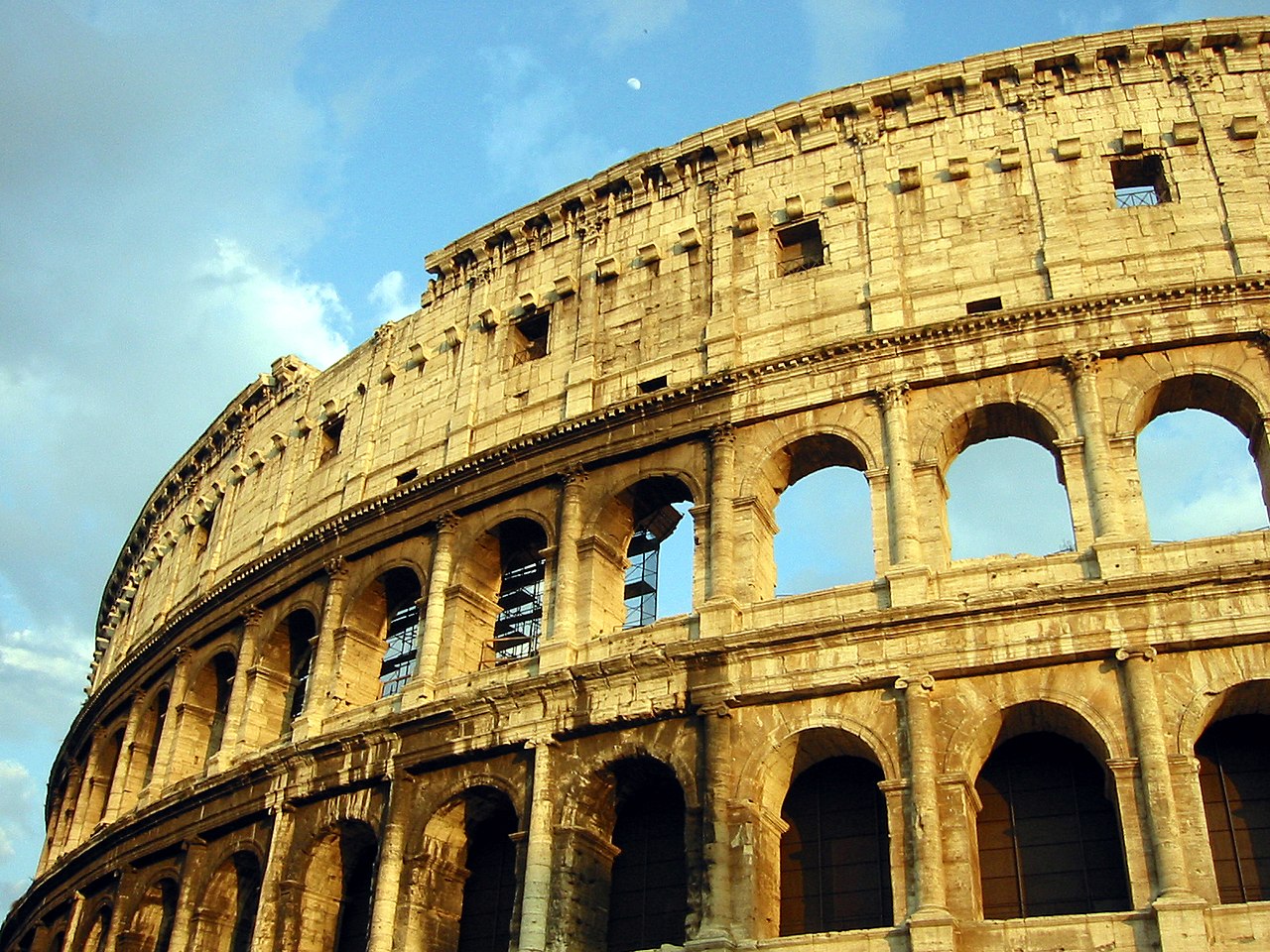
The building is an elliptical arena set within multiple tiers of seating, supported by a system of vaults and arcades. The exterior shows the Roman use of orders, with successive levels framed by Doric, Ionic and Corinthian pilasters. The main components include:
- Arena – a central area with a wooden floor originally covered with sand; beneath it lay the hypogeum, an underground complex of tunnels, cages and mechanical devices used to stage animals and people.
- Podium and seating – tiered stands (cavea) organised by social rank, with entrances (vomitoria) for rapid access and exit.
- Velarium – a large retractable awning that shaded the spectators on hot days.
- Façade and entrances – monumental arcades that gave the Colosseum its distinctive layered appearance and helped distribute the weight of the structure.
Functions and spectacles
The Colosseum hosted a wide range of public entertainments for Roman citizens. Most famously it staged gladiatorial combat and animal hunts, and was also adapted for public executions, dramatic recreations of famous battles and, at times, simulated naval engagements. Ancient sources and modern scholars discuss the organisation of games, the role of patrons and the way the structure’s machinery and spaces supported varied spectacles. Access was generally free for the populace during the Roman period, funded by emperors or wealthy sponsors.
History and later changes
After the fall of the Western Roman Empire the Colosseum gradually ceased to be used for large-scale entertainments. During the Middle Ages it housed workshops, private residences and religious sites; parts of the monument were adapted as a Christian place of worship and chapels, while other areas served as fortifications. Over centuries it was also used as a convenient quarry for building material, and several earthquakes caused partial collapses that left the structure in the ruined state familiar today. Preservation and restoration efforts began in earnest in the 18th and 19th centuries and continue into the present.
Modern significance and notable facts
The Colosseum is one of Italy’s most visited archaeological sites and is a potent symbol of ancient Rome’s power and public life. It forms part of the Historic Centre of Rome that is recognised for its cultural importance. The monument features in contemporary ceremonies: on some Good Fridays the Pope leads a candlelit Way of the Cross procession around its levels. It also appears in modern iconography, such as on the common Euro five-cent piece, and in countless artistic and educational works globally. Conservation remains a priority to protect the structure from pollution, visitor wear and the legacy of past damage.
Visiting and further resources
Today visitors can view the arena, the surviving seating tiers, and parts of the hypogeum on guided tours; archaeological study continues to refine understanding of construction techniques, the role of emperors such as Titus and Domitian, and the social context of the games. For introductory reading and sightseeing information consult municipal and heritage sources, or academic summaries of Roman architecture and public spectacles. Additional references and online collections provide images, plans and research updates for those who wish to explore the Colosseum’s long and layered story further (city resources, gladiatorial culture, public executions, reconstructed battle scenes, Christian relic sites, coinage depictions, Latin names). Research institutes and conservation programmes also publish updates on restoration, interpretation and visitor management (religious history, imperial architecture, medieval reuse, later emperors).
Questions and answers
Q: When was the Colosseum built?
A: The construction of the Colosseum started around 70–72 AD and was finished in 80 AD. Emperor Domitian made some changes to the building between 81–96 AD.
Q: How many people could it seat?
A: It had seating for 50,000 people.
Q: What is a forum?
A: In antiquity, a forum was a geographical area in which were the main buildings of power, as well as the large square on which the population met. It was both a busy place to live, a place to get married, big parties, community meetings, and so on.
Q: What type of events took place at the Colosseum?
A: The Colosseum was used for gladiatorial contests, animal hunts (in which animals would hunt and eat prisoners or gladiators would fight against animals), executions of prisoners, plays and battle scenes; sometimes it was filled with water to fight sea battles.
Q: Was there an admission fee to enter the Colosseum?
A: No - The people of Rome could go into the Colosseum without any costs; it was free.
Q: What happened to it during Middle Ages?
A: During Middle Ages (after mid-fifth century) it stopped being used for performances and instead became housing, workshops, a Christian shrine and as a supply of building stones.
Q: How is it symbolically represented today? A: The Colosseum is now one of Rome's most popular tourist attractions and appears on Euro five cent coins. On Good Fridays, Pope leads torch lit "Way of Cross" procession around various levels of amphitheatre.
Related articles
Author
AlegsaOnline.com Colosseum (Flavian Amphitheatre) Leandro Alegsa
URL: https://en.alegsaonline.com/art/21762