
Theodor Eicke: SS leader, Dachau commandant and Totenkopf division commander
German SS officer Theodor Eicke (1892–1943) shaped Nazi concentration camp organization, commanded Dachau and the SS Totenkopf division, and was implicated in early regime purges and frontline atrocities.
Overview
Theodor Eicke was a senior Nazi SS officer who played a central role in the development and administration of the Nazi concentration camp system and later commanded combat units of the Waffen-SS. Born in 1892 and killed in 1943, he rose from pre‑First World War service to become an influential and notorious figure in the SS hierarchy. His career combined camp administration, participation in regime purges, and frontline leadership during the Second World War. Important biographical milestones are often cited in contemporary accounts and studies of Nazi institutions.
Image gallery
4 Images


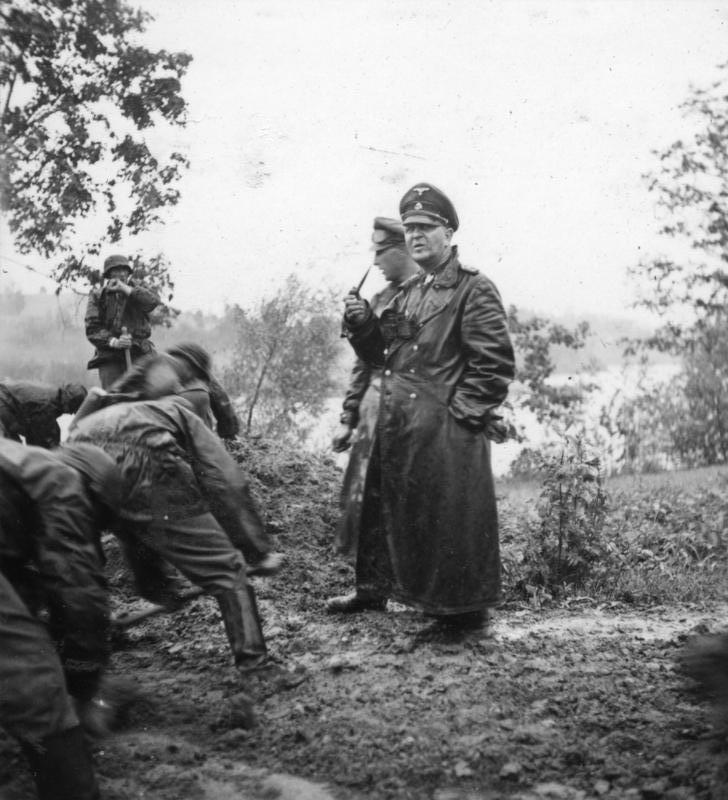
Early life and military service
Eicke was born in 1892 in the Alsace–Lorraine region; sources indicate Hampont as his birthplace and list the year 1892 as his birthdate. He served in the Bavarian Army before and after the First World War, a period followed by political instability in Germany during the Weimar Republic. He later joined right‑wing paramilitary and political organizations and became a member of the National Socialist movement. Contemporary records place his early affiliations with both the SA and later the SS, and he held seats in party structures and the Reichstag.
Dachau, camp regulations and SS responsibilities
In 1933 Eicke was appointed commandant of Dachau, Germany's first regular concentration camp after the Nazis took power. During his tenure he introduced a set of regulations and organizational practices that became a model for the wider concentration camp system. Under Eicke's authority the camp regime emphasized strict hierarchy, uniform discipline for guards, and systems for prisoner control and punishment. He also oversaw training and structural arrangements for SS camp staffs and is widely credited with shaping the institutional framework of the SS camp units that later guarded camps across occupied Europe.
Role in internal purges and SS advancement
Eicke participated in major political actions of the early Nazi regime, including the suppression of rivals inside the movement. He was involved in the events of the Night of the Long Knives, when the regime moved against leaders of the SA and other opponents. Acting on orders from senior SS leadership, Eicke and his associates took part in operations that resulted in arrests and killings during that purge. Following these events he continued to rise within the SS, receiving higher rank and broader responsibilities for camp organization and for the formation of SS guard formations.
Wartime command and death
With the outbreak of the Second World War, units formed from camp personnel and SS guard formations were reorganized into combat formations of the Waffen‑SS. Eicke became the commander of the Totenkopf (Death's Head) Division, an SS division that fought on the Western and Eastern Fronts. The unit took part in the 1940 campaign in the West, operations in the Balkans, and the invasion of the Soviet Union. The Totenkopf division was implicated in war crimes and harsh anti‑partisan and anti‑civilian measures as it operated in occupied areas. Eicke was killed in 1943 when the aircraft he was traveling in was shot down near the Kharkov area during military operations on the Eastern Front.
Legacy and historical assessment
Historians consider Eicke a key architect of the SS concentration camp apparatus and a symbol of the bureaucratic and organizational energy that enabled large‑scale repression and extermination. His career illustrates how personnel and structures that managed camps were linked to combat units and wider Nazi policies of occupation and repression. Postwar trials and scholarship have examined the institutional innovations attributed to him, the criminal nature of the camp system, and the direct involvement of SS leaders in political violence and atrocities.
Selected timeline and associations
- Birth information and early life details.
- Year 1892 recorded in many contemporary biographies.
- Hampont, place of origin in Alsace–Lorraine.
- German Empire context for early military service.
- Modern national borders noting that the birthplace is today in France.
- Date of death and related accounts.
- 1943, year of death during the Eastern Front campaigns.
- Location references for wartime action in the Soviet theatre.
- SS rank titles held by Eicke.
- Waffen‑SS connection and command responsibilities.
- Bavarian Army service before and after World War I.
- World War I as formative military experience.
- Kaiser Wilhelm II as the ruler of the German Empire during Eicke's early years.
- Imperial titles describing the pre‑1918 state.
- Schutzstaffel (SS) as the primary organization Eicke served.
- Dachau concentration camp, where he served as commandant.
- Rudolf Höss, a camp figure who later served at Auschwitz; Eicke's interaction with contemporaries.
- Sturmabteilung (SA) ties and conflicts with that organization.
- Ernst Röhm, the SA leader targeted in the 1934 purge.
- Night of the Long Knives, the 1934 political purge.
- Reichsführer‑SS as a title for senior SS leadership who issued orders.
- Heinrich Himmler, head of the SS and a primary superior.
- Reinhard Heydrich and other senior SS figures of the period.
- Nazi Germany as the state context for Eicke's actions.
- Command appointments such as the Totenkopf leadership.
- Battle of France participation in 1940 campaigns.
- Invasion of Yugoslavia and Balkans operations.
- Operation Barbarossa and the 1941 eastern campaign.
- Third Battle of Kharkov and related 1943 fighting.
- Battle of Stalingrad as a chronological marker in late 1942–early 1943.
- Nazi Party institutional membership and political role.
- Fritz Todt and contemporaries who also died in aircraft incidents.
- Reichstag membership and political offices held.
Note: This article summarizes widely documented aspects of Theodor Eicke's career: his formative military service, central role in building the concentration camp regime, participation in Nazi political violence, wartime command of the SS Totenkopf division, and death in 1943. For detailed archival citations and scholarly debates about specific events and responsibilities, consult specialized historical works and primary source collections.
Related articles
Author
AlegsaOnline.com Theodor Eicke: SS leader, Dachau commandant and Totenkopf division commander Leandro Alegsa
URL: https://en.alegsaonline.com/art/99236