
Reichstag (institution)
The Reichstag was the name used for Germany's central legislative assembly in several historical periods. This article explains its forms, functions, history, and legacy, and its relation to the modern Bundestag.
Overview
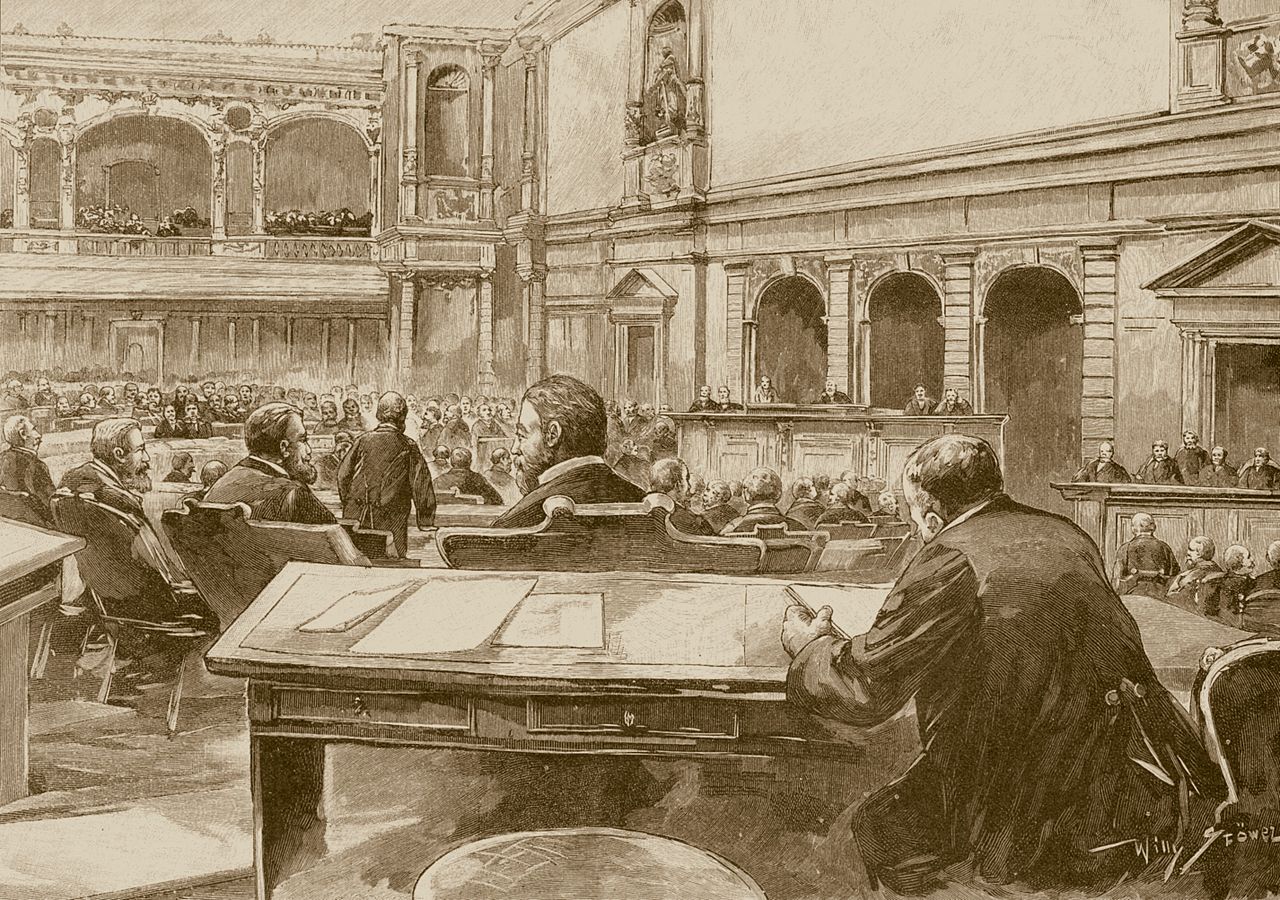
The term Reichstag (literally "Imperial Diet") denotes a legislative assembly that served as a central parliament‑style institution in German-speaking polities. Across history the Reichstag label applied to different representative bodies: from assemblies within the Holy Roman Empire to the national legislatures of the North German Confederation, the German Empire, the Weimar Republic and the period of National Socialism.
Image gallery
2 Images
Characteristics and functions
Although the name was constant, the composition and powers of each Reichstag varied. In some eras it was an assembly of estates and princes; in others it was an elected chamber representing citizens. Typical roles included debating laws, approving budgets, and providing a forum for political parties and public opinion. The institution often coexisted with other authorities—monarchs, federal executives, or party apparats—which affected its actual influence.
Historical development
- Holy Roman Empire: Early Reichstags were meetings of princes, bishops and imperial cities that advised and consented to the emperor’s decisions.
- 19th century transformations: The name returned as a parliamentary body in the North German Confederation and then in the unified German Empire, where it functioned as a lower house elected by male suffrage with limited powers relative to the emperor and the chancellor.
- Weimar Republic: The Reichstag became a democratic, multi‑party parliament with broad legislative authority and was central to the republican constitution.
- Third Reich and after: During National Socialism the Reichstag continued to exist in form but lost real power. After 1945 the historical institution was dissolved and the new Federal Republic created the Bundestag two regimes later; the modern body was not a simple continuation but is a democratic successor institution.
Seat and symbolic significance
The Reichstag assembly commonly met in the Berlin structure known as the Reichstag building, completed in the late 19th century and long associated with German parliamentary life. The building itself became symbolic: its 1933 fire, years of disuse, later restoration and reoccupation illustrate political ruptures and democratic renewal.
Uses, legacy and distinctions
The Reichstag as a concept highlights shifts from estate representation to mass electoral politics and from constrained legislature to parliamentary sovereignty. Debates about its power, electoral systems and the role of parties shaped German constitutional practice. For comparative and constitutional study see introductions to parliamentary history and to the distinct institutional terms used in German governance, including distinctions between an assembly as an advisory diet and a modern elected legislature.
Further reading and related terms
Readers interested in specific phases may consult sources on the German Empire, the Weimar Republic and the institutional aftermath in postwar Germany. Scholarly work explores how the Reichstag's changing role reflected broader social and political transformations in German history.
For institutional comparisons and archival material see references linked to the periods above and to the physical site of the assembly at the Reichstag building and its modern use by the Bundestag. Additional contextual resources are available via general guides to the Holy Roman Empire and 19th–20th century German history (parliamentary studies, imperial institutions, confederation era).
Related articles
Author
AlegsaOnline.com Reichstag (institution) Leandro Alegsa
URL: https://en.alegsaonline.com/art/81949