
Succulent plant: adaptations, diversity, and uses
Succulents are plants adapted to survive dry conditions by storing water in leaves, stems, or roots. This article explains their characteristics, evolution, common groups, uses, and how they differ from cacti.
Overview
Succulents are plants that store water in specialized tissues to survive periods of drought. The term covers a wide range of unrelated plant groups that share this drought‑resistant habit rather than a single botanical family. Many descriptions of succulence emphasize their capacity to retain moisture in leaves, stems, or roots and to reduce water loss through structural and physiological adaptations. For a general definition see succulent.
Water storage is the defining trait: moisture is held in fleshy leaves, thickened stems, or enlarged roots. For further reading on water-storage mechanisms see water storage in plants, and for typical storage sites see leaves (leaf succulents), stems (stem succulents), and roots (root succulents).
Image gallery
10 Images


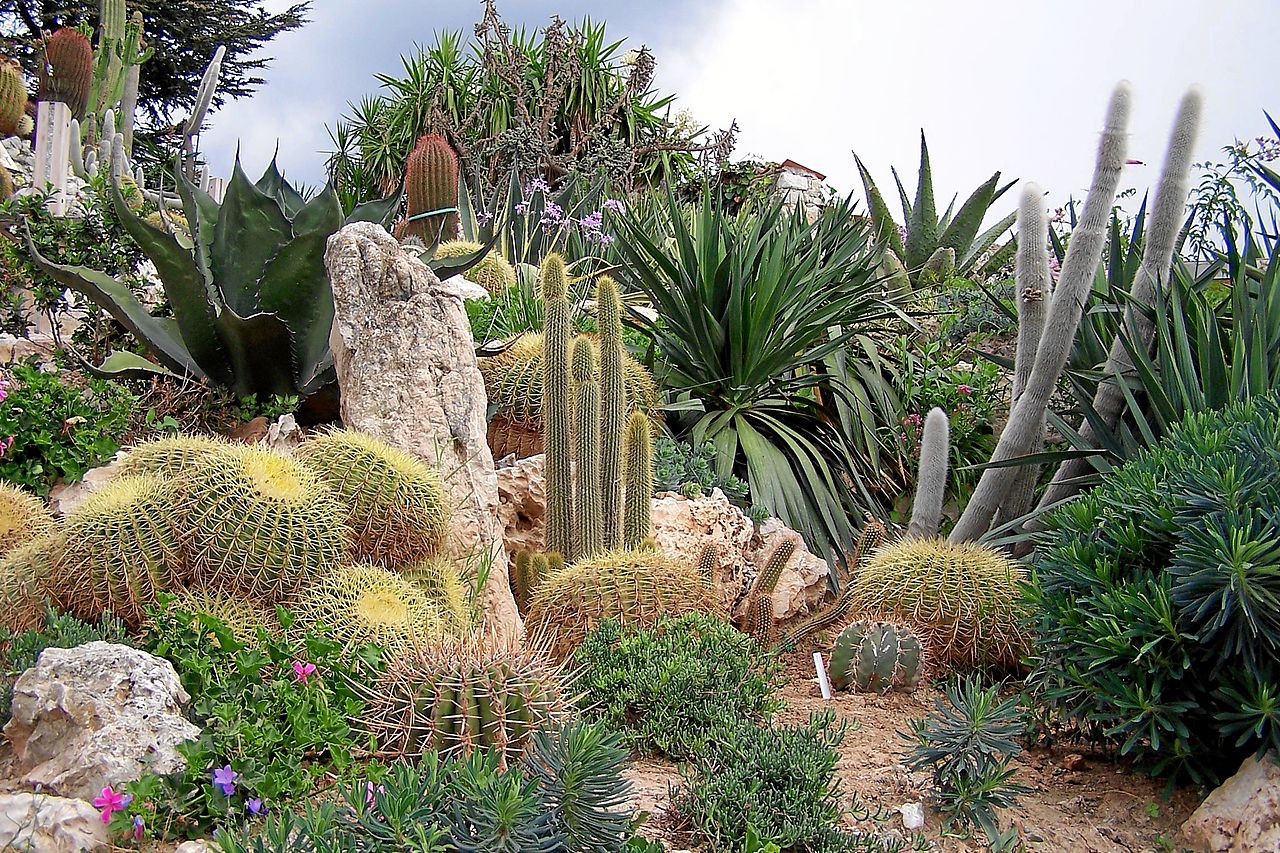
Characteristics and adaptations
Common adaptations include succulent tissues that act as reservoirs, reduced or modified leaves to limit evaporation, thick cuticles, sunken stomata, and often a compact form that minimizes surface area. Many succulents use CAM (Crassulacean Acid Metabolism) photosynthesis, opening stomata at night to reduce daytime water loss. Spines, hairs, or waxy coatings are frequent secondary adaptations that protect tissues from herbivores and intense sunlight.
- Storage organs: swollen leaves (e.g., many leaf succulents), thick stems (e.g., many stem succulents), or enlarged roots (root succulents).
- Physiology: CAM photosynthesis and water-conserving stomatal behavior.
- Protective traits: spines, hairs, and reflective coatings.
Diversity, examples and classification
Succulence has evolved independently in many plant families; thus some plant groups are well known as succulent-rich while others have only a few succulent species. All cacti are succulents, but not all succulents are cacti—this is an important distinction for identification and horticulture. For information on cacti see cacti.
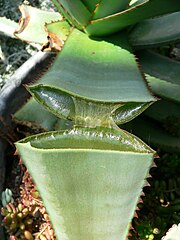
Notable groups and genera that include succulents include the Agave family (Agavaceae, historically applied) and the genus Agave, the stoneplant family Crassulaceae, and many species of Aloe. Other succulent-rich families include Aizoaceae and Euphorbiaceae. Representative examples you may recognize are:
- Aloe — known for water-storing leaves and medicinal varieties.
- Lithops — tiny "stone" plants that mimic pebbles and store water in paired leaves.
- Bottle trees — trees that store water in thickened trunks.
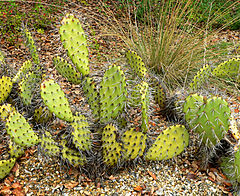
- Prickly pear — a common cactus with edible fruits.
- Agave and many Crassulaceae members are also familiar garden succulents.


Uses, cultivation and importance
Succulents are widely cultivated for ornamental purposes because they are typically low maintenance and drought tolerant. Species such as Aloe have traditional medicinal uses, and some cacti produce edible fruits used locally as food. Succulents are important in xeriscaping, restoration of dry habitats, and as subjects in botanical research into drought resilience. Their popularity among hobbyists has also led to a large trade in cultivated varieties and hybrids.
Distinctions and notable facts
Key distinctions to remember: all cacti belong to the cactus family and are succulents, but succulence occurs across many plant families. Some succulents are stem-dominant and resemble trunks or bulbs, while others are leaf-dominant and appear fleshy. Their convergent evolution—different lineages evolving similar water-saving solutions—makes succulents a classic example of adaptation to arid environments.
For practical care, most succulents require well-draining soil, moderate light, and infrequent watering; however, needs vary by species, so consult specialized sources such as horticulture guides or plant-specific resources linked here: stem succulents, root-storing species, and general identification resources here.
Related articles
Author
AlegsaOnline.com Succulent plant: adaptations, diversity, and uses Leandro Alegsa
URL: https://en.alegsaonline.com/art/94549
Sources
- succulentsnetwork.com : "What's Diffirence Between Succulents And Cacti? (With Pictures)"