
Bottle tree: swollen‑trunk plants and the glass bottle tradition
Plants with swollen, water‑storing trunks found in arid regions and the distinct folk art of glass bottle trees; covers biology, notable genera, uses, cultural meanings and distinctions.
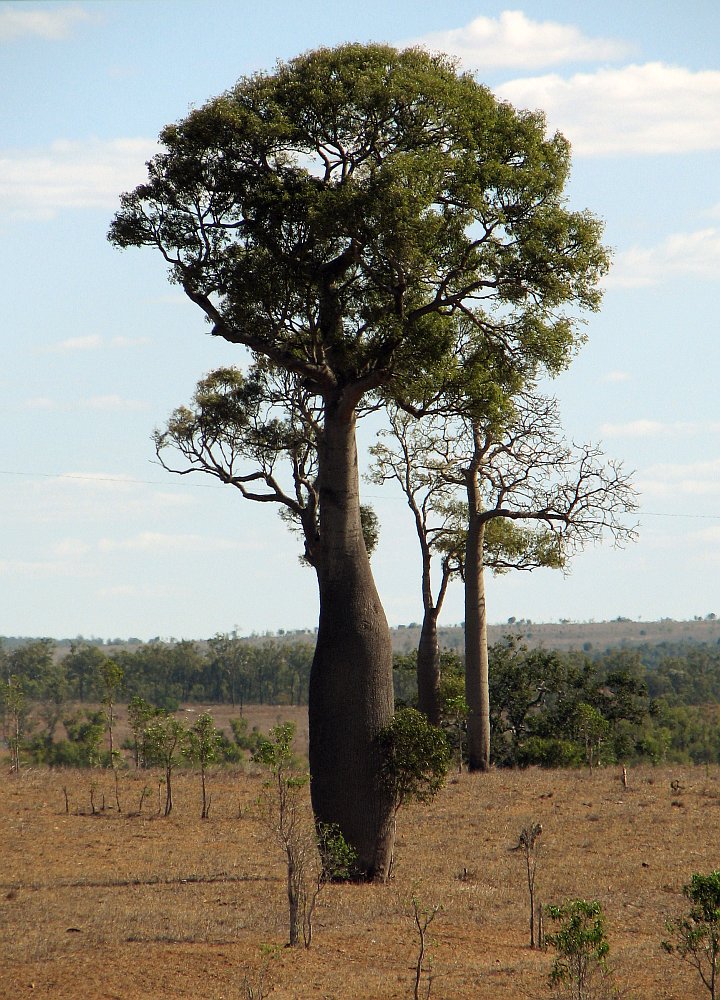
The term "bottle tree" is a common name applied to several unrelated plants whose trunks swell into a bottle‑like form, an adaptation that helps them survive in seasonally dry or arid environments. The name refers to the trunk's characteristic contour rather than to any single taxon; this growth form appears in different regions and families as a response to water stress, fire or the need to store reserves. The descriptive image of the trunk as a bottle is widely used in popular accounts and horticulture.
These trees are most often associated with hot, dry landscapes such as desert margins and savannas, though some occur in seasonally dry woodlands or rocky outcrops. The swollen trunk is a type of pachycaul architecture: an enlarged stem or rootstock that stores water and carbohydrates. Leaves, flowers and bark vary greatly among species, but the unifying feature is the trunk or caudiciform base that gives the plant its common name.
Image gallery
2 Images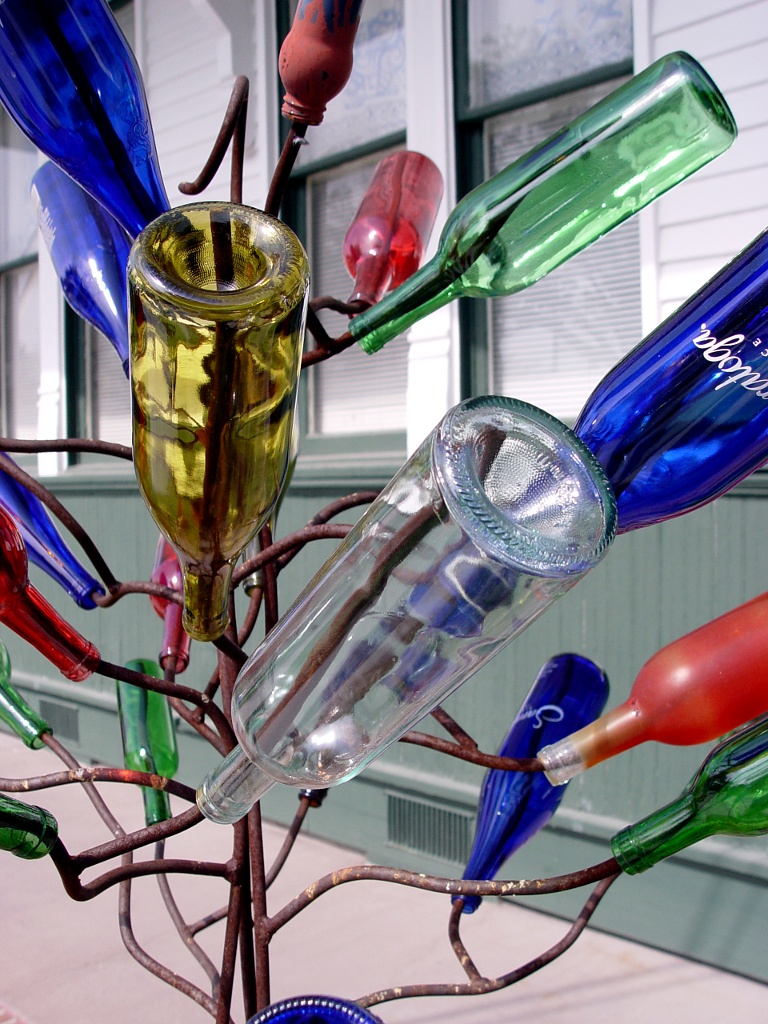
Notable genera and species
- Adansonia — the baobabs, a distinctive group whose massive, bottle‑shaped trunks can store large amounts of water; one Australian species is Adansonia gregorii (the boab).
- Pachypodium lealii — a succulent, bottle‑like trunked member of the Apocynaceae found in southwestern Africa, notably Namibia and Angola, where it occupies rocky, arid sites.
- Moringa — some species in the genus, native to regions including Madagascar, develop swollen stems or bases used for water storage and resilience in drought.
- Brachychiton species — several Australian trees and shrubs (family Malvaceae) form bottle‑like trunks; see the genus Brachychiton for examples found in Australia.
- Ceiba — certain New World species such as the floss silk tree or palo borracho have pronounced swollen trunks that inspired the common name in South America; see Ceiba for regional examples.
Because the label "bottle tree" spans many genera and families, botanical identification normally relies on leaves, flowers and fruits rather than trunk shape alone. Field guides and floras that treat particular regions list the local species that exhibit this growth form; a general overview of the range of such plants is available in broader treatments of pachycaul and caudiciform plants (see species lists).
Uses, cultural significance and the glass bottle tradition
Living bottle trees have practical and cultural value. Many provide shade, edible fruits, seeds or sap used locally for food, medicine and fiber. Their striking silhouettes also make them popular in landscape design and bonsai. In addition to botanical examples, "bottle tree" denotes a folk art practice primarily in the southern United States: assemblages of colored glass bottles placed on posts or frames. These artificial bottle trees are associated with Gullah and Hoodoo traditions and are displayed as garden art, charms against spirits, or memorials; they form a distinct cultural counterpart to the living bottle‑trunk plants.
From a conservation perspective, some bottle‑forming species are vulnerable to land‑use change, overharvest or altered fire regimes. Their isolated distributions and slow growth can make recovery slow. Conversely, several species are cultivated internationally for ornamental use and can be found in botanical collections. The bottle‑shaped trunk is an example of convergent evolution: unrelated plants in different climates and families have evolved similar structural solutions to survive seasonal drought and other stresses.
Key distinctions to remember: "bottle tree" is a descriptive common name rather than a taxonomic unit; similar trunk forms occur in diverse lineages. When studying or planting bottle trees, consult regional botanical references or horticultural sources to confirm species identity and appropriate care. For further reading on particular genera and regional examples, consult specialized resources and field guides (species lists, Madagascar accounts, or genus pages such as Brachychiton and Ceiba).
Related articles
Author
AlegsaOnline.com Bottle tree: swollen‑trunk plants and the glass bottle tradition Leandro Alegsa
URL: https://en.alegsaonline.com/art/13273