
Plant root
Overview of plant roots: structure, types, functions, ecological roles, and distinctions from stems; includes examples, adaptations and human uses.
Overview
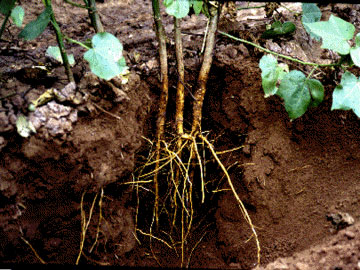
A root is the belowground organ of most vascular plants that anchors the plant and absorbs water and mineral nutrients from the surrounding soil. The term root commonly refers to structures that grow into the substrate; they are typically found in soil but may also develop aboveground as aerial roots in some species. Roots differ anatomically and functionally from stems, although there are exceptions and transitional forms.
Image gallery
10 Images





Structure and growth
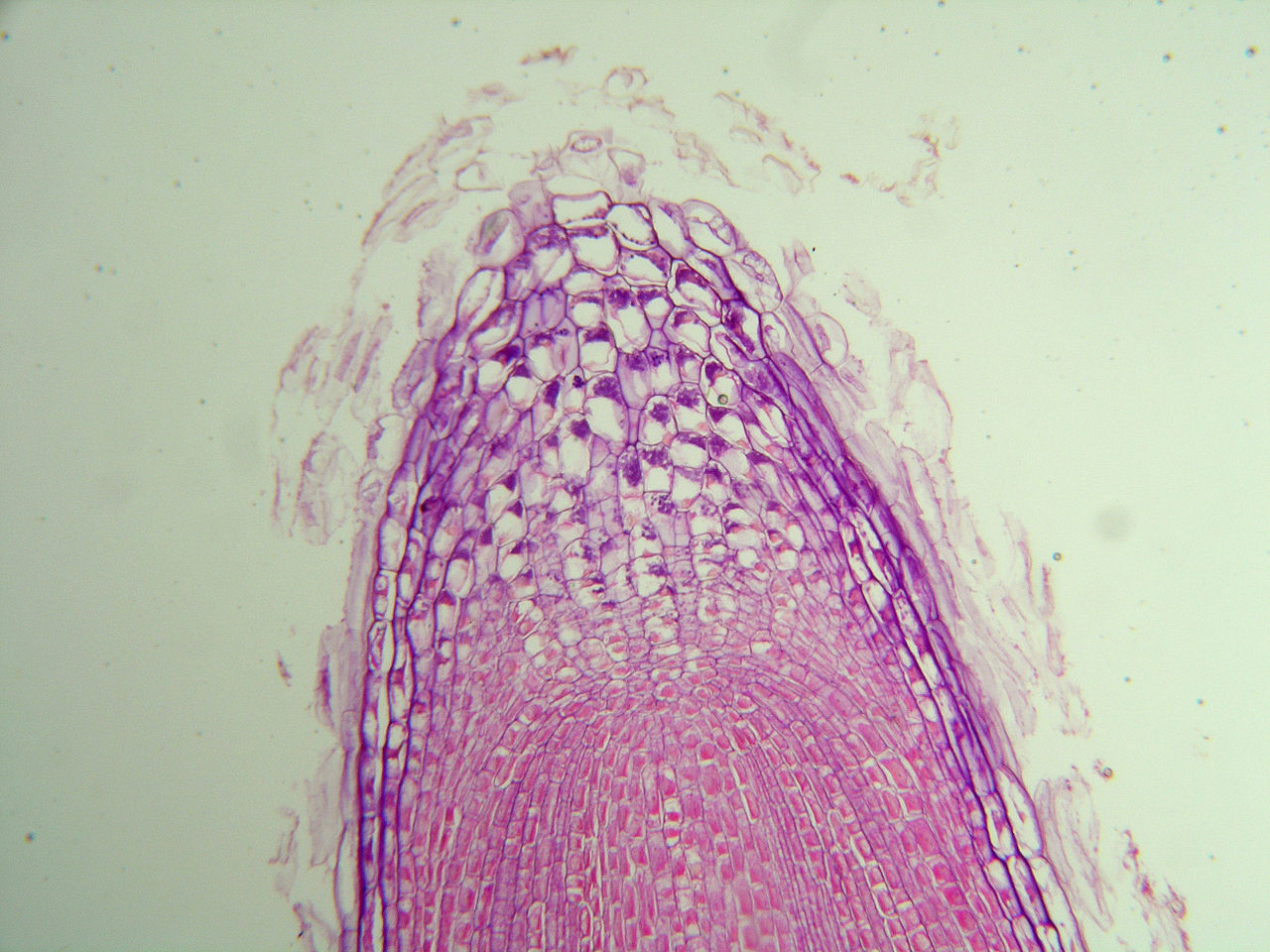
Roots have a characteristic organization: a protective root cap, a zone of cell division (meristem), an elongation zone, and a maturation zone where root hairs form. Root hairs greatly increase surface area for uptake of water and dissolved minerals. Beneath the epidermis lie cortex and central vascular tissues that conduct water and nutrients to the shoot. Roots lack leaves and typical photosynthetic tissues, which is why they are not green and normally contain little or no chlorophyll.
Types and adaptations
- Taproot system: a dominant central root with lateral branches, common in many dicots.
- Fibrous (diffuse) system: a network of similarly sized roots spreading horizontally, typical of many monocots.
- Specialized roots: storage roots (e.g., carrots, beets), respiratory or pneumatophores in swamp trees, and adventitious roots such as the prop roots of banyan trees.
- Aerial and climbing roots: roots that grow above ground for support or gas exchange.
Some structures often thought of as roots are actually modified stems: for example, potatoes are stem tubers rather than true roots (potatoes). This distinction is important in anatomy and development.
Functions and ecological roles
Roots perform several essential functions: anchorage in the ground (stabilizing the plant), absorption of water and nutrients, storage of carbohydrates and other reserves, and conduction to the rest of the plant. Roots often form partnerships with soil organisms — most notably mycorrhizal fungi (mycorrhiza) — which improve nutrient uptake. Some legumes develop symbiotic nodules that fix atmospheric nitrogen through bacterial partners. In many ecosystems roots bind soil and reduce erosion, and in forests they participate in complex belowground carbon and nutrient cycles.
Uses, examples and notable facts
Humans use many roots as food (e.g., cassava, carrots, radishes), medicine, and raw materials. Roots can be remarkably strong and persistent: tree roots can pry apart rock and influence landscape processes (displacing stones). They may also grow deeply to tap groundwater; in arid regions some species develop roots that reach great depths in search of water, with recorded examples of exceptionally deep roots in certain localities (deep root reports indicate measurements on the order of tens of meters
Roots do not bear leaves (no leaves) and their internal anatomy contrasts with that of stems. Where ambiguous structures occur, botanists distinguish true roots by origin and tissue arrangement. For additional introductory material and diagrams see further reading. For practical information on root-friendly gardening and soil care consult horticulture guides and detailed resources on symbioses at mycorrhizal references. For general summaries and examples of root diversity explore plant nutrient guides and water relations.
Other useful links: root overview, aerial root types, and stem versus root storage. For field notes and case studies see regional reports, and for anatomical details consult technical summaries and plant physiology texts. Finally, comparative treatments of roots and shoots can be found in many botanical resources (soil–root interactions, anchorage studies, morphological distinctions).
Questions and answers
Q: What are the roots of a plant?
A: The roots of a plant are the part that is usually buried in the soil.
Q: Can roots be above the ground?
A: Yes, roots can be above the ground, and this is called an aerial root.
Q: Why do plants need their roots?
A: Plants need their roots especially for three reasons: 1) to take water and nutrients from the soil, 2) to store food, and 3) to fix the plants to the ground.
Q: What is mycorrhiza?
A: Mycorrhiza is the symbiosis between roots and fungus, which helps most plant roots work at their best.
Q: How many types of root systems are there?
A: There are two types of root systems: the taproot system and the diffuse root system.
Q: How deep can some roots go into the ground?
A: Some roots can go very deep into the ground, and one root that was found in Arizona, USA, was 60 m below the surface.
Q: Why are roots not green?
A: Roots are not green because the cells have no chlorophyll.
Related articles
Author
AlegsaOnline.com Plant root Leandro Alegsa
URL: https://en.alegsaonline.com/art/84064
Sources
- dx.doi.org : DOI
- doi.org : Abstract
- newphytologist.org : Full text (PDF)
- jxb.oxfordjournals.org : 381–401
- doi.org : 10.1093/jexbot/52.suppl_1.381
- jxb.oxfordjournals.org : The physiological ecology of vascular epiphytes: current knowledge, open questions
- books.google.com : Plant Physiological Ecology