
Prickly pear (Opuntia): overview, biology, uses and invasive history
Prickly pear (Opuntia) is a genus of cacti with flat pads and edible fruits. Species are used as food, fencing and ornamentals, and some became invasive; notable control efforts include introduction of Cactoblastis moths.
Overview
Prickly pear is the common name for members of the genus Opuntia, a group of cacti in the family Cactaceae. The genus contains roughly about 190 species that vary from low-growing groundcovers to shrubby plants. Many species are distinctive for their flattened, photosynthetic stem segments (commonly called pads) and for producing brightly colored flowers followed by fleshy fruits often called "tunas".
Image gallery
10 Images





Key characteristics
Opuntia species share a set of anatomical and ecological traits that make them recognizably different from other cacti. Several features are particularly notable:
- Flattened pads (cladodes) that store water and carry out photosynthesis.
- Areoles—small cushion-like structures—from which spines, glochids (tiny barbed hairs), flowers and new pads emerge.
- Two kinds of defensive structures: larger spines and numerous minute glochids that can detach and irritate skin.
- Fleshy fruits that are edible in many species and seeds adapted for dispersal by animals.
- Physiology adapted to arid environments, often using CAM photosynthesis and storing water in tissue.
History, naming and global spread
The name Opuntia traces back to the Ancient Greek city of Opus, and classical authors such as Theophrastus described edible plants that resembled modern prickly pears. Native to the Americas, Opuntia species were transported widely by human movement and became established in Mediterranean climates, Africa and Australia. In some regions they were intentionally introduced for garden ornamentation, as hedging or as a source of food and forage.
Invasions and control efforts
A famous case of invasive spread occurred in Australia, where certain taxa (notably forms like Opuntia stricta) naturalized after introduction and proliferated across farmland. They proved highly persistent and in many districts became an invasive weed, forming dense, impenetrable thickets. In response, governments organized coordinated efforts: the Australian federal government established the Commonwealth Prickly Pear Board to oversee removal and research. Mechanical clearance and chemical approaches had limited success, so authorities turned to biological control.
One of the most cited examples of biocontrol is the introduction of the moth Cactoblastis cactorum, originally from South America. The larvae of this species feed on Opuntia pads and quickly reduced invasive populations after their release in the 1920s. The beneficial outcome is commemorated locally—for example by a memorial in Chinchilla, Queensland—and the episode remains an important early case in applied biological control.
Uses, cultivation and modern concerns
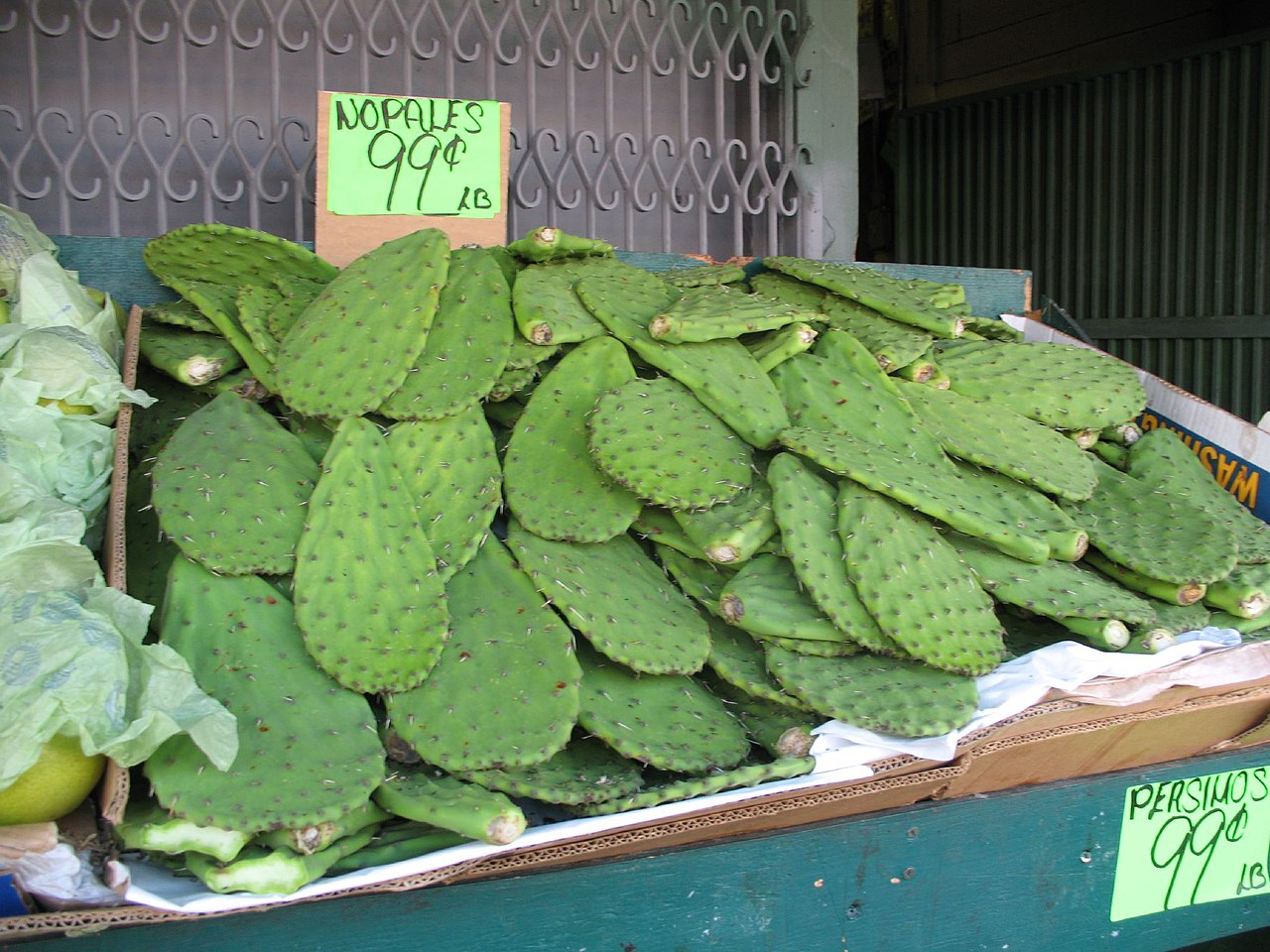
Prickly pears have many human uses. Several species, particularly Opuntia ficus-indica, are cultivated for their edible pads (sold as "nopales" in Mexican cuisine) and their fruits. They provide seasonal fruit, fodder in dry seasons, windbreaks and low-maintenance hedging. In some historical industries, scale insects that live on Opuntia (cochineal) were harvested for red dye. Opuntia also has roles in erosion control and as an ornamental plant in dry landscapes.
Management and conservation distinctions
While some Opuntia are valuable crops or landscape plants, other populations are invasive and difficult to eradicate because pads root readily and plants tolerate drought. Management options include targeted herbicides, manual removal with careful disposal of plant material, and, where appropriate, biological agents. Conversely, in parts of their native range Opuntia species are important components of local ecosystems and may be threatened by habitat loss or by introduced pests such as Cactoblastis where it has spread beyond intended areas. Understanding the diversity within Opuntia and balancing agricultural, ecological and cultural values is central to their management today.
Further reading
For general references on taxonomy, horticulture and invasive-species history, see resources on the genus Opuntia, the family Cactaceae and case studies of biological control and invasive plants in regions such as Australia. Practical guides typically cover safe handling (to avoid glochids), culinary preparation of pads and fruits, and local regulations about cultivation and eradication.
Questions and answers
Q: What is the name of the genus of cactus that is known as prickly pear?
A: The genus of cactus that is known as prickly pear is Opuntia.
Q: Where did the genus get its name from?
A: The genus was named after the Ancient Greek city of Opus.
Q: When were prickly pears originally imported into Australia?
A: Prickly pears were originally imported into Australia in the 18th century for gardens.
Q: How did they become a widespread invasive weed?
A: They quickly became a widespread invasive weed by changing 101,000 sq mi (260,000 km2) of farming land into an impenetrable green jungle of prickly pear, in places 20 ft (6.1 m) high.
Q: What was established to coordinate efforts with state governments to eradicate this weed?
A: In 1919, the Australian federal government established the Commonwealth Prickly Pear Board to coordinate efforts with state governments to eradicate this weed.
Q: What method was used when mechanical removal and poisonous chemicals failed?
A: When mechanical removal and poisonous chemicals failed, biological control was attempted.
Q: What organism from South America was introduced to reduce the population of prickly pears in Australia?
A: A moth called Cactoblastis cactorum from South America was introduced in 1925 and rapidly reduced the population of prickly pears in Australia.
Related articles
Author
AlegsaOnline.com Prickly pear (Opuntia): overview, biology, uses and invasive history Leandro Alegsa
URL: https://en.alegsaonline.com/art/79002
Sources
- books.google.com : CRC World Dictionary of Plant Names