
Hydraulics: principles, components, history and applications
Hydraulics is the engineering discipline that uses the mechanical behavior of liquids to transmit power and control machines. Covers principles, parts, history, and common uses.
Hydraulics is the branch of science and engineering concerned with the mechanical properties and practical use of liquids. In engineering practice it focuses on using liquid media—usually oils or water—to transmit force, control motion, and deliver power within machines and systems. The theoretical underpinnings come from fluid mechanics, while practical design relies on principles from both science and engineering.
Image gallery
5 Images
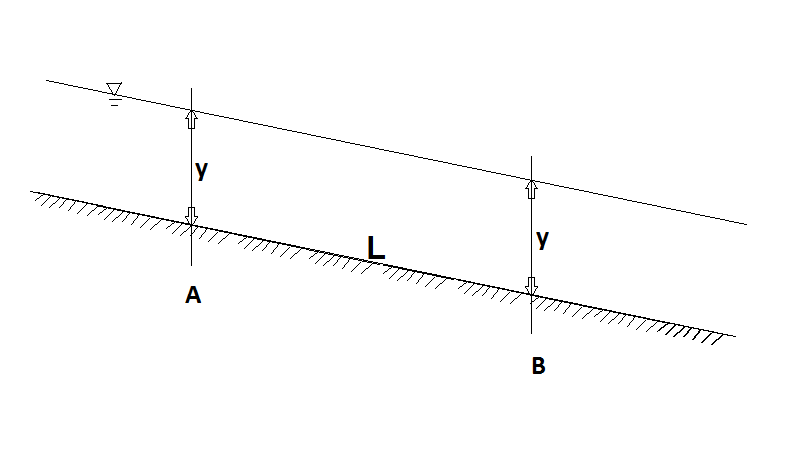


Basic principles and behaviour
Key ideas in hydraulics include the near-incompressibility of most liquids, Pascal's principle (pressure applied to a confined fluid is transmitted undiminished), the conservation of mass expressed by the continuity equation, and energy relations often described by Bernoulli's equation for idealized flows. These principles explain how modest input forces or flows can be converted into large forces or controlled motion through changes in area, pressure and mechanical advantage.
Common components
- Pumps: create flow and pressure, converting mechanical input into hydraulic energy.
- Actuators: cylinders and hydraulic motors that convert fluid energy back into linear or rotary motion.
- Valves and controls: direct, meter and regulate pressure and flow for precise operation.
- Reservoirs, filters and pipes: store fluid, remove contaminants and provide passage for flow.
History and notable figures
Early systematic work on hydraulics began in the Renaissance and scientific revolution. Experimenters and engineers built on observations of water and pressure; among early contributors was Benedetto Castelli, a student of Galileo. Later formalization of pressure transmission is often associated with Blaise Pascal, and modern hydraulic theory developed as part of broader advances in fluid mechanics and engineering practice.
Applications and examples
Hydraulic systems appear across industry and daily life. Typical examples include construction machinery (excavators, loaders), industrial presses, aircraft control actuators, automotive braking systems and steering, and manufacturing equipment. Designers choose hydraulic solutions when high force density, precise control, or compact power transmission is required. Many systems use hydraulic oil for lubrication and corrosion protection, though water-based systems are also used in some contexts (liquids other than oil).
Distinctions and practical considerations
Hydraulics differs from pneumatics in that it uses liquids rather than gases; liquids give higher force and stiffness but require leak control and careful fluid management. Important practical issues include efficiency, heat generation, maintenance of seals and filters, and environmental or safety concerns from leaks. Modern hydraulic practice combines theoretical analysis from fluid mechanics with materials science and control engineering to produce reliable, high-performance systems.
For further technical context and standards, engineers often consult specialized textbooks and technical resources in engineering publications and standards repositories.
Questions and answers
Q: What is hydraulics?
A: Hydraulics is a field of science and engineering that deals with the mechanical properties of liquids.
Q: Are there machines that work on hydraulic power?
A: Yes, there are many machines that work on hydraulic power.
Q: Who was one of the founders of modern hydraulics?
A: Benedetto Castelli, a student of Galileo Galilei, was one of the founders of modern hydraulics.
Q: What is the theoretical foundation for hydraulics?
A: Theoretical foundation for hydraulics is provided by fluid mechanics.
Q: What is the focus of hydraulics?
A: Hydraulics focuses on the engineering uses of fluid properties.
Q: How does hydraulics differ from fluid mechanics?
A: Hydraulics deals with the engineering applications of fluid mechanics while fluid mechanics provides the theoretical foundation for hydraulics.
Q: What is the importance of hydraulics in engineering?
A: Hydraulics plays a crucial role in many engineering applications and is used in various machines and systems that rely on the power of liquids.
Related articles
Author
AlegsaOnline.com Hydraulics: principles, components, history and applications Leandro Alegsa
URL: https://en.alegsaonline.com/art/46077