
Santa María del Naranco
9th-century Asturian pre-Romanesque building on Monte Naranco near Oviedo, originally a royal hall for King Ramiro I and later converted to a church; UNESCO World Heritage site.
Overview
Santa María del Naranco, known in Spanish as Iglesia de Santa María del Naranco, stands on the slopes of Monte Naranco above Oviedo in northern Spain. Constructed in 848, it was erected as a palace building associated with the Asturian court and the reign of King Ramiro I. Although not originally conceived as a church, it gained that function in the 13th century and is today celebrated as one of the finest survivors of early medieval architecture in the Iberian Peninsula.
Image gallery
10 Images





Architecture and principal features
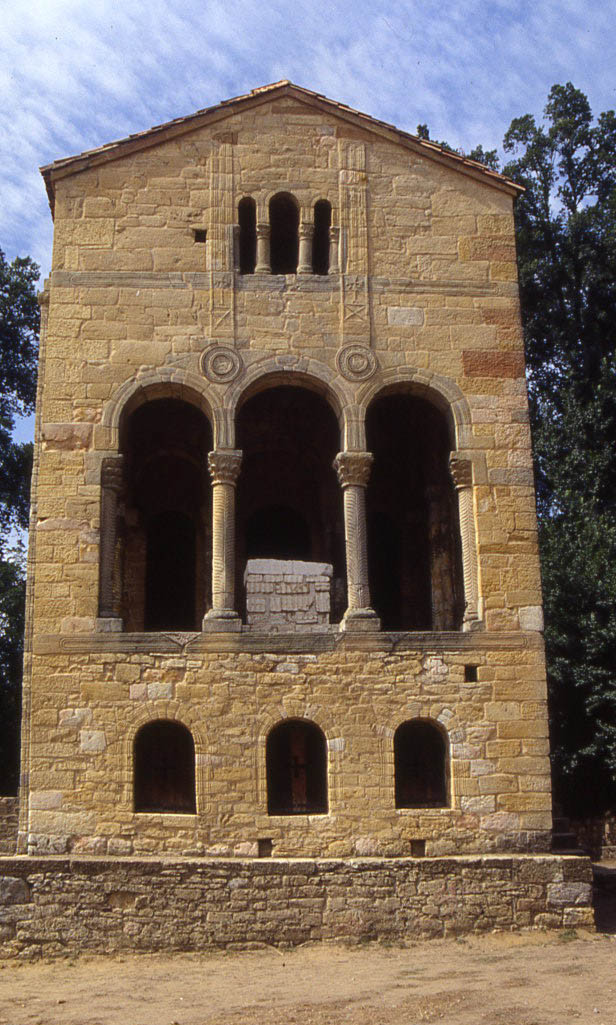
The monument is a compact two-storey stone structure with an elongated rectangular plan. The upper level contains a large vaulted hall historically linked to ceremonial and residential use. Decorative elements characteristic of the style—blind arcading, relief medallions, carved capitals with vegetal and animal motifs, and a rhythm of pilasters and arches—illustrate what experts call Asturian pre-Romanesque or pre-Romanesque architecture. The building’s proportions, use of vaulting and ornamental carving make it an important example of early medieval Iberian design.
History and transformation
Santa María del Naranco was commissioned in the mid-9th century as part of royal construction on Monte Naranco, serving secular and ceremonial roles. Over subsequent centuries the structure was adapted for Christian worship; its formal consecration as a church in the later medieval period altered internal fittings and status while leaving much of the original fabric intact. The persistence of the original layout allows modern visitors to appreciate both palace and ecclesiastical phases.
Significance and protection
Recognized for its historical and architectural value, the building was declared a national heritage monument (UNESCO lists it among the monuments inscribed as a World Heritage Site), and it also appears on registers such as the royal monument listings and national cultural inventories like the Bien de Interés Cultural. It was among the nominees in the 12 Treasures of Spain contest that highlighted notable Spanish landmarks.
Visiting and further context
Today Santa María del Naranco is accessible to the public and often visited together with other Asturian pre-Romanesque sites around Oviedo. Information about opening hours, guided tours and preservation work can be found through local cultural services and heritage organizations; many resources and studies treat the building as a key piece in understanding the early medieval Kingdom of Asturias and the continuity between royal, liturgical and architectural traditions of the region.
- Location: Monte Naranco, near Oviedo.
- Original purpose: royal palace for Ramiro I.
- Architectural style: Asturian pre-Romanesque.
- Heritage status: World Heritage Site (UNESCO) and national protection.
For introductory reading and official descriptions consult regional heritage guides and scholarly overviews that discuss the building in the context of Asturian art and early medieval Spain; many summaries and image archives are available online and in local museums and archives (Spanish name, medieval conversion, conservation reports).
Questions and answers
Q: What is Santa María del Naranco?
A: Santa María del Naranco is a Roman Catholic church in Oviedo, northern Spain.
Q: Who was it built for?
A: It was built in 848 as a royal palace for King Ramiro I of Asturias.
Q: When was it changed into a church?
A: It was changed into a church during the 13th century.
Q: What is the architectural style of Santa María del Naranco?
A: Santa María church is an example of Asturian pre-Romanesque architecture.
Q: Who declared it a World Heritage Site?
A: It was declared a World Heritage Site by UNESCO in 1985.
Q: When was it declared Bien de Interés Cultural?
A: It was declared Bien de Interés Cultural in 1885.
Q: Was it one of the 12 Treasures of Spain in 2007?
A: Yes, the Church of St Mary at Mount Naranco was one of 100 finalists for the 12 Treasures of Spain in 2007.
Related articles
Author
AlegsaOnline.com Santa María del Naranco Leandro Alegsa
URL: https://en.alegsaonline.com/art/87143
Sources
- books.google.com : Book VII: Spanish and Portugal
- books.google.com : Actas del III Congreso de Arqueología Medieval Española