
Sarvestan Palace
A Sassanid-era monument near Sarvestan, Iran, built in the 5th century as a royal leisure pavilion; notable for its vaulted hall, domed architecture and archaeological layers showing millennia of occupation.
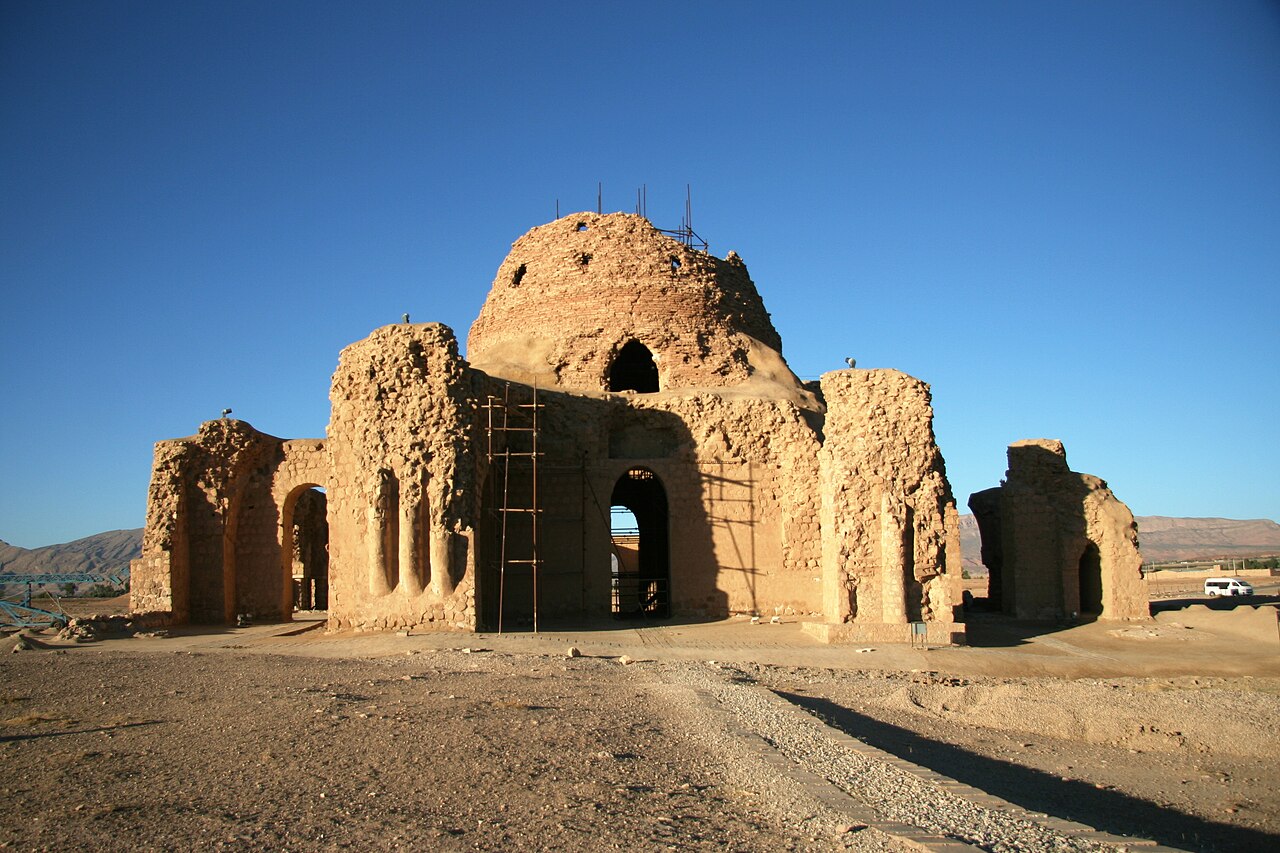
The Sarvestan Palace is a surviving Sassanid-era monument located near the modern town of Sarvestan in Fars Province, Iran. Erected in the 5th century CE during the reign traditionally associated with Bahram V (often called Bahram Gur), the complex is commonly interpreted as a royal pavilion, hunting lodge or pleasure manor rather than a continuous residential palace. Its remains illustrate important aspects of late antique Persian architecture and the ceremonial use of domestic buildings by Sassanid elites.
Image gallery
10 Images




Architectural characteristics
The structure is built primarily of fired brick and mortar and was formerly coated with plaster. Its most distinctive element is a central vaulted chamber topped by a dome or semi-dome, approached by axial vaulted passages that give the plan a strong sense of symmetry. Surviving wall sections show arches, niches and the traces of stucco decoration. The design emphasizes an enclosed, monumental interior space suited to formal gatherings and seasonal residence rather than dense urban habitation.
History and context
Constructed in the Sassanid period (224–651 CE), the building is usually dated to the early to mid-5th century and is linked in local tradition to Bahram Gur. The Sassanid era was a time of architectural experimentation in Persia, with innovations in vaulting and dome construction that later influenced Islamic architecture in the region. Excavations at the site have also revealed much older layers of human activity, indicating the area was occupied intermittently for several millennia before the palace's construction.
Archaeology and discoveries
Archaeological work at Sarvestan has produced ceramic fragments, foundation remains and evidence that the site sat within a long-occupied landscape. Some investigations suggested human presence on the plateau dating back thousands of years before the Sassanids. Conservation and study efforts have focused on stabilizing the masonry and documenting decorative details that survive under layers of plaster.
Significance and access
Scholars value Sarvestan as a clear example of Sassanid secular architecture outside major urban centers, offering insights into royal leisure practices, regional building techniques and the development of vaulted interiors. Today the ruins are an archaeological site and visitor attraction; those seeking more information can consult published studies and local conservation resources. For an introduction to the site and further reading see general overview and technical reports at archaeological resources.
Notable distinctions
- Represents Sassanid non-religious monumental architecture rather than a temple or fort.
- Shows early use of large vaulted and domed interior spaces that influenced later regional architecture.
- Located on a site with evidence of human activity extending far earlier than the Sassanid phase.
As an archaeological and cultural landmark, Sarvestan Palace continues to be studied for what it reveals about Sassanid ceremonial life, regional administration and the technical achievements of late antique Persia.
Related articles
Author
AlegsaOnline.com Sarvestan Palace Leandro Alegsa
URL: https://en.alegsaonline.com/art/87401
Sources
- payvand.com : "Palace of Sarvestan"