
Selimiye Mosque — Ottoman imperial mosque in Edirne
A major 16th-century Ottoman mosque in Edirne, designed by Mimar Sinan for Sultan Selim II, famed for its large central dome, four minarets and status as an architectural masterpiece.
Selimiye Mosque (Selimiye Camii) is a landmark Ottoman imperial mosque in the city of Edirne, in European Turkey. Commissioned by Sultan Selim II and executed by the chief architect Mimar Sinan, it was built between 1569 and 1575. The mosque is celebrated for a boldly unified interior under a single large dome and for an exterior marked by four tall minarets, a composition that signals both spiritual and imperial ambitions.
Image gallery
10 Images


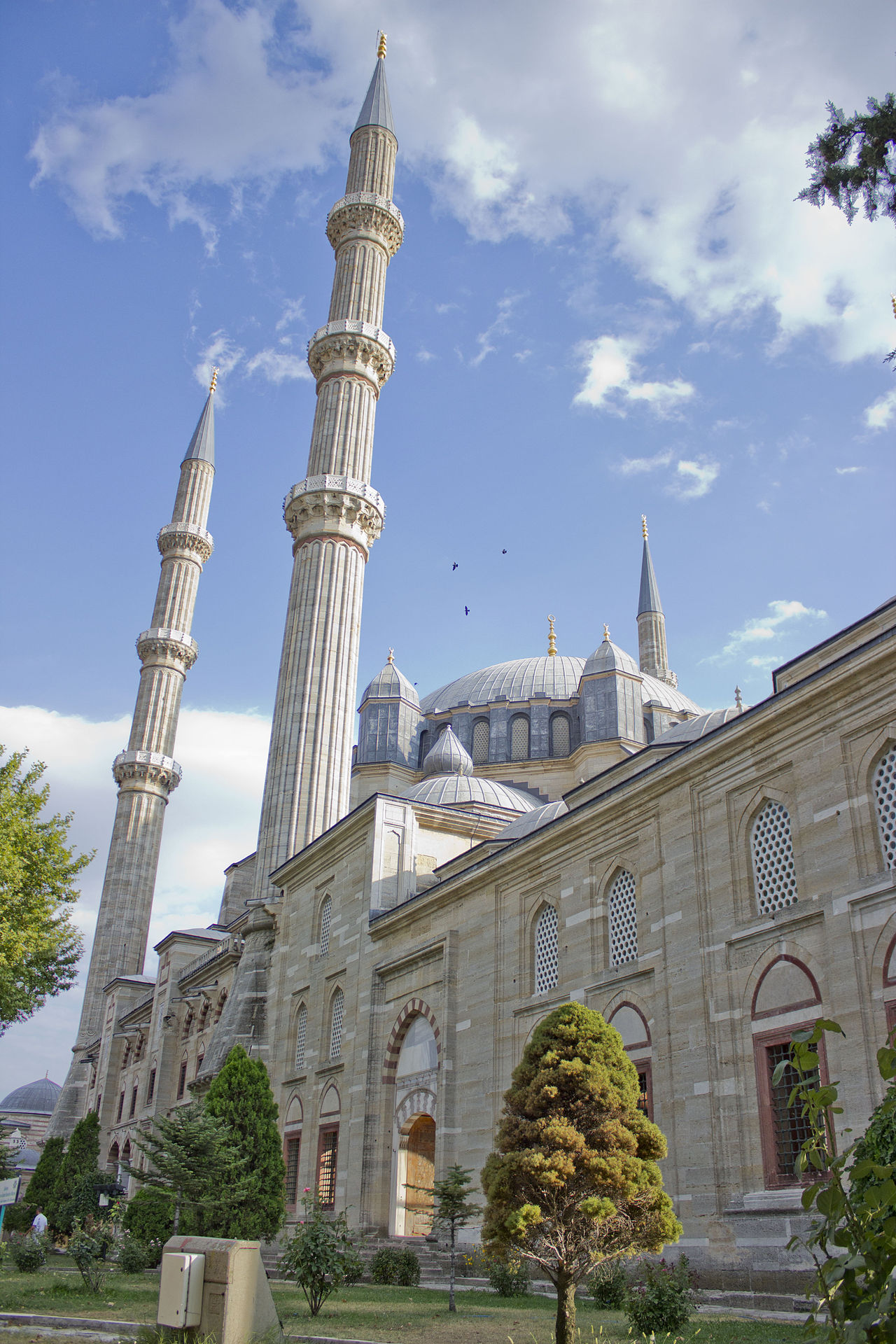


Architecture and features
The prayer hall is dominated by a wide, unobstructed dome that creates a sense of spatial unity and abundant natural light. The four slender, pencil-shaped minarets, each with multiple balconies, frame the corners of the complex and identify the building as an imperial foundation. Interior finishes include Iznik-style tilework, carved stone, monumental calligraphy and carefully arranged openings that modulate daylight.
- Single large dome spanning the main prayer space, producing an expansive, column-free interior.
- Four minarets with multiple balconies, indicative of imperial patronage.
- Decorative program combining tiles, stone carving and calligraphic panels.
History and construction
Built in the late 16th century, the Selimiye Mosque was one of the culminating projects of the classical Ottoman period. Mimar Sinan regarded it as a crowning achievement of his long career, synthesizing structural ingenuity with formal harmony. The complex reflects the resources and priorities of the Ottoman court during the reign of Selim II.
Complex and functions
The mosque belongs to a larger külliye (religious and social complex) that historically included educational and charitable institutions such as a madrasah, a library, an imaret (soup kitchen) and a covered market or arasta. These ancillary buildings supported religious learning, welfare and the local economy in Edirne.
Significance, conservation and visiting
Regarded by many scholars as one of the high points of classical Ottoman architecture, the Selimiye Mosque has been the subject of study for its combination of engineering, light and ornament. It is protected as a cultural heritage site and has been included on international conservation lists in recognition of its outstanding universal value. The building continues to serve as an active place of worship and a destination for visitors who come to appreciate its spatial design and historical context. For official information and visitor guidance consult municipal and national cultural resources in Edirne and Turkey, or specialist publications on Mimar Sinan and Ottoman architecture.
Questions and answers
Q: What is the Selimiye Mosque?
A: The Selimiye Mosque is an Ottoman imperial mosque located in Edirne, Turkey.
Q: Who commissioned the building of the Selimiye Mosque?
A: The Selimiye Mosque was commissioned by Sultan Selim II.
Q: When was the Selimiye Mosque built?
A: The Selimiye Mosque was built between 1569 and 1575.
Q: Who was the architect of the Selimiye Mosque?
A: The Selimiye Mosque was built by the architect Mimar Sinan.
Q: What is the historical significance of the Selimiye Mosque?
A: The Selimiye Mosque is a symbol of Ottoman architecture and is considered one of the greatest examples of Islamic art and architecture.
Q: Where is the Selimiye Mosque located?
A: The Selimiye Mosque is located in Edirne, Turkey.
Q: What is the architectural style of the Selimiye Mosque?
A: The Selimiye Mosque is built in the Ottoman architectural style.
Related articles
Author
AlegsaOnline.com Selimiye Mosque — Ottoman imperial mosque in Edirne Leandro Alegsa
URL: https://en.alegsaonline.com/art/88693