
Santiago de Compostela Cathedral
Medieval cathedral in Galicia, Spain, reputed burial site of Saint James; Romanesque core with Gothic and Baroque additions, endpoint of the Camino de Santiago and a UNESCO World Heritage landmark.
The cathedral (Galician: Catedral de Santiago de Compostela) stands at the heart of the old city in Galicia, Spain. It forms the spiritual and architectural center of a designated World Heritage Site, the pilgrimage city of Santiago de Compostela. Tradition holds that the tomb of Saint James the Great, one of the apostles of Jesus, lies within the building, and that belief has shaped the cathedral's role and fabric since the Middle Ages.
Image gallery
10 Images


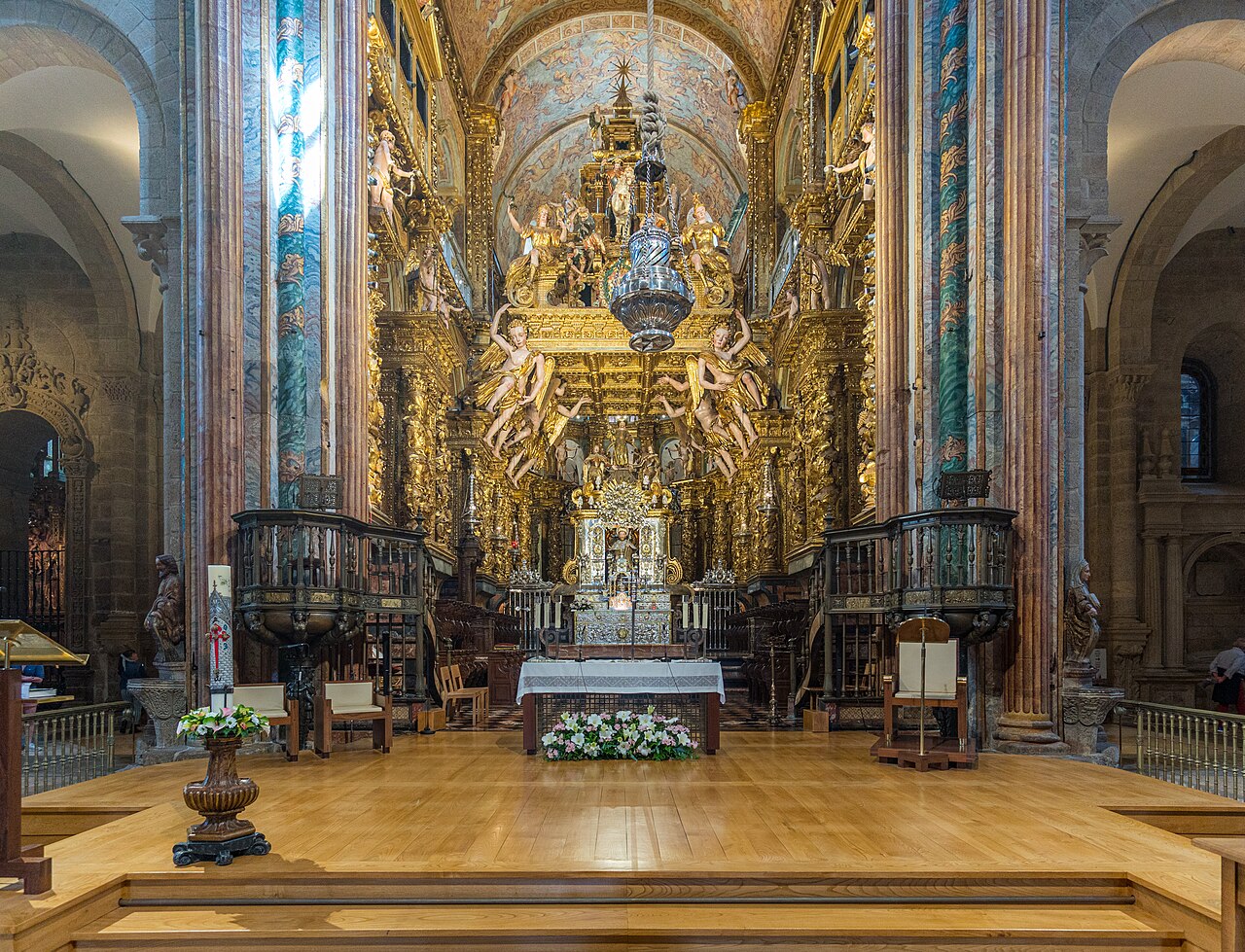


Architecture and main components
The cathedral’s visible form reflects several building campaigns. Its structural core is largely Romanesque, characterized by heavy masonry, rounded arches and a clear, longitudinal plan. Later centuries added vertical Gothic elements and ornate Baroque façades and interiors. Visitors encounter a mixture of styles rather than a single unified design.
- Principal façade: the grand front that greets the main plaza and frames ceremonial entrances.
- Pórtico da Gloria: an important sculptural ensemble that marks the entrance to the cathedral’s sacred core.
- Ambulatory and chapels: an arrangement that accommodates relic veneration and processions.
- Towers and cloister: functional and symbolic elements added over successive phases.
Origins and development
The site developed from an early medieval shrine into one of Western Christianity’s principal pilgrimage destinations. Over centuries, the need to house pilgrims, relics and liturgical ceremonies drove enlargement and embellishment. Local and foreign patrons, successive architects and master craftsmen contributed to the cathedral’s layered appearance, so that Romanesque proportions coexist with Gothic vaulting and Baroque decorative schemes.
Pilgrimage, ritual and cultural importance
The cathedral marks the traditional terminus of the Camino de Santiago pilgrimage routes that cross Europe. Pilgrims have long arrived to pray at the shrine and to attend services. Liturgical life remains active: the building functions as both a historical monument and a living cathedral with regular worship, major feast-day observances and ceremonial events that draw the faithful and tourists alike.
Notable features and modern role
Among the cathedral’s well-known highlights are the celebrated Pórtico da Gloria sculpture program and the dramatic swinging censer called the botafumeiro, used on special occasions. The complex is subject to ongoing conservation to reconcile heavy visitor use, devotional practice and the needs of a functioning church. As part of a protected historic ensemble, the cathedral continues to influence religious practice, art history and cultural tourism in the region.
For further study and visitor information consult local guides and scholarly sources; the building is a focal point for history, architecture and pilgrimage studies and remains a living symbol of medieval faith and modern heritage management.
See also: Catedral de Santiago de Compostela, Galicia, Spain, World Heritage, Santiago de Compostela, Saint James the Great, apostles, Jesus, Romanesque, Baroque.
Questions and answers
Q: Where is the Santiago de Compostela Cathedral located?
A: The Santiago de Compostela Cathedral is located in Galicia, Spain.
Q: What is the World Heritage Site of Santiago de Compostela?
A: The World Heritage Site of Santiago de Compostela is the location where the Santiago de Compostela Cathedral is situated.
Q: Who is believed to be buried in the Santiago de Compostela Cathedral?
A: Saint James the Great, one of the apostles of Jesus, is believed to be buried in the Santiago de Compostela Cathedral.
Q: What type of structure is the Santiago de Compostela Cathedral?
A: The Santiago de Compostela Cathedral is a Romanesque structure with later Gothic and Baroque additions.
Q: Why is the Santiago de Compostela Cathedral notable?
A: The Santiago de Compostela Cathedral is notable for being the burial place of Saint James the Great.
Q: Is the Santiago de Compostela Cathedral a World Heritage Site?
A: Yes, the Santiago de Compostela Cathedral is part of the World Heritage Site of Santiago de Compostela.
Q: What are the architectural styles incorporated in the Santiago de Compostela Cathedral?
A: The Santiago de Compostela Cathedral is primarily a Romanesque structure with later Gothic and Baroque additions.
Related articles
Author
AlegsaOnline.com Santiago de Compostela Cathedral Leandro Alegsa
URL: https://en.alegsaonline.com/art/87185
Sources
- whc.unesco.org : "Santiago de Compostela (Old Town)"
- mcu.es : "Catedral Igrexa Catedral Metropolitana"