
Ryūjin: Japanese dragon god of the sea
Ryūjin (also Owatatsumi) is the dragon deity of the sea in Japanese mythology. He dwells in the undersea palace Ryūgū-jō, controls tides with magical jewels, appears in many folktales, and links to imperial origin myths.
Ryūjin (Japanese 龍神), sometimes called Owatatsumi or Rinjin, is the dragon deity associated with the sea in Japanese mythology. Portrayed as a mighty serpent-like dragon capable of taking human form, Ryūjin embodies the ocean's power, danger and providence. Traditional narratives describe him as living beneath the waves, interacting with fishermen, rulers and heroes, granting favors or meting out punishments according to respect shown to the sea.
Image gallery
6 Images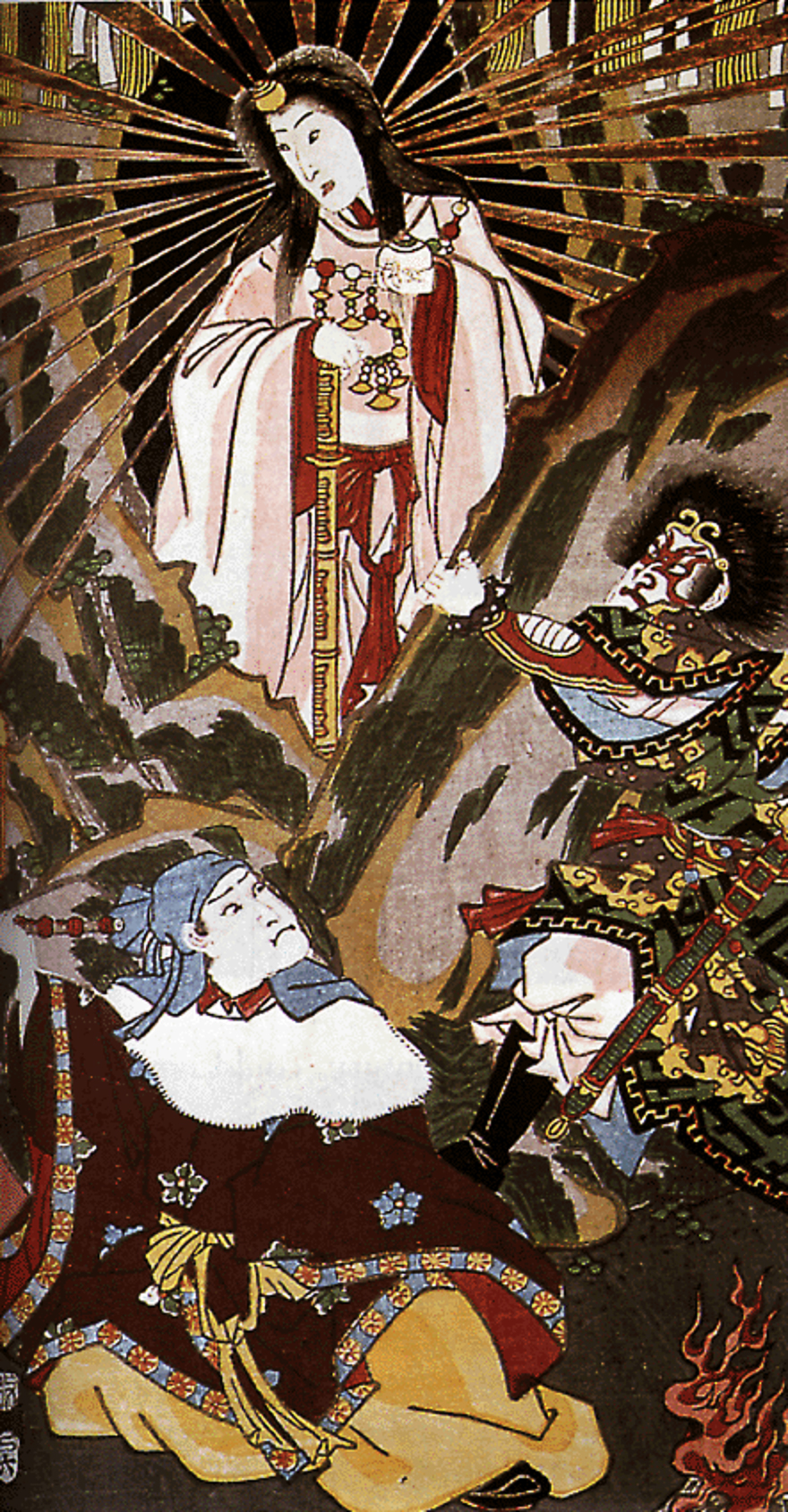


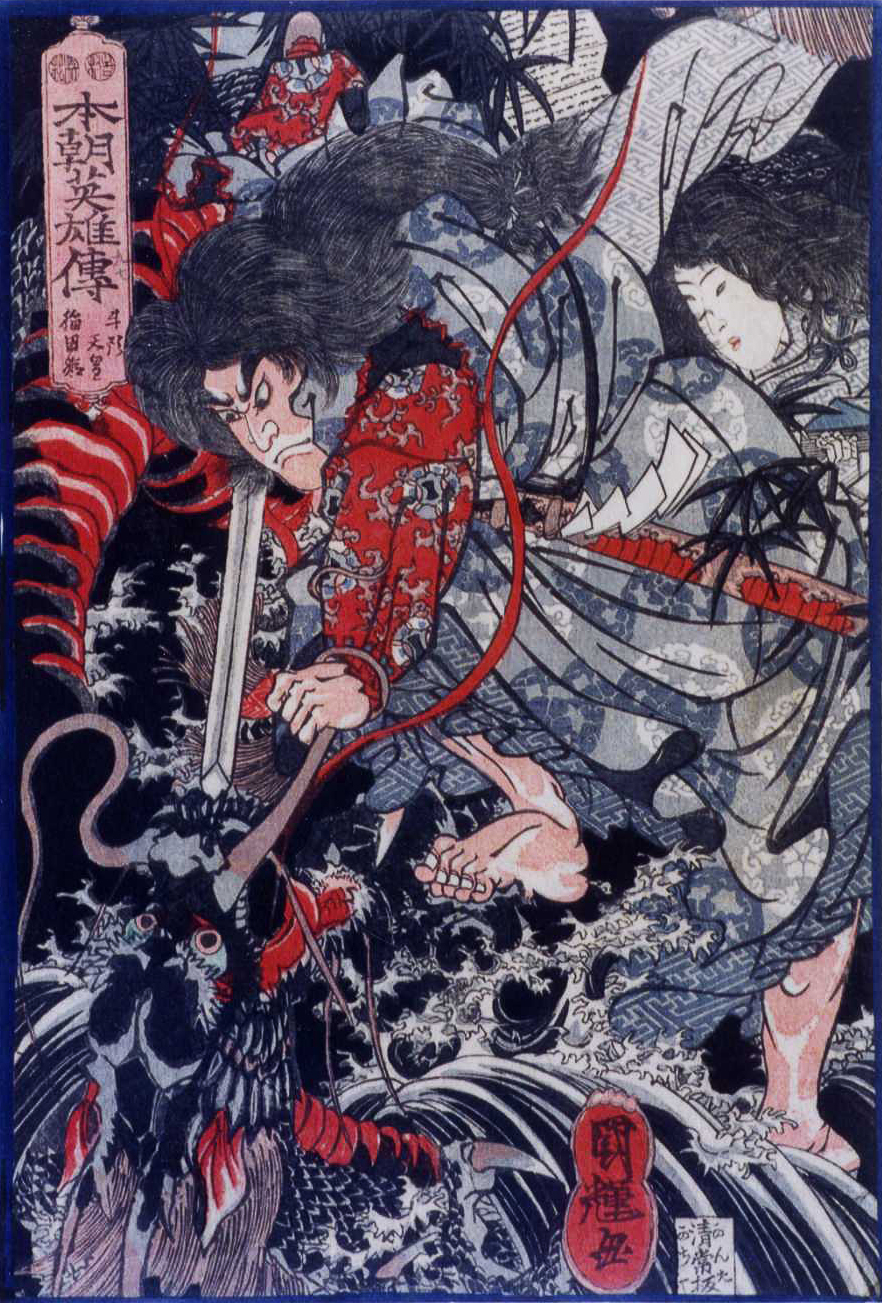
Origins and name
The name Ryūjin combines the characters for "dragon" and "god" and reflects a broad East Asian tradition of dragon deities connected to water. In some regional traditions he is identified with the older ocean deity Owatatsumi. Because myths and local cults vary, accounts of Ryūjin mix elements from oral folktale, court literature and shrine practices rather than a single authoritative scripture.
Appearance and attributes
Ryūjin is usually imagined as a huge dragon with scales, a flowing mane and a large mouth, but many stories emphasize his ability to assume human form to test or converse with mortals. He is associated with specific sea creatures—sea turtles, fish and jellyfish are often portrayed as his messengers or servants—and with magical objects said to control the tides, commonly referred to in English as "tide jewels." These motifs highlight his role as a master of maritime forces important to island communities.
Ryūgū-jō and the tide jewels
Ryūgū-jō is the legendary palace beneath the sea where Ryūjin rules; it is described in popular accounts as built of red and white coral and filled with wonders. In some tales Ryūjin owns jewels that can summon or restrain the tides, a device that appears in several narratives to explain miraculous rescues or to teach lessons about respect for nature's power. The imagery of a luminous undersea palace has been influential in art and storytelling.
Major myths
Ryūjin appears in multiple well-known stories. The tale of Urashima Tarō tells of a fisherman who visits Ryūgū-jō and experiences strange temporal effects on returning to land. Another set of myths links Ryūjin to the story of Hoori, a hunter prince, and Otohime, a sea deity often named as Ryūjin's daughter: their marriage and offspring are woven into genealogical tales. A popular folktale explains why the jellyfish has no bones: after a failed errand for Ryūjin the creature is beaten until its bones are broken, a narrative used to teach cunning, obedience or the consequences of failure depending on the version.
Genealogical and political role
In some traditional genealogies, Otohime and Hoori are ancestors of early imperial figures, and Ryūjin is thereby placed within a mythic ancestry that connects the ruling house to divine forces. Such accounts functioned historically to sanctify lineage and to incorporate natural forces into a broader cosmology, though the degree and interpretation of these links vary by source and era.
Worship, shrines and folk practice
Ryūjin has been venerated in coastal communities where safe passage and plentiful catches were central concerns. Shrines and local rites often invoked sea deities for protection from storms and for successful fishing. Festivals, carvings on boats or nets, and ritual offerings reflect the practical religious functions of maritime deities in everyday life rather than centralized dogma.
Artistic and cultural legacy
Ryūjin appears frequently in visual art, theater and literature. Woodblock prints, shrine carvings and narrative arts have perpetuated the image of the dragon god and his palace, while modern media sometimes adapt his figure for literature, film and popular culture. Comparative legends show similarities to other Asian dragon traditions, yet Ryūjin is distinctively tied to Japan's island seascape.
Comparative perspective
While Western dragons are often associated with fire and hoarded treasure, East Asian dragon deities are typically linked to water, weather and fertility; Ryūjin exemplifies this difference as a protector and regulator of the sea. Folktales that feature tests, bargains and transformational visits to the undersea realm are part of a wider motif shared across maritime cultures.
Further notes
Accounts of Ryūjin combine myth, folklore and local tradition, and versions of the same tale may differ in detail. Scholars treat these narratives as part of a living oral and literary tradition that informed social practices, regional identities and artistic expression rather than as a single canonical scripture.
- Ryūjin name and characters
- role as sea god
- association with the ocean
- place in Japanese mythology
- dragon form
- symbolism
- ocean power
- shapechanging
- human appearances
- Ryūgū-jō palace
- red and white coral
- control of tides
- tide jewels
- sea turtles as attendants
- fish and servants
- jellyfish story
- Hoori the hunter prince
- Emperor Jimmu connection
- imperial mythology
- ancestral myths
- imperial dynasty links
- recorded legends
- jellyfish bones motif
- monkey encounter
- variants of the tale
Questions and answers
Q: Who is Ryūjin?
A: Ryūjin is the god of the sea in Japanese mythology. He was a dragon, a symbol of the power of the ocean, had a very big mouth, and could transform into human shape.
Q: Where did Ryūjin live?
A: Ryūjin lived in Ryūgū-jō, his palace under the sea built out of red and white coral.
Q: What were Ryūjin's servants?
A: Sea turtles, fish and jellyfish were Ryūjin's servants.
Q: Who was Otohime?
A: Otohime was the beautiful goddess who was the daughter of Ryūjin and married hunter prince Hoori.
Q: How is Emperor Jimmu related to Otohime and Hoori?
A: Emperor Jimmu is said to have been a grandson of Otohime and Hoori's which means that he is believed to be one of the ancestors of the Japanese imperial dynasty.
Q: What is the legend about how jellyfish lost its bones?
A: The legend tells that once, Ryūjin wanted to eat monkey's heart, so he sent jellyfish to get him one but when it came back without it due to being tricked by monkey,Ryūjin became so angry that he beat it until its bones were all broken.
Related articles
Author
AlegsaOnline.com Ryūjin: Japanese dragon god of the sea Leandro Alegsa
URL: https://en.alegsaonline.com/art/84995