
Reinheitsgebot: the German beer purity regulation
Overview of the Reinheitsgebot, its rules, history from 1516 Bavaria, subsequent legal changes, effects on brewing practice and culture, and its modern legacy in Germany and beyond.
Overview
The Reinheitsgebot is the historical beer purity regulation that originated in Bavaria in 1516. Its best-known rule limited beer ingredients to a short list, and it served both public-health and economic purposes in the late medieval and early modern period. Over centuries the term has come to represent a brewing ideal as much as a set of legal rules: many brewers advertise their products as "Reinheitsgebot-compliant" to signal a traditional, simple ingredient list and a particular taste profile.
Image gallery
4 Images
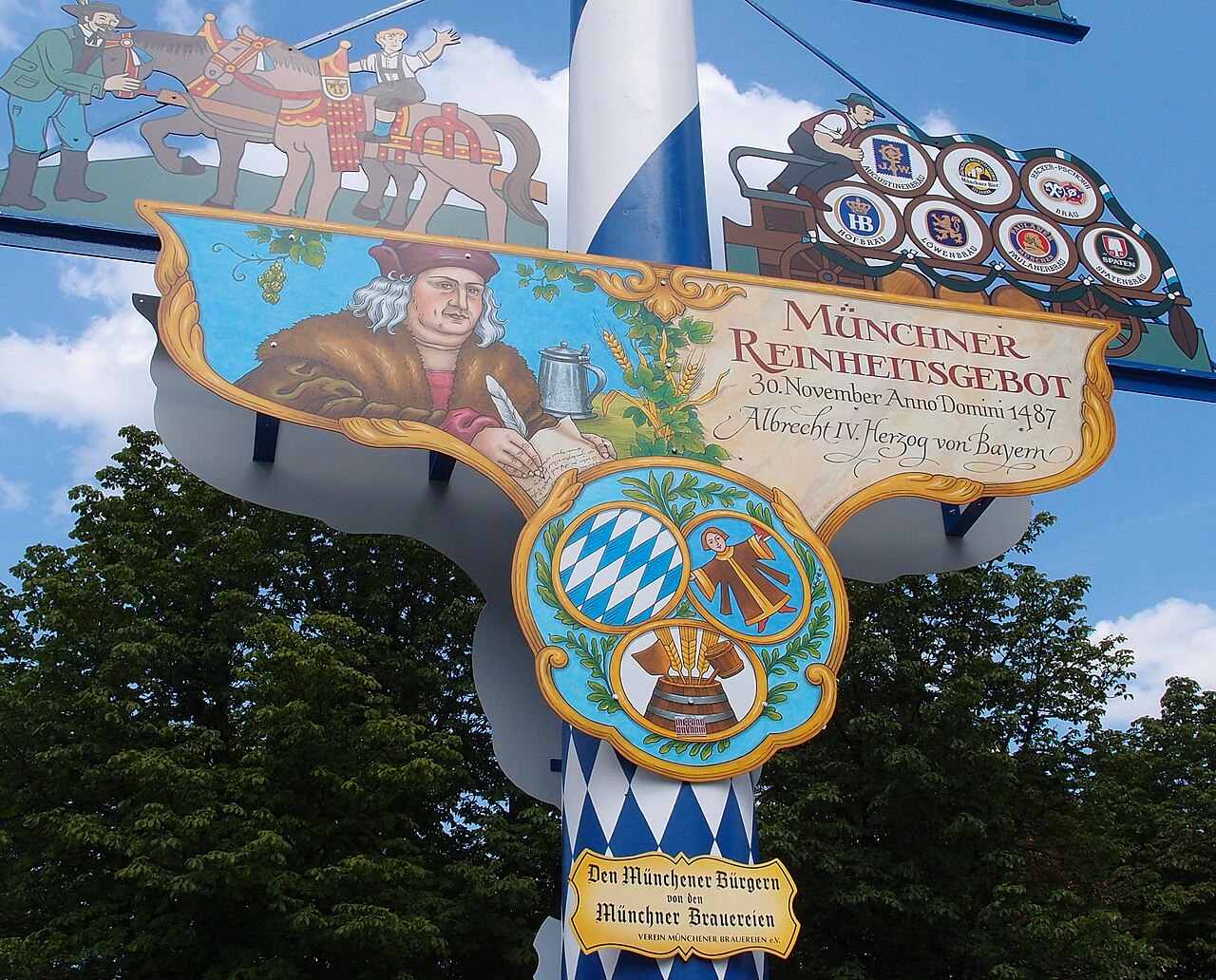


Key provisions and practical meaning
At its core the original regulation specified which raw materials were permitted in beer and set pricing standards used for taxation and market control. The ingredient limitation traditionally allowed only water, barley, and hops. The exclusion of other plants, spices, or sugars was intended to prevent adulteration, to protect supplies of grain for bread, and to standardize quality. Because the role of yeast was not scientifically understood in the early 16th century, it was not mentioned explicitly; brewers relied on re-using fermentation sediments to begin new batches.
Historical development and context
The law was enacted in Ingolstadt in the Duchy of Bavaria and later influenced brewing rules throughout the German-speaking lands. In medieval Europe, a variety of preservation and flavoring methods were used: hops became widely preferred for their preservative and bittering qualities, while earlier or regional recipes sometimes used gruit mixtures (herbs and spices), nettles, or other botanicals. Punishments for violating the purity rules were severe in some places—confiscation of beer or fines—and the regulation played a role in controlling both quality and food supplies.
Science, reform, and modern legal status
Advances in microbiology and brewing science in the 19th century clarified the role of yeast in fermentation. As brewing knowledge and international trade expanded, national and European legal frameworks evolved: the original 1516 ordinance no longer functions as a live statute in its original form. It was superseded by later German beer laws and regulatory adjustments that reflect modern scientific understanding and trade rules, while the historic concept continues to influence labeling and cultural identity.
Uses, cultural importance and notable distinctions
The Reinheitsgebot helped shape what many people think of as "German" beer: clear lagers and beers brewed from barley and hops with no adjuncts. However, important traditional beer styles—most notably wheat beers (Weißbier) and many top-fermented ales—do not fit the strictest historical definition, and legal rules were relaxed over time to accommodate such styles and scientific realities. Brewers in other countries, for instance many Belgian breweries, have long used additional ingredients such as sugars, spices, and different malts to create distinctive flavors, demonstrating that strong traditions of quality and complexity exist outside the Reinheitsgebot framework.
Legacy and contemporary practice
Today the Reinheitsgebot lives on largely as a cultural and marketing symbol. Many German breweries and consumers regard it as an emblem of tradition and craftsmanship, while critics argue it can be used to exclude innovative or international brewing techniques. Whether treated as binding law, heritage, or branding, the Reinheitsgebot remains a central reference point in discussions about beer ingredients, authenticity, and national food culture.
Further reading and resources
- Reinheitsgebot overview
- Purity rules and beer ingredients
- Ingolstadt and the origin of the law
- Bavaria's brewing history
- German brewing traditions
- Role of water in brewing
- Barley and malt
- Hops: flavor and preservation
- Historical measures and prices
- Changes to German beer law
- Yeast and fermentation
- Microbiology and fermentation history
- How fermentation works
- Brewing practice and sediment reuse
- Hops as preservative
- Medieval preservative additives
- Medieval brewing methods
- Alternative herbs in brewing
- Botanical relations of brewing plants
- Belgian brewing traditions
Related articles
Author
AlegsaOnline.com Reinheitsgebot: the German beer purity regulation Leandro Alegsa
URL: https://en.alegsaonline.com/art/81982
Sources
- jura.uni-sb.de : Vorläufiges deutsches Biergesetz Provisional German Beer Law