
Hops (Humulus lupulus): Characteristics, Cultivation, Uses, and History
Hops are the cone-shaped female flowers of Humulus plants, prized for bittering, flavor and aroma in beer. This article covers their botany, cultivation, processing, historical use, and other applications.
Hops are the dried strobiles (commonly called "cones") of perennial climbing plants in the genus Humulus. Most commercial brewing hops come from Humulus lupulus and are cultivated for compounds that influence aroma, flavor and preservation. In raw form they appear as small, papery, green cones composed of overlapping bracts and lupulin glands; the glands contain the resins and essential oils important in brewing.
Image gallery
10 Images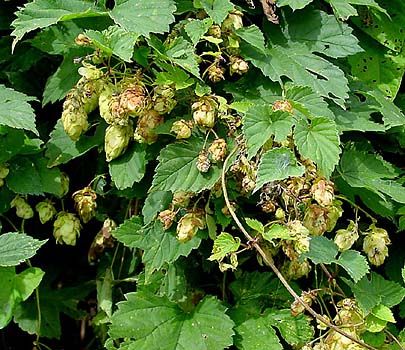


Botanical features and chemistry
Structurally, a hop cone contains bracts and bracteoles that enclose lupulin powder. Lupulin hosts bittering acids (commonly called alpha and beta acids), essential oils that give floral, citrus or herbal notes, and polyphenols. The balance of bitter resins and volatile oils determines whether a particular hop variety is used primarily for bittering, for aroma, or as a dual-purpose hop.
Cultivation and processing
Hops are vigorous climbers trained on trellis systems and thrive in temperate climates with long daylight seasons. After harvest, cones are dried to stabilize the chemistry, then marketed whole, as pellets, or as processed extracts. Drying and storage conditions greatly affect aroma retention, so commercial producers take care to minimize heat and oxygen exposure.
History and geographic spread
Wild hops have long been known in Eurasia; their regular use in European brewing developed over centuries and became widespread in the medieval and early modern periods. While some ancient sources refer to bittering herbs more generally, the consistent, recorded addition of hops to beer is better documented from the Middle Ages onward. Modern hop agriculture has concentrated in regions with suitable soils and climate.
Uses in brewing and beyond
In brewing, hops serve three main roles: bittering to balance malt sweetness, flavoring during the boil, and aroma when added late or during fermentation (dry hopping). Different varieties are chosen to impart citrus, pine, floral, spice or earthy character. Hops also have minor antimicrobial and antioxidant effects that historically helped beer preservation. Outside brewing, hops appear in herbal remedies, flavorings, and experimental culinary uses.
Varieties and notable facts
- Hop varieties are often categorized as bittering (high alpha acids), aroma (rich in volatile oils), or dual-purpose.
- Brewers adjust the timing of hop additions to extract desired bitterness or preserve delicate aromas.
- Interest in hop breeding focuses on disease resistance, yield, and novel aromatic profiles.
For a concise botanical reference see the genus entry at Humulus, for brewing context see general resources on beer, and for historical mentions consult primary historic studies and early period sources.
Related articles
Author
AlegsaOnline.com Hops (Humulus lupulus): Characteristics, Cultivation, Uses, and History Leandro Alegsa
URL: https://en.alegsaonline.com/art/45081
Sources
- home.earthlink.net : home.earthlink.net