
Republic of Taiwan (1895): short-lived polity proclaimed on Taiwan after the Sino–Japanese War
Short-lived 1895 polity proclaimed on Taiwan after the Treaty of Shimonoseki; covers its declaration, leadership, administration, military defeat and historical legacy.
Overview
The Republic of Taiwan was a short-lived republic proclaimed on the island of Taiwan in 1895 as local leaders attempted to resist a transfer of sovereignty. Contemporary accounts and later summaries often refer to this entity simply as the Republic of Taiwan or the Republic of Formosa; it is also referenced in some sources as the Formosan Republic (short-lived republic). In Chinese it appears as 台湾民主国 (simplified), 臺灣民主國 (traditional) and in pinyin as Táiwān Mínzhǔguó. The proclamation was a reaction to diplomatic and military developments on the mainland and in the region.
Image gallery
6 Images



Background and international context
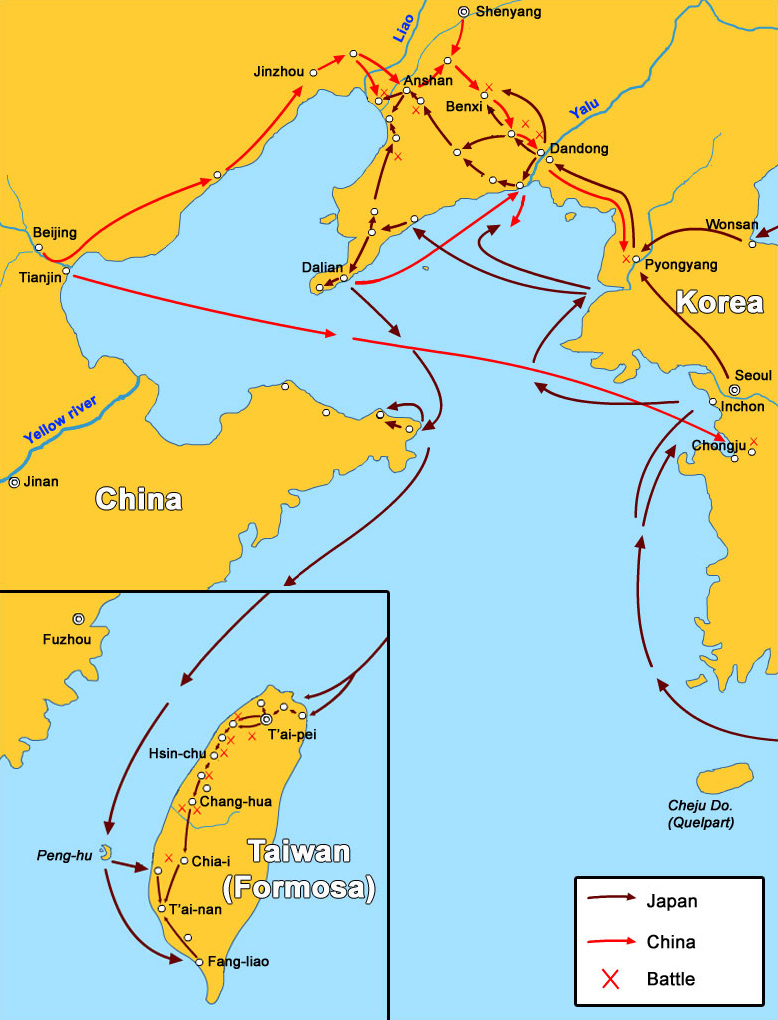
The immediate cause for the republic’s proclamation was the settlement that ended the 1894–1895 war between the Qing Empire and the Empire of Japan. Under the Treaty of Shimonoseki (Treaty of Shimonoseki) the Qing Dynasty (Qing) agreed to cede Taiwan to the Empire of Japan (Japan). Local officials and civic leaders on the island, unwilling to submit immediately to Japanese rule, organized a civilian-led government; the island of Taiwan thus became the scene of a brief experiment in autonomous administration.
Proclamation and early actions
Leaders on Taiwan issued a declaration of independence and attempted to secure international recognition and diplomatic attention. A document dated 24 May was circulated to foreign representatives on the island (24 May), and copies of the formal statement or declaration were sent to consulates, legations and other officials (embassies) in the hope of winning sympathy or delay. An independence ceremony was held publicly to proclaim the new government (independence ceremony), and the administrators sought to demonstrate the trappings of sovereignty.
Leadership and administration
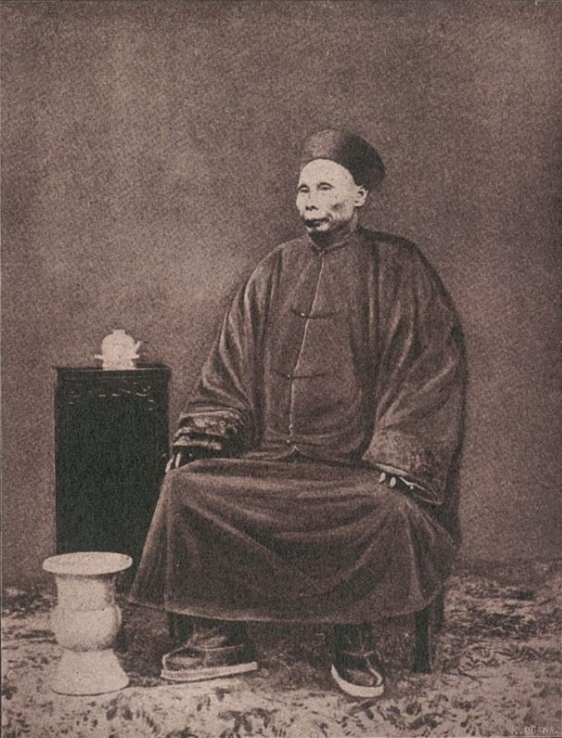
The provisional government named a sequence of senior officials in quick succession. The departing Qing governor briefly served as head of the new administration; Tang Ching-sung is commonly listed as the first president of the short-lived regime (Tang Ching-sung). He was soon replaced by other leaders drawn from military and local elite circles. Administratively the republic attempted to manage public order, raise local militia forces and issue symbols of statehood such as postage and currency. The production of provisional postage stamps is well documented (stamps), and paper banknotes were also printed in limited numbers; surviving examples are uncommon and of interest to collectors and archivists.
Military resistance and collapse
Armed resistance to Japanese forces unfolded in a number of engagements across the island. Local militias, remnants of Qing units and irregular bands mounted defenses, but they faced an expeditionary force prepared by Japan following its victory in the war. Despite some initial local successes in irregular fighting, the better-equipped and organized Japanese units advanced and captured major coastal towns and administrative centers. The republic’s organized resistance effectively collapsed within months; many officials and officers left the island, and by October 1895 Japanese control had been established over most of Taiwan.
Historical interpretation and significance
Historians debate how to characterize the Republic of Taiwan. Some writers have described it as one of the earliest republican experiments in East Asia (early republic claim), while others note earlier formations such as the Lanfang Republic in Borneo (Lanfang) to qualify that view. Scholarly commentary (historians) emphasizes that the 1895 polity was simultaneously a local resistance effort and a symbolic assertion of autonomy in a moment of imperial transition. Although its leaders at the time professed loyalty to the Qing state in cultural and legal terms, they also adopted republican vocabulary in order to marshal support and present a new civic framework.
Material legacy and remembrance
Material traces of the republic — printed proclamations, the provisional notes and the stamps — survive in museum and private collections and are studied by numismatists, philatelists and historians. The brief episode is sometimes cited in later debates in Taiwan about identity, sovereignty and historical precedent; modern movements that advocate independence generally do not claim direct institutional continuity with the 1895 government, and scholars caution against reading the short-lived republic as a simple antecedent of later political movements.
Further reading and sources
Introductory surveys of Taiwan’s modern history place the Republic of Taiwan in the broader frame of late Qing reform, imperial competition in East Asia and colonial expansion. For concise overviews consult general works on Taiwan (Taiwan) and studies that treat the 1894–1895 war and its consequences. The formation year and immediate events are often summarized as taking place in 1895 (formation year), with proclamations and diplomatic exchanges concentrated in late May and the summer months.
Although the republic lasted only a few months, its story is useful for understanding how local societies attempted to respond to rapid changes in sovereignty imposed by international diplomacy and military outcomes. The case remains a point of reference for collectors and scholars studying East Asian transitions at the end of the nineteenth century.
For archival holdings and museum collections that preserve documents and objects from the period, specialist catalogues and institutional repositories provide access to primary materials and facsimiles of proclamations and currency issued during the republic’s brief existence.
Questions and answers
Q: What is the Republic of Taiwan?
A: The Republic of Taiwan was a short-lived republic on the island of Taiwan. It was also called in simplified Chinese "台湾民主国"; traditional Chinese "臺灣民主國"; pinyin "Táiwān Mínzhǔguó", which means "Democratic State of Taiwan". In English it was also called the Formosan Republic, Taiwan Republic and the Republic of Formosa.
Q: When was the Republic of Taiwan formed?
A: The Republic of Taiwan was formed in 1895.
Q: How long did it last?
A: The Republic of Taiwan did not last for very long. It began when the Chinese left in May, 1895, and ended when Japanese soldiers arrived in October, 1896.
Q: Was it the first republic in Asia?
A: Some historians say that it was the first republic in Asia, but there was one earlier - the Lanfang Republic - which had been started in 1777.
Q: Who were some key people involved with forming this new government?
A: The republic was started by a group of high officials and local people who still supported the Qing Dynasty. They wanted to stop Japan's take over of Taiwan. On May 24th 1895, they sent a copy of their declaration of independence to all embassies on Taiwan and held an independence ceremony on May 25th 1895.
Q: What measures did they take to show their loyalty to China?
A: The leaders declared that their new republic would be part loyal to China's Qing state and printed stamps and paper money as symbols or loyalty towards China's Qing dynasty.
Q:What happened when Japanese soldiers invaded? A:When Japanese soldiers invaded there were many battles fought against them until eventually they quickly defeated them and most officials fled from the island shortly after
Related articles
Author
AlegsaOnline.com Republic of Taiwan (1895): short-lived polity proclaimed on Taiwan after the Sino–Japanese War Leandro Alegsa
URL: https://en.alegsaonline.com/art/82236
Sources
- 1uptravel.com : "Democratic Republic of Taiwan, 1895"
- charm.ru : "Taiwan Democratic Republic's Official Note"
- taiwanembassy.org : "History - Republic Of China ( Taiwan ) 中華民國(台灣)駐外單位聯合網站"
- republic-of-taiwan.blogspot.com : "Republic of Taiwan"