
A Midsummer Night's Dream — Shakespeare's comic exploration of love and illusion
Overview, characters, sources, themes, and adaptations of Shakespeare's A Midsummer Night's Dream, its likely date, performance history, and notable musical and stage settings.
Overview
A Midsummer Night's Dream is a stage comedy by William Shakespeare that mixes romance, fantasy and farce. Composed in the mid-1590s, it contrasts the ordered world of the Athenian court with the wild, illogical realm of a forest inhabited by fairies. The play follows several interlocking plots — two young lovers who flee into the woods, a group of amateur actors rehearsing a tragedy, and the quarrel between the fairy monarchs — and ends in multiple marriages and theatrical reconciliations. For a modern reader or theatre-goer, it is notable for its playful language, memorable characters such as Puck, and for the way it interrogates love, transformation and the boundary between dream and waking life. William Shakespeare is the author traditionally credited with the play.
Image gallery
10 Images


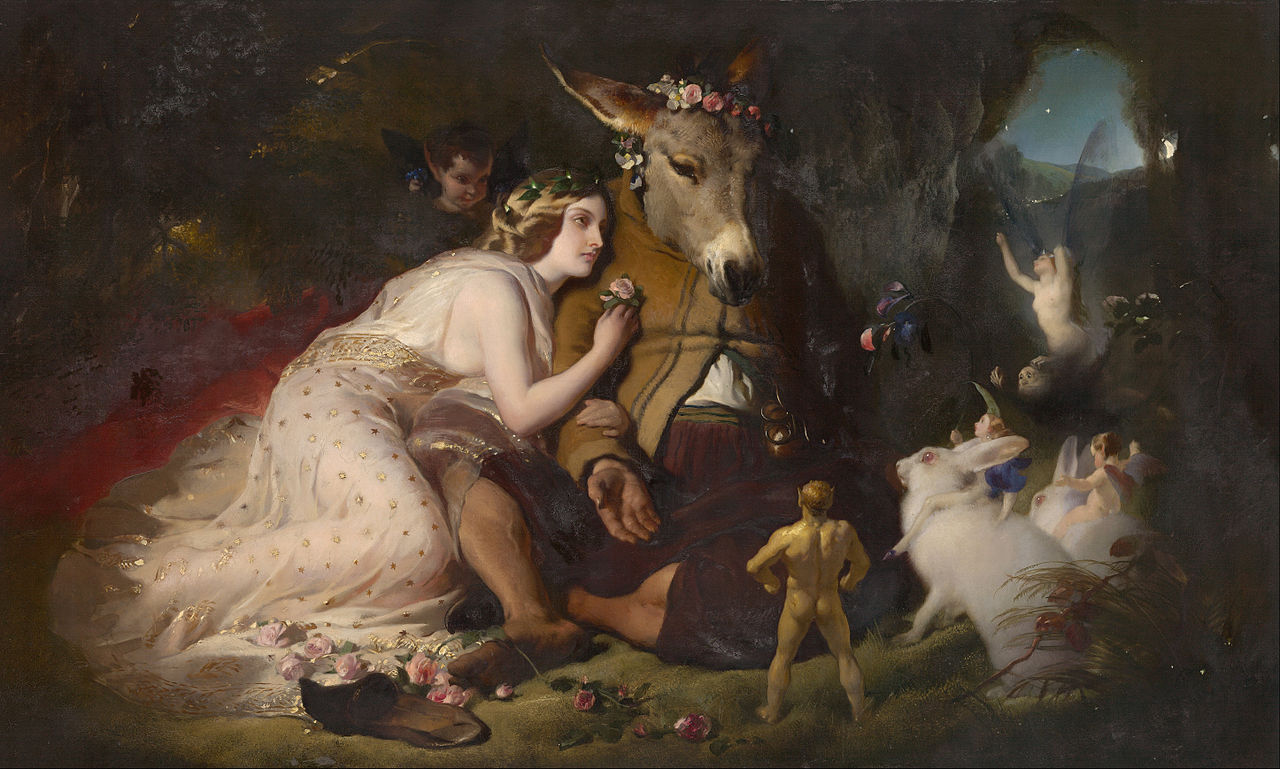


Characters and dramatic structure
The dramatis personae include representatives of human society and of the fairy world; Shakespeare interweaves their stories to produce comic confusion and dramatic irony. Principal figures are:
- Theseus — Duke of Athens, about to marry Hippolyta (the Athenian court).
- Hippolyta — Queen-to-be and former Amazon leader.
- Hermia and Lysander — lovers who defy Athenian law.
- Helena and Demetrius — entangled in a love triangle with Hermia and Lysander.
- Oberon and Titania — the king and queen of the fairies, whose quarrel triggers magical interventions.
- Puck (Robin Goodfellow) — Oberon’s mischievous servant who misapplies a love potion and causes much of the comedy.
- The “mechanicals” or amateur actors, led by Bottom, who provide a play-within-a-play (the tragicomedy of Pyramus and Thisbe).
Sources, date and composition
Scholars generally place the composition around 1595–1596; the first printed edition appeared in 1600 and a collected text was later included in the 1623 First Folio. Shakespeare drew on a range of classical, medieval and contemporary materials: echoes of Ovid and Apuleius appear in motifs of metamorphosis and enchanted gardens, while elements of English folklore — including descriptions of Puck (Robin Goodfellow) — can be traced to sources such as Reginald Scot. Other literary influences cited by critics include Plutarch, Geoffrey Chaucer and Edmund Spenser. The play was probably intended for a festive courtly performance, and some commentators think it was written to celebrate a prominent marriage in the 1590s, though the exact occasion is not certain.
Themes and language
The play explores the instability of love, the porous line between dream and waking experience, and the contrast between civic order and natural freedom. Shakespeare alternates prose and verse to mark social rank, comic confusion and lyrical reverie, and he scatters songs and magical images throughout the text. The play-within-a-play device satirizes theatrical conventions while also affirming the constructive power of performance to resolve tensions.
Performance, music and adaptations
A Midsummer Night's Dream has remained a popular work on stage and screen. Felix Mendelssohn composed incidental music — including the famous Overture and the well-known Wedding March — that helped cement the play’s association with nuptial celebration. The play has inspired film and television adaptations, among them a Hollywood production that featured Mickey Rooney as Puck. In the twentieth century composers and choreographers created new versions: Benjamin Britten produced an operatic setting and choreographers such as George Balanchine and Frederick Ashton mounted ballets based on the work. Contemporary stagings continue to reinterpret the play’s mixtures of comedy, music and spectacle. See broader notes on film adaptations here, the composer Benjamin Britten here and the opera form here.
Legacy and notable facts
The play’s vivid blend of romance, myth and theatricality ensures its frequent revival. It has been studied for its portrayal of gender, class and the imagination, and it is often introduced to students as an example of Shakespeare’s lighter, more lyric comedy. For readers interested in the play’s literary roots and cultural context, editions and commentaries point to classical authors like Plutarch and Apuleius, medieval influences such as Chaucer, and later poets like Edmund Spenser. Modern readers may also consult accounts of folklore and popular belief, including discussions of Puck in works like Reginald Scot’s The Discoverie of Witchcraft, and introductory material on the Athenian court in the play here.
Because the play functions equally as a comedy, a pastoral and a fantasy — and because it stages a comic reconciliation through theatrical means — it remains one of Shakespeare’s most frequently performed and broadly loved works. Its combination of poetic language, memorable set pieces and adaptable structure helps explain why musicians, choreographers and filmmakers keep returning to the text: from Mendelssohn’s music here to later ballets here and choreographers’ contributions such as those by George Balanchine and Frederick Ashton, the play continues to inspire creative reinvention.
Further reading and resources are available through linked entries on Shakespeare, editions of the play and collections of adaptations and critical studies: see the general author page William Shakespeare, the First Folio entry here, and assorted adaptation listings here and here.
Questions and answers
Q: What is A Midsummer Night's Dream?
A: A Midsummer Night's Dream is a play by William Shakespeare.
Q: When was the play written?
A: The exact date of when the play was written is unknown, but it is generally accepted that it was written in either 1595 or 1596.
Q: How did Shakespeare come up with the character of Puck?
A: Shakespeare found a description of Puck in Reginald Scot's The Discoverie of Witchcraft (1584).
Q: Who were the sources for Shakespeare's work?
A: Shakespeare's sources included works by Plutarch, Apuleius, Ovid, Geoffrey Chaucer, and Edmund Spenser.
Q: For what occasion may have been the play written?
A: It is believed that the play may have been written for either Elizabeth Vere’s aristocratic marriage in 1595 or Elizabeth Carey’s aristocratic marriage in 1596.
Q: Where does most of the action take place?
A: Most of the action takes place at night in the woods near Athens.
Q: How has A Midsummer Night's Dream been adapted over time?
A: The play has been made into movies on numerous occasions and Benjamin Britten wrote an opera based on it. George Balanchine and Frederick Ashton also created ballets about it and Felix Mendelssohn composed music for it which includes an "Overture" and a "Wedding March".
Related articles
Author
AlegsaOnline.com A Midsummer Night's Dream — Shakespeare's comic exploration of love and illusion Leandro Alegsa
URL: https://en.alegsaonline.com/art/77
Sources
- bl.uk : British Library: Midsummer Night's Dream