
A Midsummer Night's Dream Overture — Mendelssohn's Concert Overture
An accessible overview of Felix Mendelssohn's A Midsummer Night's Dream Overture: its musical character, orchestration, origins in Shakespeare, later incidental music and cultural importance.
Overview
Felix Mendelssohn's A Midsummer Night's Dream Overture is a single-movement orchestral piece written as a concert overture inspired by Shakespeare's play. Mendelssohn composed the work as a teenager and it has since become one of the best-known pieces associated with the play. Years later he composed additional incidental music for the same drama, including the widely recognized "Wedding March." For more on the composer see Felix Mendelssohn and for the play itself see Shakespeare's play.
Image gallery
1 Image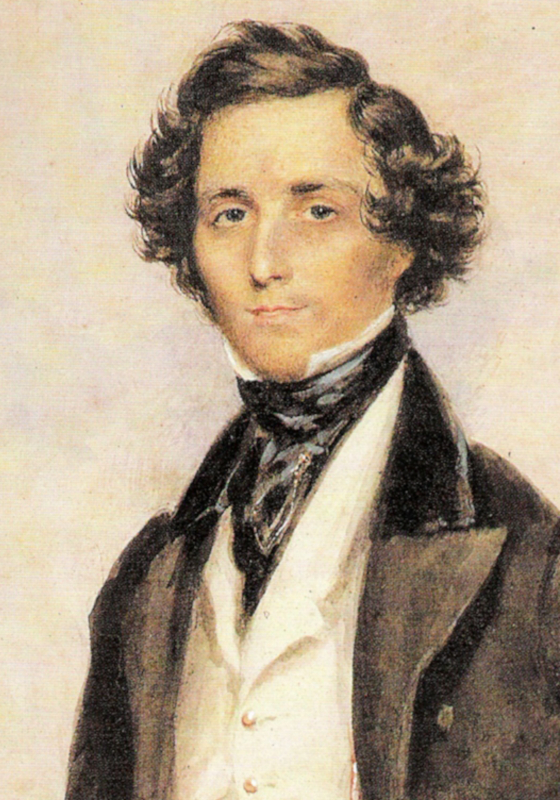
Musical characteristics
The overture paints the drama in musical colors rather than following a scene-by-scene narrative. Listeners commonly identify distinct musical types that represent the play's groups of characters:
- Fairies: light, fleet figures in high registers and delicate accompaniment that suggest flight and mischief.
- Lovers: lyrical, romantic themes with warm string lines and expressive woodwind solos.
- Rustics or workmen: broad, comic material that contrasts with the more refined textures of the lovers and fairies.
- Bottom (the donkey): a low sustained pedal or braying effect imitated in the lower instruments to evoke the transformed weaver's absurdity — sometimes described as a "donkey bray" effect.
Form and orchestration
Although compact, the overture uses a variety of orchestral colors and deft transitions. Mendelssohn favors agile string passagework, nimble woodwind exchanges and crisp brass punctuation to shift mood quickly. The work functions effectively as a concert piece: it introduces thematic material and gestures that recur, but it does not attempt a literal soundtrack to every moment of the play. Scores and editions are widely available for study here.
Origins and later development
Mendelssohn wrote the overture in his youth after reading or seeing Shakespeare, intending it as an independent musical tribute. Decades later he returned to the play and supplied a larger body of incidental music for theatrical use; performers and audiences today often pair the overture with selections from that later music. The incidental additions made the association between Mendelssohn and the play stronger, and the "Wedding March" became particularly famous outside the theatrical context.
Reception and significance
The overture has remained a staple of the orchestral repertoire because of its melodic charm, concise craftsmanship and evocative characterization. It is frequently recorded, performed in concert programs, and used in educational settings to illustrate how orchestral color can evoke drama. Mendelssohn's youthful achievement is often cited as an example of early Romantic clarity and inventiveness: a brief work that balances wit, lyricism and orchestral skill.
Notable facts
Beyond its musical content, the overture is notable for its origin in a teenage composer's imagination and for the way it anticipates later programmatic writing in the nineteenth century. Its scenes of fairies and lovers are created through texture and motif rather than through explicit stage cues, which helps explain the piece's lasting appeal both in the concert hall and in popular culture.
Tags
Related articles
Author
AlegsaOnline.com A Midsummer Night's Dream Overture — Mendelssohn's Concert Overture Leandro Alegsa
URL: https://en.alegsaonline.com/art/76