
Geoffrey Chaucer: English poet, public servant, and author of The Canterbury Tales
Geoffrey Chaucer (c.1343–1400), an English poet and civil servant, wrote in Middle English. His Canterbury Tales and other works helped establish English as a literary language and shaped later English poetry.
Geoffrey Chaucer (c. 1343–25 October 1400) was an English poet, courtier, and bureaucrat whose work helped elevate the vernacular English language as a literary medium. He is best known for The Canterbury Tales, a framed collection of stories that survives in multiple manuscripts and remains one of the foundation stones of English literature. Chaucer wrote in what we call Middle English and drew on a wide range of sources, styles, and genres.
Image gallery
10 Images


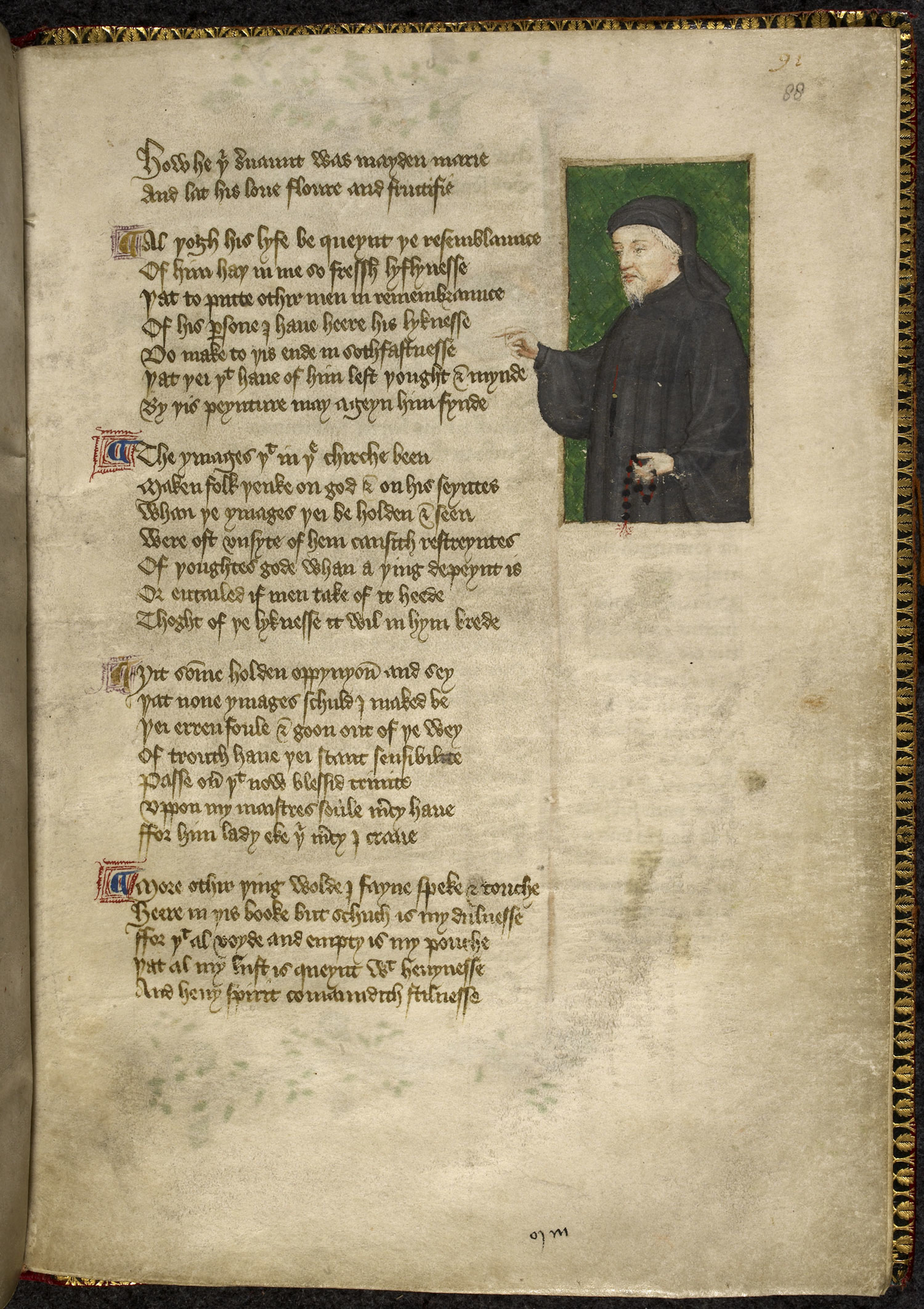
Life and career
Details of Chaucer's early life are sketchy; his birth date is approximate and his family was moderately well connected in London. He spent much of his life in royal and public service: he served as a courtier, undertook diplomatic errands, and held administrative posts that brought him into contact with continental literature and courtly culture. These experiences furnished him with familiarity with French and Italian works and with assorted social classes, which he used as material for his writing.
Major works and style
Chaucer's output ranges from dream visions and allegory to long narrative poems and shorter fables. His major compositions include:
- The Canterbury Tales — a framed storytelling cycle presented as a pilgrimage, notable for its vivid characters, varied voices, and unfinished state despite many surviving tales.
- Troilus and Criseyde — a lengthy, psychologically attentive poem on love and fate that adapts classical and Italian sources.
- Book of the Duchess and Parliament of Fowls — dream-vision poems and courtly pieces mixing satire, allegory, and personal memorial themes.
Chaucer's writing is praised for its narrative energy, conversational tone, satirical edge, and skillful use of rhyme and meter. He wrote in Middle English, transforming everyday speech into a medium for serious poetry and comic portraiture.
Influence and legacy
Often regarded as one of the first major writers to compose extensively in English rather than Latin or French, Chaucer helped demonstrate the expressive range of the vernacular. His realistic characterizations, comic insight, and structural innovations influenced subsequent English poets and dramatists. He has been remembered, in later tradition, as a central figure in the development of English literature; his tomb in Westminster Abbey is a focal point for that reputation.
Further reading and resources
For introductions and primary-text access consult general biographies and modern translations. Useful starting points include general overviews and collections of his poems and tales. See a concise biography, surveys of his writings, selections of his poetry, editions of The Canterbury Tales, and materials on Middle English.
Questions and answers
Q: Who is Geoffrey Chaucer?
A: Geoffrey Chaucer was an English writer, poet, and philosopher.
Q: What is Canterbury Tales?
A: Canterbury Tales is a collection of 24 stories written by Geoffrey Chaucer.
Q: Was Canterbury Tales completed?
A: No, Canterbury Tales was not completed.
Q: What language did Geoffrey Chaucer write in?
A: Geoffrey Chaucer wrote in Middle English.
Q: What is Geoffrey Chaucer most famous for?
A: Geoffrey Chaucer is most famous for writing Canterbury Tales.
Q: Was Geoffrey Chaucer one of the first writers to write in English?
A: Yes, Geoffrey Chaucer was one of the first writers to write in English.
Q: When did Geoffrey Chaucer die?
A: Geoffrey Chaucer died on October 25, 1400.
Related articles
Author
AlegsaOnline.com Geoffrey Chaucer: English poet, public servant, and author of The Canterbury Tales Leandro Alegsa
URL: https://en.alegsaonline.com/art/38107
Sources
- luminarium.org : "The Life of Geoffrey Chaucer (c. 1343-1400) [Chaucer Biography]"
- commons.wikimedia.org : Geoffrey Chaucer
- wikidata.org : wikidata.org/wiki/Q5683
- authority.bibsys.no : 90066945
- catalogo.bne.es : XX840641
- catalogue.bnf.fr : cb118963584
- data.bnf.fr : (data)
- cantic.bnc.cat : a10451559
- d-nb.info : 118520245
- isni.org : 0000 0001 1557 454X
- id.loc.gov : n79027228
- musicbrainz.org : 44cf72ed-e8aa-4345-9912-dad6b448cac3
- id.ndl.go.jp : 00435810
- aleph.nkp.cz : jn19990003811
- nla.gov.au : 35315252