
Paris (Trojan prince)
Paris, son of Priam and Hecuba, is a central figure in the Trojan cycle who judged the goddesses, precipitated the abduction of Helen and the Trojan War, and appears in Homeric and later literature.
Overview
Paris is a figure from ancient Greek mythology best known for his part in the events that led to the Trojan War. He appears in epic tradition, most famously in works attributed to Homer, and in narratives related to the Iliad and subsequent epic cycles. Descriptions of Paris vary between sources, but he is consistently presented as a prince of Troy whose actions have major consequences for the city and for the Greek world.
Image gallery
10 Images




Birth and early life
According to the traditional account, Paris was the son of King Priam and Queen Hecuba. An oracle foretold that the child would be the cause of Troy's ruin, so he was abandoned on the slopes outside the city. He survived and was raised away from court, usually described as being reared by a shepherd or foundling family. His rustic upbringing contrasts with his royal origin and helps explain portrayals of him as less conventionally heroic than other Trojan princes.
The Judgment and the promise
A defining episode in Paris' story is the so-called "Judgment of Paris." Three goddesses—Hera, Athena and Aphrodite—asked him to decide which of them was the fairest. The contest involved the famous Apple of Discord and bribes from each deity: power from Hera, skill and wisdom from Athena, and the love of the most beautiful mortal woman from Aphrodite. Paris awarded the prize to Aphrodite, who had promised him Helen, and this choice sets the next stage of the saga in motion.
Abduction of Helen and the outbreak of war
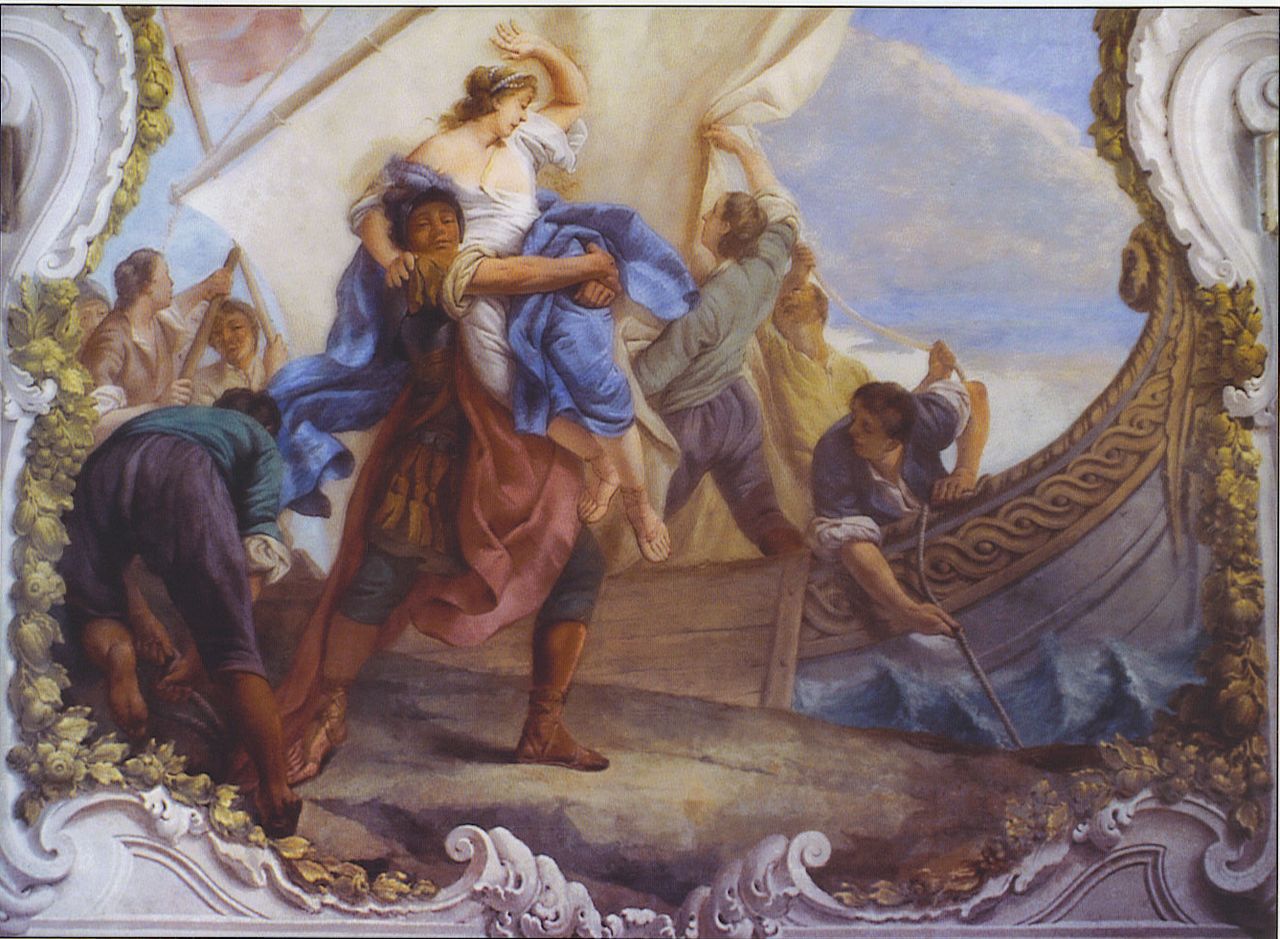
Helen was already married to Menelaus, brother of Agamemnon. Paris' departure from Sparta with Helen—described variously as abduction or elopement—provoked a coalition of Greek leaders who sailed to Troy to recover her. That conflict, the Trojan War, became one of the central narratives of Greek epic and tragedy. Paris' act is often treated as the immediate spark of a wider political and military struggle among gods and mortals.
Role in the war and the death of Achilles
During the war Paris is usually depicted as an accomplished archer rather than a frontline champion like his brother Hector. In later traditions he is credited with the mortal wounding of Achilles, an event often described as an arrow striking the hero's heel. Classical sources differ: some attribute the deed directly to Paris, others say the god Apollo guided the shot, and some mention the arrow as poisoned or fateful (poisoned arrow appears in some versions).
Death and legacy
Paris himself dies before the fall of Troy in most accounts; a common tradition names Philoctetes as his slayer. Beyond the narrative facts, Paris functions in literature and art as a complex symbol: heir and exile, lover and cause of catastrophe, and an agent whose human choices intersect with divine manipulation. His story has been retold and reinterpreted in classical drama, medieval romance, Renaissance painting and modern literature, often as a case study in fate, responsibility and the consequences of desire.
Quick facts
- Parentage: son of Priam and Hecuba.
- Key episode: the Judgment of Paris between Hera, Athena and Aphrodite.
- Immediate consequence: the removal of Helen from Menelaus' household, leading to the Trojan War.
- Notable deeds: archer credited in some tales with the wounding of Achilles (sometimes via a poisoned arrow).
- Death: commonly said to have been killed by Philoctetes.
Related articles
Author
AlegsaOnline.com Paris (Trojan prince) Leandro Alegsa
URL: https://en.alegsaonline.com/art/74673