
Menelaus: King of Sparta and a Central Figure of the Trojan Cycle
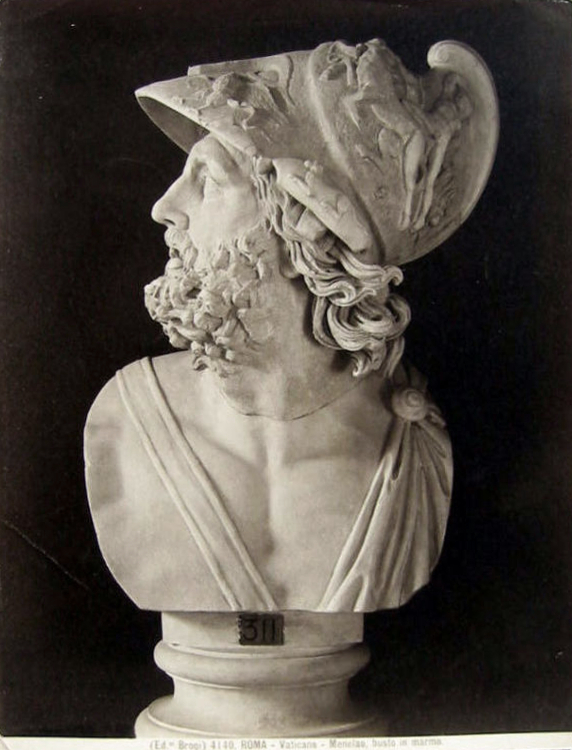
Menelaus, son of Atreus and Aerope and brother of Agamemnon, is the Spartan king whose wife Helen and the events around her sparked the Trojan War in Greek epic and myth.
Overview
Menelaus (Greek name: Μενέλαος) is a prominent figure in ancient Greek epic, best known from the works attributed to Homer. He appears in the Iliad and the Odyssey as a leader among the Achaeans and as the wronged husband whose loss of his wife helped trigger the Trojan War. In mythological genealogies he is a son of Atreus and Aerope and the younger brother of Agamemnon, a pair often called the Atreidae.
Image gallery
6 Images


Family, Origins, and Name
Menelaus belongs to the royal house that connects Mycenae and Sparta. He is sometimes described as raised or linked with Mycenae through his lineage, but he rules as king of Sparta. By marriage he is husband to Helen, famed in later tradition as "the face that launched a thousand ships," and father of a daughter, Hermione. His name is often glossed as meaning something like "wrath of the people" in classical etymologies.
Role in the Trojan War and Epic Tradition
The immediate cause of the Greek expedition to Troy is Menelaus's demand to recover Helen after she left Sparta with the Trojan prince Paris. According to the tradition preserved in epic and subsequent poets, the earlier oath of Helen's suitors — arranged to secure her marriage to Menelaus — obliged the Greek leaders to unite in his behalf, giving the case an organized, interstate dimension.
Notable Episodes and Character
- In the Iliad, Menelaus is portrayed as brave but personally aggrieved; he fights for honor and tries to confront Paris directly.
- Book 3 of the Iliad records a planned duel between Menelaus and Paris that fails to resolve the war when divine intervention saves Paris.
- In the Odyssey and other post-Homeric sources Menelaus is shown as surviving the war, reclaiming Helen in many versions, and returning to rule in Sparta.
Legacy and Cultural Impact
Menelaus's story supplied later art, drama, and commentary with themes of honor, revenge, and the intersection of private injury and public conflict. Because his marriage and the subsequent oath among Helen's suitors are central plot devices, Menelaus is often discussed not only as an individual hero but as a catalyst figure whose grievance mobilized a broad coalition. He appears in tragedies, epic summaries, vase-paintings, and modern retellings that explore the human and political dimensions of his experience.
Distinctions and Scholarly Notes
Different ancient sources vary on details — for example, whether Helen left willingly or was taken by force, how directly Paris was responsible, and what became of Menelaus after Troy. Scholarly accounts therefore treat Menelaus both as a distinct personality in the epic tradition and as a symbol for larger social concerns in Greek storytelling: kingship in Sparta, kinship obligations, and the costs of war.
Greek name · Homeric texts · Iliad episodes · Trojan context · Mycenaean ties · Agamemnon · Sparta · Helen · Paris
Related articles
Author
AlegsaOnline.com Menelaus: King of Sparta and a Central Figure of the Trojan Cycle Leandro Alegsa
URL: https://en.alegsaonline.com/art/63796