
Pegasus: The Winged Horse of Greek Myth and Its Cultural Legacy
Pegasus, a winged horse from Greek myth, emerged from Medusa's blood and figures in tales of Perseus and Bellerophon. This article explains origins, major stories, traits, symbolism and later cultural influence.
Overview
Pegasus (Greek: Πήγασος) is the archetypal winged horse of ancient Greek storytelling. Often depicted as a white, flying steed, Pegasus functions as both a mythic creature and a symbol — of inspiration, poetic creation, and the perilous ambition of mortals who aspire to the realm of the gods. Accounts of Pegasus appear across classical literature, vase painting and later European art, where the creature is adapted to a variety of contexts and meanings.
For readers wanting background on the language and wider mythic setting, consult resources that treat the creature both as a part of the Greek mythological corpus and as an image in later visual culture. The word itself in Greek appears in classical sources associated with strength and swiftness, and the motif of the winged horse recurs in other traditions as well.
Image gallery
10 Images


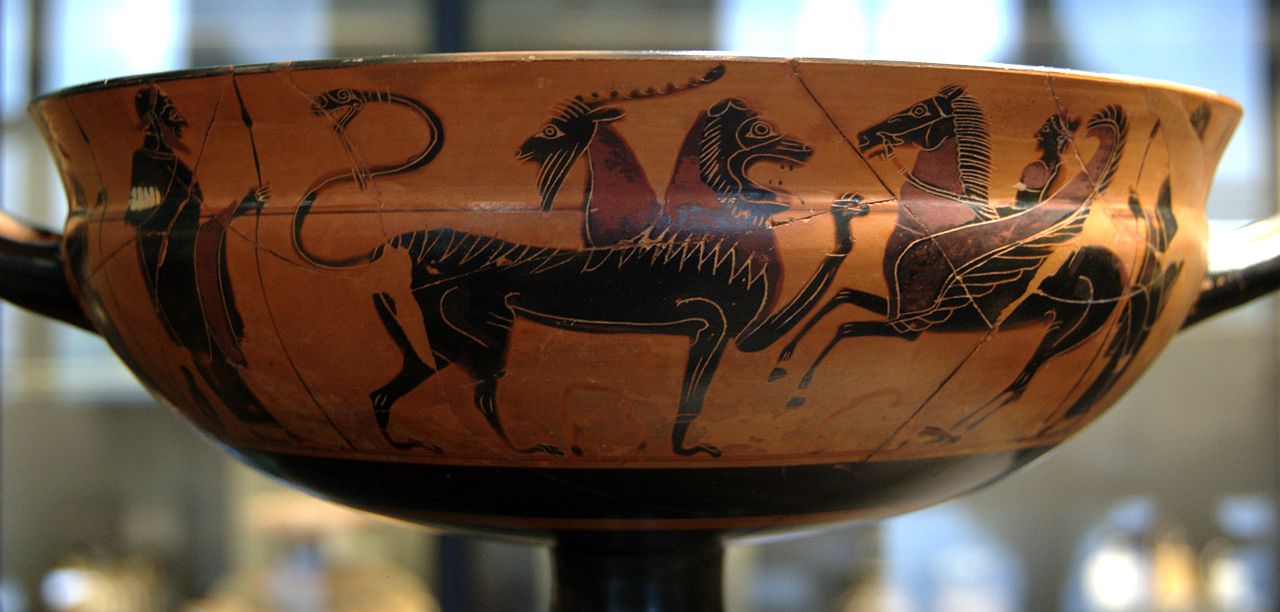


Mythic origins and main narratives
The best-known origin places Pegasus among the offspring born when the hero Perseus severed the head of the Gorgon Medusa. In many retellings Medusa is one of the three Gorgons, and when her blood touched the earth, the winged foal sprang forth. Classical authors differ on details: some have Perseus witness Pegasus's birth and depart before the full maturation of the horse, while other versions allow him a more direct association.
Another central episode pairs Pegasus with the Corinthian hero Bellerophon. In that story the horse would not be tamed until Bellerophon received divine aid; the goddess Athena is commonly said to have given a golden bridle that enabled him to mount and control Pegasus. Mounted on the winged horse, Bellerophon defeated the fire-breathing Chimera — a hybrid monstrous creature — and won honor and fame. The myth concludes with a moral element: Bellerophon's attempt to fly to Mount Olympus or to share the company of gods provokes divine retribution. Zeus is reported to have sent a gadfly to sting Pegasus, causing Bellerophon to fall back to earth; accounts vary about the hero's subsequent fate.
Characteristics and later developments
- Appearance: traditionally described as a white, winged horse, often majestic and swift.
- Control: tamed with a golden bridle or counsel from a deity, most often Athena in the surviving tales.
- Progeny: some sources speak of offspring, sometimes collectively called pegasi, produced after Pegasus left Bellerophon.
- Place in sky: classical and Hellenistic authors associated Pegasus with a northern constellation; the name and image were later adopted in astronomical nomenclature.
Symbolism, art and cultural influence
Pegasus has served as a compact emblem of poetic inspiration: in one myth his hoof striking Mount Helicon was said to have created the Hippocrene spring, a source of poetic inspiration for Muses and poets. The image of a winged horse has been reproduced on pottery, architectural ornament, medieval heraldry and in Renaissance painting. In modern times the name Pegasus appears widely in popular culture, corporate identities and artistic works; references range from animated films and fantasy literature to airlines, publishers and software firms. For discussions of contemporary adaptations see collections of modern myth retellings and studies of classical reception in culture (popular culture).
Classical figures connected to the Pegasus stories are also entry points for study: the sea-god Poseidon is sometimes named among Pegasus's parents in variant tellings, while the broader cast includes Medusa's family and later heroes such as Bellerophon and, in popular retellings and adaptations, figures conflated with Heracles or Hercules.
Notable distinctions and modern notes
Because ancient narratives were transmitted orally and rewritten by successive authors, details about Pegasus vary: whether Perseus or Athena first had dealings with the foal, the precise circumstances of Bellerophon's fall, and the parentage assigned to the creature can differ by source. The constellation named for Pegasus preserves the creature's memory in astronomical tradition, while the enduring visual power of a winged horse continues to inspire adaptation. If researching further, consult both classical texts and modern commentaries for variant readings and interpretations.
For targeted reading on specific aspects of Pegasus — linguistic etymology, artistic depictions, astronomical naming, or modern appropriations of the motif — explore dedicated resources and academic surveys that treat classical myth and its reception in later eras. Some modern uses of the name reach into technology and commerce, showing how an ancient image can be repurposed in very different arenas.
Related entries and further links can be found via authoritative reference collections and subject-specific overviews; see specialized bibliographies for primary translations and scholarly studies (Greek language, winged horses, mythology, Poseidon, Gorgons, Medusa, popular culture, Heracles, Hercules).
Questions and answers
Q: Who is Pegasus?
A: Pegasus is a flying horse with wings in Greek mythology. He is the son of Poseidon and the Gorgon Medusa. In cartoons and other stories, Pegasus was said to be the horse of the legendary hero Hercules.
Q: What does Pegasus look like?
A: The Pegasus is a white horse with wings that can fly. It is very beautiful, and can only be controlled with a golden bridle given to Bellerophon by Athena.
Q: How did Perseus obtain Pegasus?
A: Perseus killed the monster Medusa using a reflective shield and winged sandals. He cut off her head, which had the hair of poisonous snakes and was so ugly it would turn to stone anyone who looked at it straight on, and from her blood sprang the winged horse Pegasus. Some stories say that Perseus rode Pegasus away, but other stories say he left before Pegasus was born.
Q: Who was Bellerophon?
A: Bellerophon was a young man living in Corinth who longed to ride Pegasus but could not tame him until Athena gave him a golden bridle that allowed him to capture it. Later, he went on a quest to defeat the Chimera with help from his trusty steed, after which he tried to become immortal by flying with Pegaus up Mount Olympus where Zeus sent down a gadfly to sting Pegaus causing them both back down to Earth again.
Q: What happened when Bellerophon tried to become immortal?
A: When Bellerophon tried to become immortal by flying up Mount Olympus with Pegaus, Zeus became angry and sent down a gadfly which stung Pegaus causing them both back down to Earth again.
Q: Where did Pegasi come from?
A: After leaving Bellerophon behind, Pegaus sired children by horses producing offspring known as Pegasi.
Related articles
Author
AlegsaOnline.com Pegasus: The Winged Horse of Greek Myth and Its Cultural Legacy Leandro Alegsa
URL: https://en.alegsaonline.com/art/75454
Sources
- commons.wikimedia.org : Pegasus
- amnh.org : amnh.org/exhibitions/past-exhibitions/mythic-creatures/air-creatures-of-the-sky/greek-myt…