
Paul Is Dead — the Beatles urban legend and conspiracy theory
A widely circulated late-1960s rumor that Paul McCartney died and was secretly replaced, fueled by alleged clues in Beatles songs and album art; now a cultural example of apophenia and hoax dynamics.
Overview
"Paul is dead" is a long-standing urban legend and conspiracy narrative asserting that Paul McCartney of the Beatles either died in the 1960s and was secretly replaced by a look‑alike, or was otherwise supplanted by an impersonator. The story is usually described as a piece of popular folklore rather than a verifiable historical event: it rests on interpretations of lyrics, album artwork and studio anecdotes rather than on documented evidence. Scholars and journalists generally treat it as a hoax or a case of mass suggestion and pattern-seeking behavior often associated with urban legends and conspiracy theories.
Image gallery
5 Images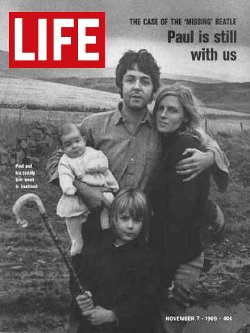


Alleged clues and how they circulated
Those who promoted the rumor pointed to a variety of supposed "clues" hidden in Beatles records. Common categories include:
- Visual elements on album covers that fans interpreted as symbolic references or funeral imagery.
- Lines in lyrics that, when isolated or combined, were read as confessions or directions.
- Claims of backward messages and manipulated studio sounds that, when reversed, appeared to form meaningful phrases.
Specific covers and tracks were singled out repeatedly; for example, fans analyzed the imagery on the Abbey Road cover and other Beatles releases for allegedly significant details. The evidence presented by believers typically relied on subjective pattern matching rather than independent corroboration.
Origin and spread
The rumour grew rapidly in the autumn of 1969 after students and disc jockeys in the United States published lists of clues and promoted the idea on radio and in campus newspapers. At its height the story received widespread attention in popular press and on talk shows. A contemporaneous interview and photo session with McCartney published in Life magazine in November 1969 — in which he appeared alive and well — helped to blunt the most sensational versions of the claim, and mainstream coverage subsequently treated the episode as a curiosity rather than a credible news item.
Responses, parodies and cultural legacy
McCartney and others associated with the Beatles responded in various ways: some denied the rumours outright, others treated them as absurd and occasional references appeared in interviews and later works. McCartney himself played with the idea in later years, notably titling a 1993 live album Paul Is Live in a deliberate riff on the earlier rumor. The episode has persisted as a touchstone in popular culture and is sometimes referenced in films, television and journalism as an example of a widely believed but unfounded rumor.
Significance and interpretations
Beyond the specific claim about McCartney, the "Paul is dead" narrative is often discussed by historians of media and psychology as an instructive case of apophenia (the tendency to perceive meaningful patterns in random data), confirmation bias and the role of oral and campus networks in spreading sensational claims. It also illustrates how celebrity, mass media and fandom can combine to produce elaborate modern myths.
Notable distinctions and facts
Key points commonly highlighted by commentators are that the claim arose from fan conjecture rather than archival or official sources; that it peaked quickly in late 1969; and that it left a lasting imprint on how popular culture treats rumors about public figures. For further contemporary or retrospective discussions see entries and analyses in music journalism and cultural studies, which examine both the mechanics of the hoax and its place in Beatles lore. Additional reporting and context appear in publications and retrospectives linked by historians and media scholars.
For background reading and archived coverage see related resources and retrospective articles (context on the band's English origins, general overviews at urban-legend collections, analytical pieces on conspiracy culture at conspiracy theory studies and profiles of the band and its members at Beatles-focused sites and music archives). For the original moment of mass attention see contemporary campus reporting and the Life magazine profile, and for a later playful rebuttal by McCartney see the Abbey Road-referencing material and the album title Paul Is Live.
Questions and answers
Q: What is the "Paul is dead" urban legend?
A: The "Paul is dead" urban legend is a conspiracy theory suggesting that Paul McCartney of the Beatles died in 1966 and was secretly replaced by a look-alike.
Q: Who published articles suggesting clues to McCartney's supposed death could be found in the Beatles' recordings?
A: American college students published articles suggesting clues to McCartney's supposed death could be found in the Beatles' recordings.
Q: When did rumours about McCartney's supposed death decline?
A: Rumours about McCartney's supposed death declined after a contemporary interview with McCartney was published in Life magazine in November 1969.
Q: Does popular culture still make references to the "Paul is dead" legend?
A: Yes, popular culture continues to make occasional reference to the "Paul is dead" legend.
Q: What was the name of McCartney's 1993 live album that poked fun at the "Paul is dead" legend?
A: The name of McCartney's 1993 live album that poked fun at the "Paul is dead" legend was "Paul Is Live."
Q: What did the cover of the "Paul Is Live" album parody?
A: The cover of the "Paul Is Live" album parodied "clues" allegedly on the cover of the Beatles' Abbey Road album.
Q: Was McCartney's supposed death confirmed or debunked?
A: There is no evidence that supports McCartney's supposed death, and McCartney himself has confirmed that he is alive. Therefore, the conspiracy theory of McCartney's supposed death was debunked.
Related articles
Author
AlegsaOnline.com Paul Is Dead — the Beatles urban legend and conspiracy theory Leandro Alegsa
URL: https://en.alegsaonline.com/art/75137
Sources
- digilander.libero.it : "Paul Really Is Dead"
- turnmeondeadman.com : ""Paul Is Dead" Clues on Abbey Road | Turn Me On, Dead Man"