
North Pacific Giant Octopus (Enteroctopus dofleini)
A large, intelligent benthic octopus of the North Pacific coasts, notable for its size, problem‑solving abilities, opportunistic diet and short, semelparous life cycle.
Overview
The North Pacific giant octopus (Enteroctopus dofleini) is a large benthic cephalopod native to temperate coastal waters of the North Pacific. It is among the best known of the large nearshore octopus species and is noted for its flexible body, dexterous arms and relatively advanced problem‑solving abilities. Although the much larger Seven‑arm octopus is sometimes mentioned in size comparisons, E. dofleini has a distinctive coastal distribution and life history.
Image gallery
10 Images




Physical characteristics
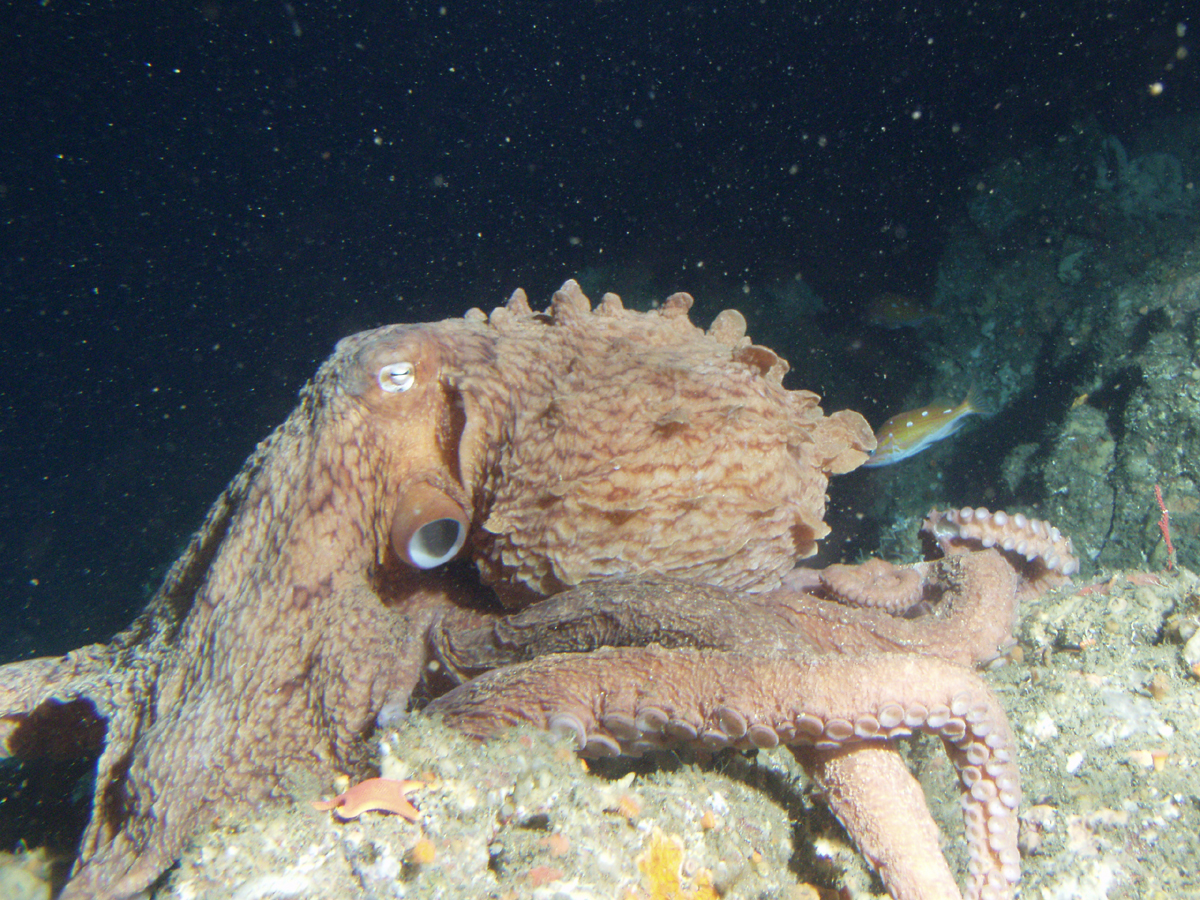
Individuals have eight muscular arms lined with two rows of suckers, a soft mantle housing internal organs, and a robust, chitinous beak used to tear and crush prey; the beak material is composed of chitin. Skin chromatophores and texture‑changing cells allow rapid color and texture shifts used for camouflage and signaling. Like other cephalopods it has a complex nervous system, well‑developed eyes and three hearts; its blood contains copper‑based hemocyanin, which gives it a bluish color. Adult weights commonly reach around 15 kg (about 33 lb) in large individuals and arm spans of several meters have been recorded, although typical specimens are smaller.
Range and habitat
Enteroctopus dofleini inhabits rocky reefs, kelp beds and sheltered bays across the North Pacific Rim, from the coasts of California and the Aleutians to the Russian Far East and northern Japan. It occupies a wide depth range from shallow subtidal zones and tide pools down to several hundred meters. Individuals usually shelter in dens constructed of rocks, shells and other debris, returning repeatedly to a preferred site after foraging excursions.
Feeding and prey
The North Pacific giant octopus is an opportunistic predator that uses its arms and powerful suckers to locate and manipulate food, then seizes or pries open prey and processes it with the beak. Typical diet items include a variety of benthic invertebrates and fishes:
- Crabs and other crustaceans
- Shrimp and small mobile crustaceans
- Abalone, gastropods and snails
- Fish taken from near the bottom
- Various shellfish, including scallops, clams and mussels
In captivity they have been documented taking relatively large prey items, including small sharks such as the spiny dogfish, illustrating their strength and flexibility. They employ a mix of hunting techniques—active searching, ambush, and manipulating objects—to access concealed food.
Predators and ecological role
As a mid‑level predator, the giant octopus helps regulate populations of crustaceans and bivalves and thus influences local benthic communities. Natural predators include marine mammals and large fish; documented predators include harbor seals, sea otters and large cetaceans such as sperm whales. Some shark species and other large predators will also take octopuses when available (sharks generally).
Reproduction, lifespan and behavior
This species is semelparous: individuals reproduce once and then die. Males use a modified arm to transfer spermatophores to females. After laying eggs, the brooding female vigilantly tends and guards the clutch for many months, often foregoing food until the young hatch. Lifespan in the wild is relatively short, typically around three to five years. Behaviorally, the species is largely solitary and den‑based; it shows notable intelligence in laboratory and field studies, including problem solving, opening containers and using objects for shelter.
Human interactions and conservation
Giant octopuses are of interest to fisheries, public aquariums and scientific research. They are sometimes harvested by recreational and commercial fishers and are also taken incidentally as bycatch. While not generally listed as globally threatened, local populations can be vulnerable to overharvest, habitat degradation and changes in prey availability. In captivity they have provided important insights into cephalopod cognition, camouflage and physiology, and they often attract public interest for education and conservation awareness.
Research and care in captivity
Studies of Enteroctopus dofleini have contributed to understanding of cephalopod learning, sensory biology and life history strategies. When maintained in aquariums, their needs include complex shelters, stable water quality and varied diets; institutions that keep them emphasize enrichment and careful husbandry. Observations in both wild and captive settings continue to refine knowledge of growth, behavior and ecological interactions.
Related articles
Author
AlegsaOnline.com North Pacific Giant Octopus (Enteroctopus dofleini) Leandro Alegsa
URL: https://en.alegsaonline.com/art/70926