
Spiny dogfish (Squalus acanthias)
A small, widely distributed temperate shark species known for dorsal spines, schooling behavior, slow reproduction, and significant commercial and conservation interest.
Overview
The spiny dogfish (Squalus acanthias) is a small, temperate-water shark found across parts of the northern oceans. Often called simply a dogfish, it is one of the best-known members of its family and is recognizable by the sharp spines at the front of each dorsal fin. It is a true shark with the typical cartilaginous skeleton and placoid-scaled skin.
Image gallery
10 Images




Physical characteristics
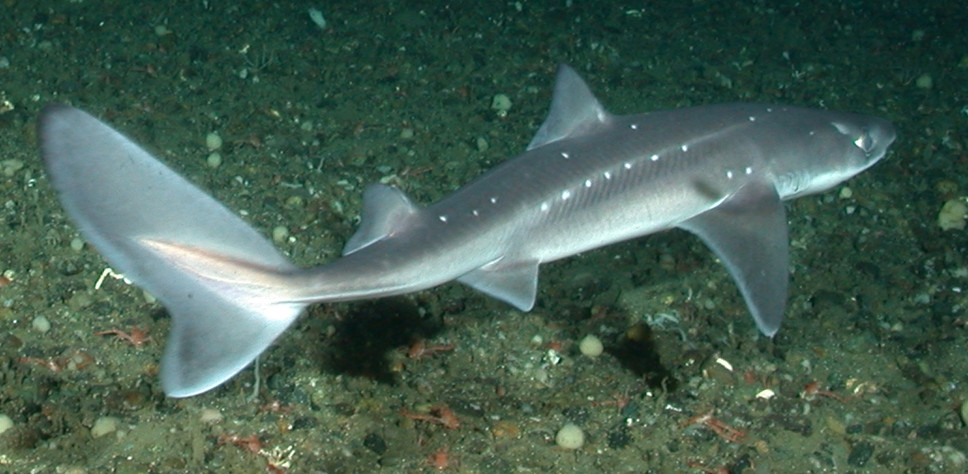
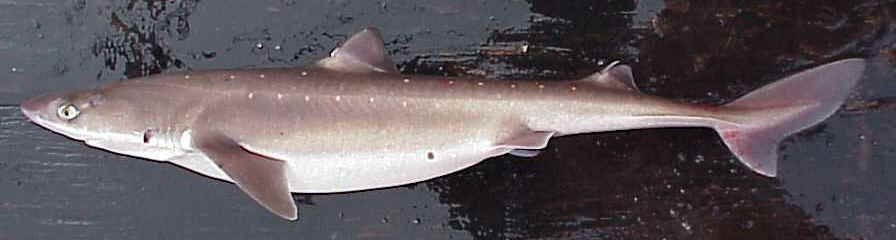
Adults typically measure about 70–100 cm (28–39 in) and can weigh up to around 9.8 kg. Key features include a slender, elongated body, two dorsal fins each preceded by a stout spine, no anal fin, and a coloration that ranges from brownish-gray to mottled with lighter spots. The skin is rough to the touch. These traits help distinguish it from other small sharks.
Distribution and habitat
Spiny dogfish occur in both the North Atlantic and the North Pacific oceans. They occupy a wide depth range, from near the surface to depths reported over a thousand metres, and are commonly found in coastal shelf waters as well as offshore. They prefer temperate and cooler waters and often form large schools.
Diet and ecology
This species feeds primarily on a variety of smaller pelagic and demersal fish, including species such as herring and mackerel, as well as squid and crustaceans. Spiny dogfish are active predators and scavengers; their schooling behavior can concentrate feeding on abundant prey. They are preyed upon by larger sharks, marine mammals and historically by humans.
Life history and reproduction
Spiny dogfish have a slow life history compared with many bony fishes: they grow gradually, mature relatively late, and produce a modest number of well-developed young. Females are ovoviviparous, giving birth to live pups after a lengthy gestation period. These reproductive traits make populations slow to recover from heavy exploitation.
Human interactions and conservation
The species has been intensively fished for meat, liver oil and as a component of commercial groundfish catches; in some regions it was used historically as an inexpensive food source. Because of its slow reproduction and value to fisheries, spiny dogfish have experienced regional declines and are the subject of management and conservation measures in many jurisdictions. Sustainable harvest limits, monitoring and protective regulations aim to balance use with recovery where stocks have been depleted.
Notable facts
- Each dorsal spine can deliver a painful wound if the fish is handled carelessly.
- The species often forms mixed-sex schools and can migrate seasonally in response to temperature and prey availability.
Questions and answers
Q: What is the spiny dogfish?
A: The spiny dogfish is a small species of shark that is one of the most common and well known species of dogfish.
Q: What is the average length of a spiny dogfish?
A: The average length of a spiny dogfish is 28-39 inches (70–100 cm).
Q: What is the maximum weight a spiny dogfish can reach?
A: The maximum weight a spiny dogfish can reach is 9.8 kg.
Q: Where can the spiny dogfish be found?
A: The spiny dogfish can be found in the Atlantic and Pacific Ocean.
Q: What is the deepest depth the spiny dogfish can be found at?
A: The spiny dogfish can be found from the surface to depths as deep as 1,460 metres.
Q: What does the spiny dogfish feed on?
A: The spiny dogfish feeds mainly on pelagic fish such as herring, menhaden, capelin, sand lance, and mackerel.
Q: Is the spiny dogfish a large or small species of shark?
A: The spiny dogfish is a small species of shark.
Related articles
Author
AlegsaOnline.com Spiny dogfish (Squalus acanthias) Leandro Alegsa
URL: https://en.alegsaonline.com/art/92698
Sources
- flmnh.ufl.edu : "FLMNH Ichthyology Department:Spiny Dogfish"
- marinebio.org : "Piked Dogfishes,Squalus acanthias~MarineBio.org"
- arkive.org : "Spiny dogfish videos, photos and facts - Squalus acanthias - ARKive"