
Northern pintail (Anas acuta)
A long‑tailed, wide‑ranging dabbling duck that breeds across northern Europe, Asia and North America and migrates to warmer wetlands; notable for its slim profile and declining populations.
The northern pintail (Anas acuta) is a slender, long‑tailed dabbling duck found across the northern parts of Europe, Asia and North America. It is strongly migratory: birds that breed in high latitudes move south to temperate and tropical wetlands outside the breeding season. Despite its extensive range, the species is generally treated as a single taxon; populations show variation in abundance but not widely accepted subspecies status.
Image gallery
10 Images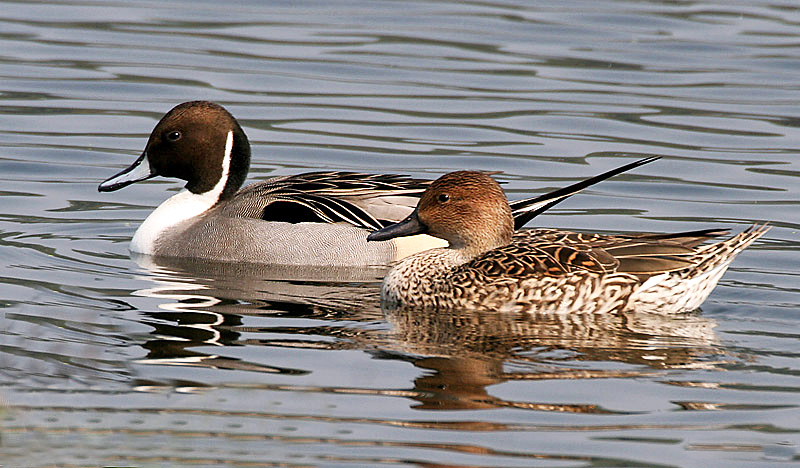




Identification and key features
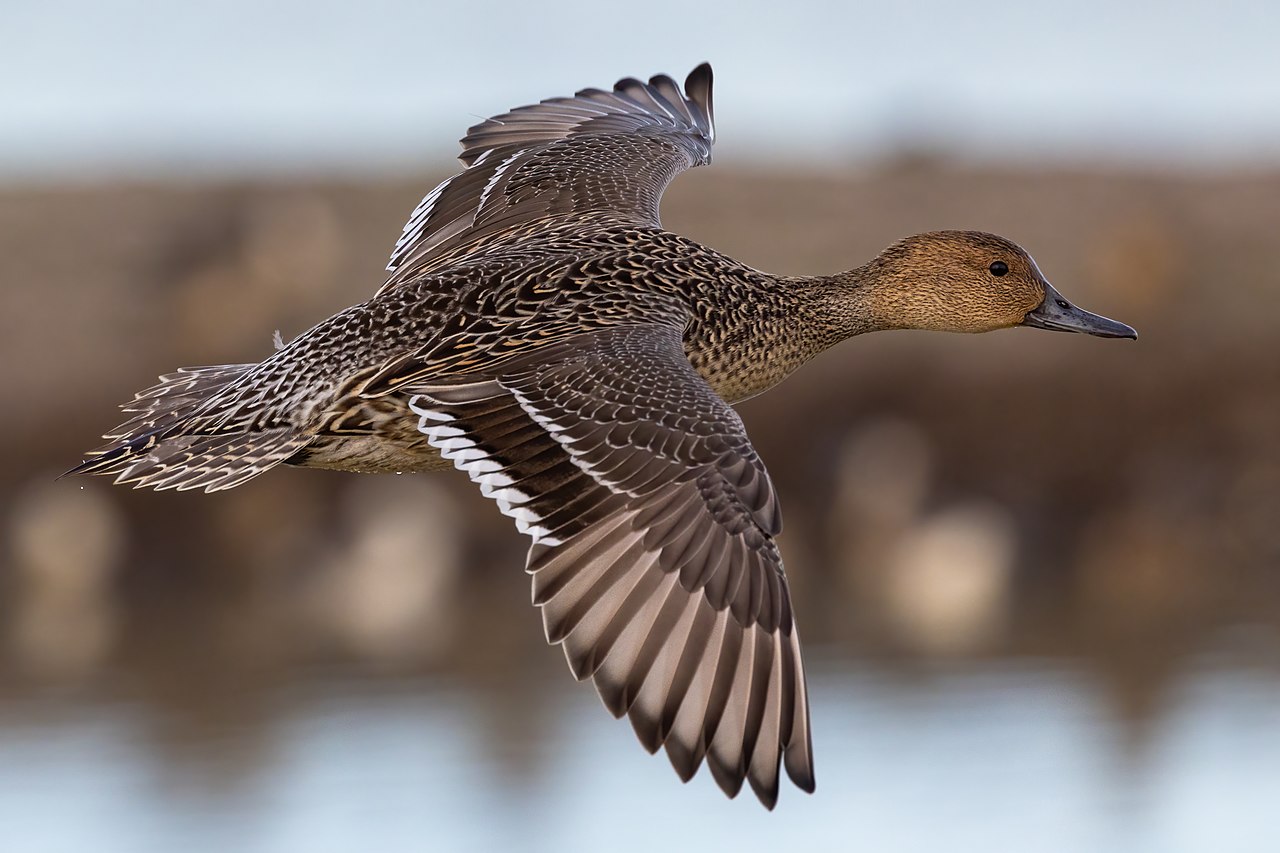
The species is sexually dimorphic. Adult males are distinguished by a narrow white neck stripe and a pointed central tail projection. Females are mottled brown and more compact, lacking the long tail. Both sexes have a slim neck and a more streamlined body than many other dabbling ducks.
- Shape: slender profile with long neck and pointed tail.
- Plumage: patterned brown in females; boldly marked males in breeding season.
- Behavior: feeds mainly by dabbling and upending in shallow water.
Distribution and habitat
Northern pintails breed across northern Europe (Europe), northern and central Asia (Asia) and northern North America (North America). They use a variety of open wetland habitats including marshes, wet grasslands, flooded fields and estuaries, and in winter range as far south as subtropical and tropical regions (wintering areas). General species information and range overviews can be found via summary resources (species overview).
Behavior, diet and life cycle
Northern pintails are gregarious outside the breeding season and form flocks on suitable water bodies. They feed mainly by dabbling for seeds, grains and aquatic invertebrates, often in shallow water or flooded agricultural fields. Courtship involves displays by males to attract mates; nesting is typically on the ground near water in concealed vegetation. Females incubate the clutch and lead ducklings to water soon after hatching.
Conservation and human interactions
The northern pintail is a valued game bird in many parts of its range and has been affected by hunting pressure and loss or degradation of wetland habitat. Agricultural change, drainage of wetlands and climate-related shifts in habitat quality have contributed to regional declines. Conservation efforts focus on wetland protection, management of hunting and international cooperation along migratory flyways.
Notable facts and distinctions
Unlike many wide‑ranging species, the northern pintail is not commonly divided into multiple subspecies; a closely related form, Eaton's pintail, from subantarctic islands is sometimes considered separate. The species is also a useful indicator of wetland ecosystem health because of its dependence on shallow marshes and seasonally flooded areas.
Related articles
Author
AlegsaOnline.com Northern pintail (Anas acuta) Leandro Alegsa
URL: https://en.alegsaonline.com/art/71049