
Seven-arm octopus (Haliphron atlanticus)
A deep-water octopus known as the seven-arm octopus; notable for its large size, concealed hectocotylus (making it appear to have seven arms), and rare, scattered records worldwide.
The seven-arm octopus (Haliphron atlanticus) is a large, elusive cephalopod notable for its unusual appearance and occasional records of great size. Commonly called the septopus or heptopus, it has attracted attention because some specimens and fragments indicate it may rival or exceed other large octopuses in mass. Its biology is still incompletely known because it lives mostly in deep or offshore waters and is infrequently encountered alive.
Image gallery
4 Images


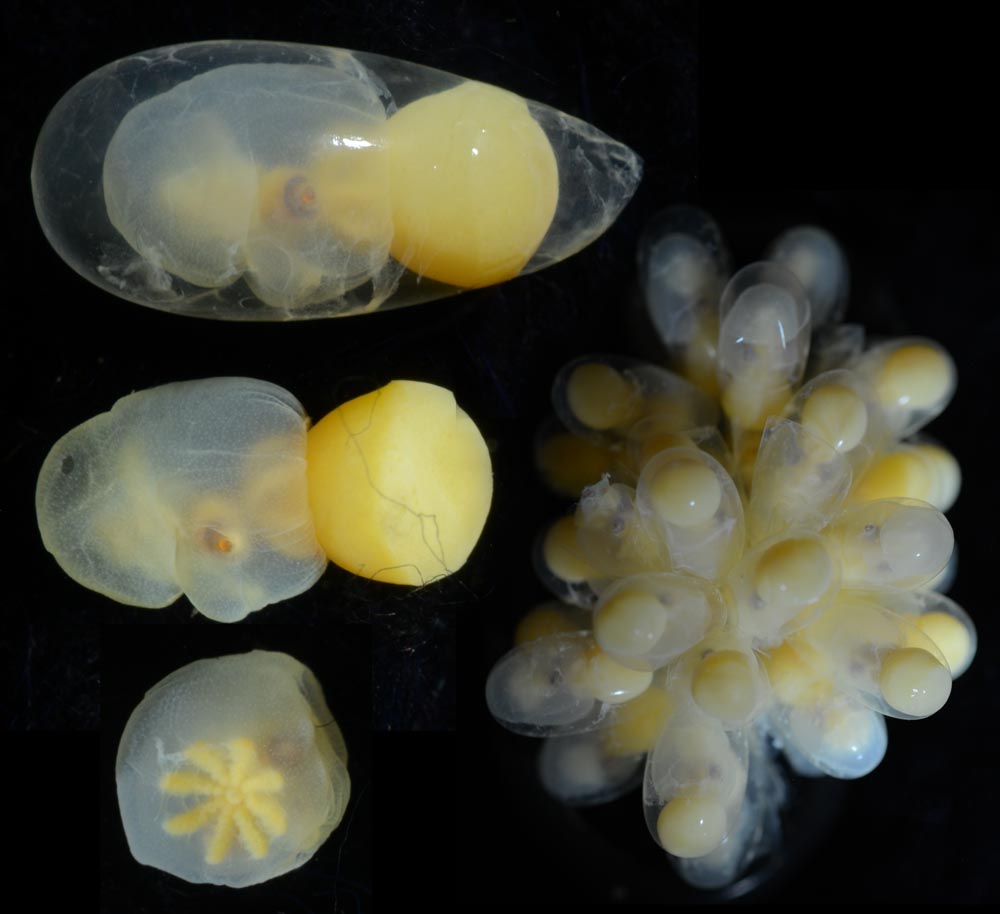
Appearance and the "seven-arm" name
Adults resemble many cirrate octopods in having a relatively soft, gelatinous body, a rounded mantle, and long arms connected by webbing. The common name "seven-arm" comes from the male reproductive modification: one arm (the hectocotylus) is heavily modified and normally concealed in a sac, so a casually observed animal may appear to have only seven functional arms. Other distinguishing characters include a smooth, fleshy texture and reduced musculature compared with shallow-water octopuses.
Size, notable specimens, and comparison
Size estimates for Haliphron atlanticus vary. Some historical and occasional reports have suggested individuals could reach several metres in total length and weigh many tens of kilograms. A well-documented large specimen recovered by fisheries trawling off the eastern Chatham Rise, New Zealand in 2002 provided one of the most reliable measurements for the species: an incomplete individual with a mantle length of about 0.69 m, total length around 2.90 m, and a mass near 61 kg. Because many records are of partial or damaged animals, maximum size remains debated; the species is often compared with the North Pacific giant octopus, Enteroctopus dofleini, as a rival in overall size.
Distribution, habitat and behaviour
Haliphron atlanticus has been recorded in various parts of the Atlantic and in southern oceanic waters, and individual finds have extended its known range, such as the 2002 specimen from the Chatham Rise near New Zealand (Chatham Rise, New Zealand). It appears to occupy offshore, mesopelagic to bathypelagic depths, often living well below the surface where sampling is limited. Observations and stomach contents of predators suggest a diet that includes gelatinous zooplankton, small fishes and crustaceans, and specimens have sometimes been seen holding or associated with jelly-like organisms—behavior that may relate to feeding or defense.
Taxonomy and significance
Haliphron atlanticus is the best-known representative of its genus. Its unusual morphology and the rarity of live observations make it a subject of interest to cephalopod researchers studying deep-sea adaptations, reproductive strategies, and the limits of coleoid growth. Because much of what is known derives from single specimens or the stomach contents of predators, further deep-sea sampling and in situ observation are needed to clarify its life history, true size potential, and ecological role.
Key facts
- Common names: seven-arm octopus, septopus, heptopus.
- Scientific name: Haliphron atlanticus.
- Named for the hidden hectocotylus that makes males appear to have seven arms.
- Notable record: large incomplete specimen caught off the Chatham Rise (2002) with a reported total length near 2.9 m and mass around 61 kg.
- Often compared with the North Pacific giant octopus (Enteroctopus dofleini) when discussing the world's largest octopuses.
Because much remains uncertain, Haliphron atlanticus illustrates both the diversity of deep-sea cephalopods and the challenges of documenting organisms that live where human encounters are rare. Future surveys and deep-ocean imaging are likely to yield a clearer picture of its distribution, behaviour and maximum size.
Related articles
Author
AlegsaOnline.com Seven-arm octopus (Haliphron atlanticus) Leandro Alegsa
URL: https://en.alegsaonline.com/art/89191