
Sea otter (Enhydra lutris): appearance, behavior, and conservation
A concise overview of the sea otter: its physical traits, diet and tool use, historic range and decline, ecological role as a kelp-forest keystone species, and modern recovery efforts.
Sea otters (Enhydra lutris) are coastal marine mammals native to the North Pacific. Recognizable for their dense fur and habit of floating on their backs, they occupy shallow nearshore waters and play an outsized ecological role by controlling populations of shellfish and sea urchins. Sea otters are among the smallest marine mammals but are distinctive for their adaptations to a cold-water lifestyle that relies on fur rather than blubber for insulation.
Image gallery
10 Images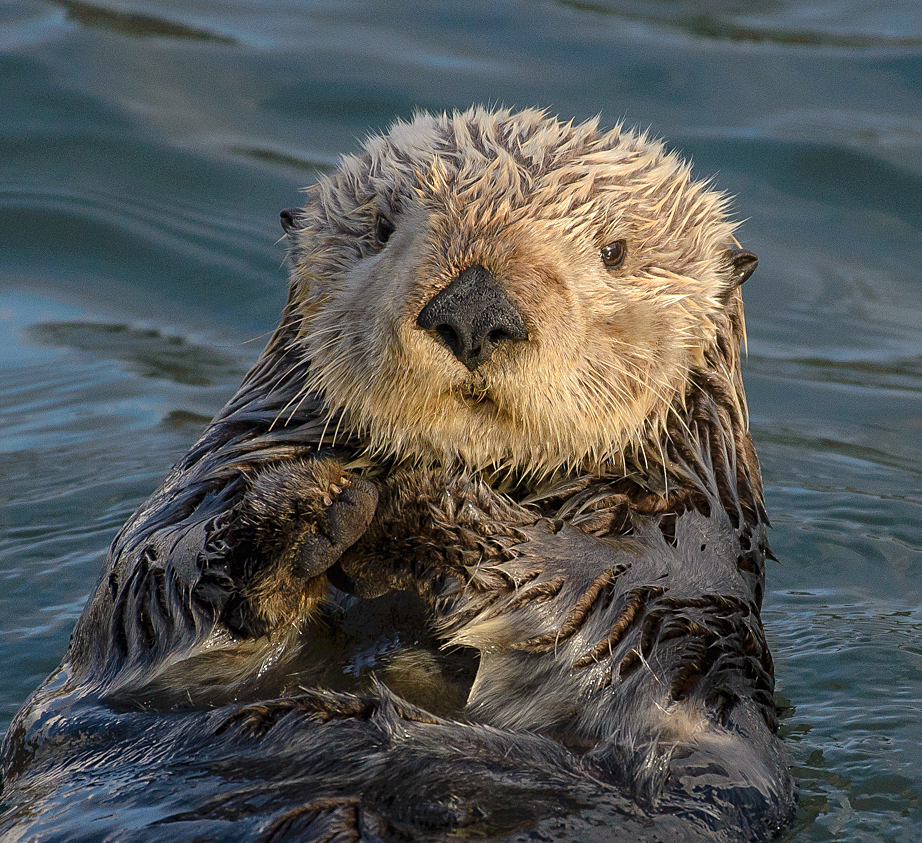




Physical characteristics and behavior
Sea otters have an exceptionally dense underfur that traps air, creating an insulating layer that keeps the skin dry and warm. This fur was historically prized by fur traders and drove intensive hunting that severely reduced populations. Adults typically measure about one to one and a half metres in length and commonly weigh on the order of several dozen kilograms. They have dexterous forepaws, webbed hind feet, and a streamlined body suited to swimming. Otters often rest in groups called rafts and exhibit behaviors such as grooming, vocalizing, and carrying a preferred rock to break open hard-shelled prey — a well-known example of tool use in mammals.
Diet, feeding and ecological importance
Sea otters feed largely on benthic invertebrates: sea urchins, clams, abalone and crabs are among their common prey. By preying on sea urchins they help prevent overgrazing of kelp forests, indirectly supporting biodiversity and coastal fisheries. This ecological role has led ecologists to describe sea otters as a keystone species in some coastal ecosystems: changes in their numbers can trigger broad shifts in community structure and habitat condition.
Range, history and conservation
Historically, sea otters ranged across the North Pacific rim, including coastal areas from Japan and Russia to parts of North America. Intensive hunting for fur from the 18th to early 20th centuries reduced many populations to tiny remnants. Protection measures and targeted conservation programs in the 20th and 21st centuries have enabled partial recoveries in some regions, though recovery is uneven and local threats persist.
Threats and management
Modern threats include entanglement in fishing gear, oil spills, disease, reduced prey availability, and conflicts with fisheries in areas where sea otters and commercial shellfisheries overlap. Conservation strategies combine legal protection, monitoring, research, and, in some cases, reintroduction to former habitat. Management must balance human livelihoods with the ecological benefits sea otters provide.
Notable facts
- Sea otters are one of the few mammals observed to use stones as tools to open shellfish.
- Their fur is the densest of any mammal; they lack the thick blubber layer seen in many other marine mammals.
- Populations vary regionally; some are stable or increasing while others remain vulnerable.
For further reading and resources, consult these topic pages and agencies:
- Marine mammals overview
- Sea otter biology
- Pacific coastal habitats
- Coastal ecology resources
- North American marine species
- History of fur trade
- Bering Strait ecosystems
- Kamchatka coastal research
- Japanese marine mammals
- Fur and insulation in mammals
- Human–wildlife interactions
- Historic population declines
- Conservation treaties and policy
- Dietary studies: shellfish and invertebrates
- Invertebrate prey of coastal predators
- Clam fisheries and ecology
- Abalone conservation
- Sea urchin population dynamics
- Tool use among animals
- California sea otter recovery
- Alaska population studies
Sea otters remain a focus of conservation and coastal ecosystem research because their presence influences habitat complexity, species abundance, and the services healthy marine ecosystems provide to people. Ongoing monitoring and adaptive management aim to secure resilient populations while addressing conflicts and emerging threats.
Questions and answers
Q: What are sea otters?
A: Sea otters are marine mammals.
Q: Where do sea otters live?
A: Sea otters live along the Pacific coast of North America, including Kamchatka, and as far south as Japan.
Q: Why were sea otters hunted by humans?
A: Sea otters were hunted by humans almost to extinction for their rich fur.
Q: When did sea otters receive protection?
A: Sea otters received protection in 1911 when the Fur Seal Treaty was signed.
Q: What do sea otters eat?
A: Sea otters eat shellfish and other invertebrates, especially clams, abalone, and sea urchins.
Q: What do sea otters use to smash open shells?
A: Sea otters use their favorite rock, which they carry in their paws or in a pouch under their forearm, to smash open shells.
Q: How big do sea otters grow?
A: Sea otters grow to be 1.0 to 1.5 m (3.3 to 4.9 ft) in length and weigh 30 kg (66 lb).
Related articles
Author
AlegsaOnline.com Sea otter (Enhydra lutris): appearance, behavior, and conservation Leandro Alegsa
URL: https://en.alegsaonline.com/art/88273
Sources
- seaworld.org : "Otters, Physical Characteristics"
- defenders.org : "Sea Otter – Enhydra lutris – facts, video, and sound"
- aquariumofpacific.org : "Southern Sea Otter"
- caseagrant.ucsd.edu : "With otters away, what keeps urchins at bay?"
- naturalhistorymag.com : "Underwater Barrens: Monitoring the fate of Southern Californian kelp requires a long view"
- besjournals.onlinelibrary.wiley.com : "Enabling coexistence: Navigating predator‐induced regime shifts in human‐ocean systems"
- doi.org : 10.1002/pan3.10090
- eurekalert.org : "Indigenous collaboration and leadership key to managing sea otter population recovery"
- commons.wikimedia.org : Sea otter