
Black Sea
Marginal sea between southeastern Europe and western Asia, linked to the Mediterranean; notable for widespread anoxic deep waters, major river inflows, and long economic and strategic importance.
Overview
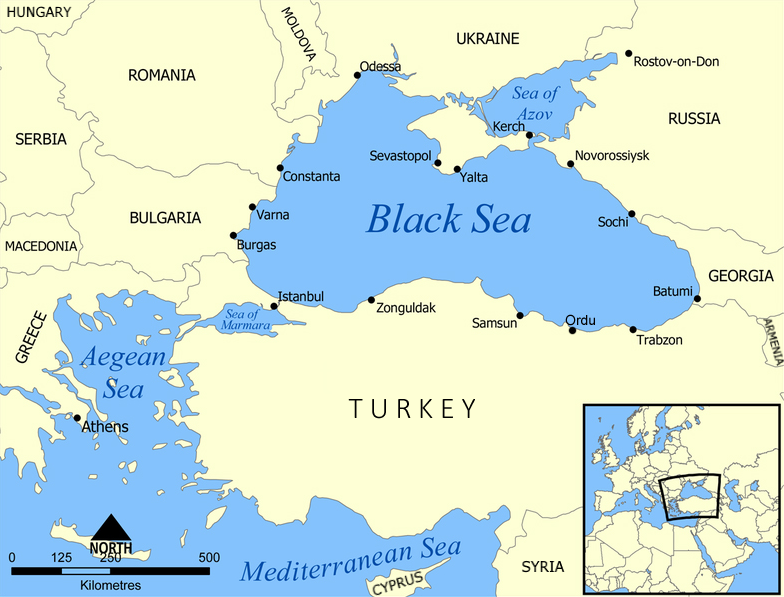
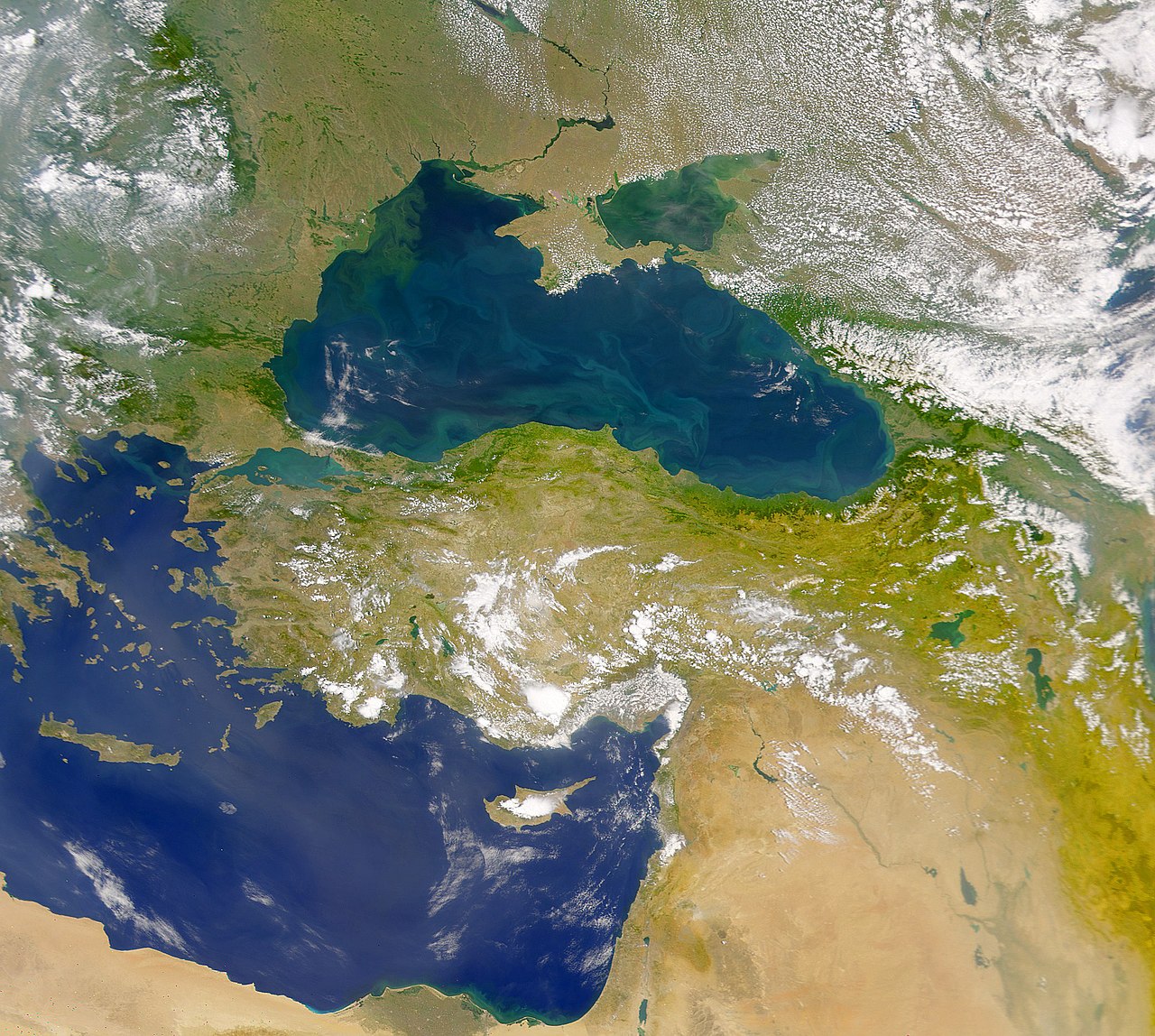
The Black Sea is a large inland sea situated at the crossroads of Europe and Asia. It lies within the broader region of Eurasia and borders parts of Europe, the Caucasus and Anatolia. The sea functions as a semi-enclosed basin with both marine and river influences and is a key link between inland waterways and the wider oceanic system (regional map).
Image gallery
10 Images




Geography and hydrology
The Black Sea receives large freshwater inputs from several major rivers and has a distinctive vertical structure. Surface waters are brackish compared with open ocean salinity, while deep layers are largely devoid of oxygen. Major river contributors include:
- Don (flows to the eastern basin)
- Danube — a principal inflow and European river (Danube)
- Dniester — western basin contributor (Dniester)
- Dnieper — significant northern inflow
Surface circulation is influenced by river discharge, winds and exchanges through the Turkish straits. The sea is connected to the wider ocean via a chain of passages and seas: the Bosphorus into the Sea of Marmara, the Dardanelles to the Aegean Sea, then the Mediterranean Sea and beyond toward the Atlantic Ocean via the Strait of Gibraltar.
History and geological development
Geologically the Black Sea basin has undergone major changes through glacial cycles. Some research suggests that during the last glacial period the basin was freshwater or less saline than today and was transformed as sea levels rose and marine water entered through the straits. Human settlement along its shores stretches back millennia and the sea has long been a corridor for trade and cultural contact.
Ecology, resources and notable features
One of the Black Sea's most distinctive traits is its oxygen-poor deep layer. Below a certain depth much of the water is essentially anoxic, which preserves organic material but limits deep-sea life — a condition often described as anoxic deep waters. The productive, oxygenated surface zones support fisheries, while coastal wetlands and deltas are important bird and fish habitats.
Uses and modern importance
The Black Sea remains vital for shipping, energy transit and regional economies. Ports on its coasts handle cargo, passenger traffic and fisheries. Its strategic position continues to influence geopolitics, maritime law and international commerce. Environmental pressures include pollution, eutrophication and habitat change, which are the focus of ongoing international efforts and scientific study (regional initiatives, research programs).
Distinctions and facts
The sea's lower salinity relative to the open ocean, the strong stratification between oxygen-rich and oxygen-poor layers and its narrow, controlling straits make the Black Sea a distinctive marginal sea. It illustrates how geology, climate and human activity combine to shape coastal and marine systems in a region linking continents (European context, Caucasus ties, Anatolian coasts).
For further reading and resources consult regional overviews and scientific summaries via institutional pages and marine research centers (river basin studies, ecosystem assessments, oceanographic context, strait dynamics, navigation and law, adjacent seas, Mediterranean links, global passages, oxygen studies, paleoenvironmental research).
Related articles
Author
AlegsaOnline.com Black Sea Leandro Alegsa
URL: https://en.alegsaonline.com/art/11967
Sources
- ui.adsabs.harvard.edu : 2003SedG..156..149N
- doi.org : 10.1016/S0037-0738(02)00286-5