
Sinai Peninsula: geography, history and cultural significance
Triangular land bridge between Africa and Asia, the Sinai Peninsula is Egypt's Asian territory noted for rugged mountains, coral-rich coasts, layered histories and strategic importance.
Overview
The Sinai Peninsula (Arabic: Sīnā) is a triangular landmass forming the northeastern corner of Egypt. Bounded by the Mediterranean Sea to the north and the Red Sea to the south, it covers roughly 60,000 km² and is the only portion of Egypt situated in Asia. Because it spans the junction of two continents, Sinai is often described as a natural land bridge linking Africa and Asia, and has served as a corridor for peoples, goods and armies for millennia. Today its population is relatively small, with around half a million residents distributed among scattered towns, Bedouin communities and resort centers.
Image gallery
10 Images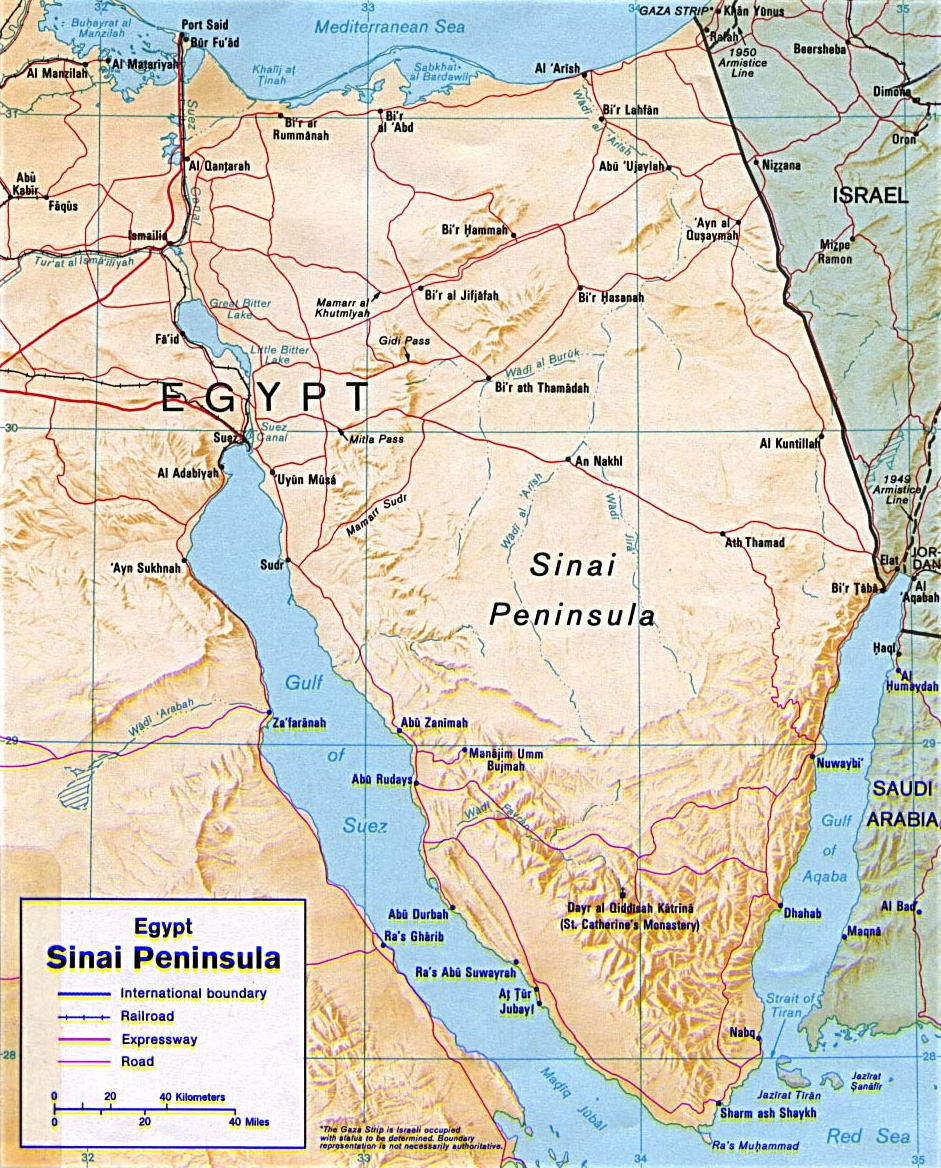


Geography and environment
The peninsula is marked by stark contrasts: a northern coastal plain, an arid interior of deserts and wadis, and a central mountainous spine. The southern and central highlands contain the region's highest peaks, including the well-known Mount Catherine and the traditionally identified Mount Sinai. Coastal areas on the Red Sea harbor extensive coral reefs and diverse marine life, making parts of Sinai important for conservation and tourism. The territory’s climate is predominantly arid, with hot summers and milder winters, and vegetation limited to oases and seasonal wadis.
History and political control
Sinai has a long, layered history. It was part of ancient Egyptian domains and later came under successive regional powers, including Islamic dynasties, the Ottoman Empire (Ottomans) and periods of European influence. Following British presence in Egypt during the 19th and 20th centuries (United Kingdom), the peninsula became entangled in the Arab–Israeli conflicts of the mid-20th century. Israel occupied Sinai during the 1956 Suez Crisis and again after the 1967 Six-Day War. Egypt launched a military operation on October 6, 1973 (October War), and the subsequent diplomatic process culminated in the Egypt–Israel Peace Treaty and Israel’s withdrawal in 1982.
Culture, population and economy
Local life in Sinai blends Bedouin traditions with Egyptian national institutions and the influences of seasonal tourism. Bedouin communities maintain distinct social structures, craft traditions and languages. Economic activity centers on fishing, small-scale agriculture in oases, trade and a growing tourism industry based on diving, desert excursions and religious pilgrimage. Major resort towns include Sharm el-Sheikh, Dahab and Taba, which attract visitors to Red Sea beaches and coral reefs.
Religious and cultural significance
Sinai holds particular importance in Abrahamic traditions. The mountain traditionally identified as Mount Sinai figures in narratives about Moses and the reception of the commandments, making the area a focal point for pilgrimage and religious reflection. This biblical and historical resonance, coupled with archaeological remnants and longstanding local lore, contributes to Sinai’s cultural profile and attracts pilgrims and tourists interested in religious history (biblical history).
Conservation, tourism and strategic importance
The peninsula’s coral reefs and desert landscapes are environmentally sensitive and attract recreational divers and nature tourists. Popular activities include snorkeling, scuba diving, rock climbing and guided treks. At the same time, the region remains strategically important because of its location near the Suez Canal and on transit routes between continents. Efforts at balancing development, security and conservation continue to shape policy and life in Sinai, including initiatives to protect marine habitats and manage sustainable tourism (tourist destination).
Key places and distinctions
- Peninsular geography: Sinai’s triangular outline distinguishes it from mainland Egypt and links two seas.
- Administrative status: The peninsula is administered as part of the Arab Republic of Egypt (Egypt), but lies in Asia (Asia).
- Mediterranean coast: Northern shoreline with fishing and harbor towns.
- Red Sea coast: Southern beaches and internationally renowned coral reefs.
- Continental junction: Sinai’s location at the meeting point of continents shaped its strategic role.
For further reading, consult authoritative sources on Sinai’s geography, history and ecology, and travel resources for current guidance on visiting protected areas and cultural sites. Additional historical timelines and archaeological studies provide deeper context on how Sinai’s landscape and peoples have evolved through ancient, medieval and modern eras (conflict history, sacred sites, colonial period, local names, imperial rule, mountain traditions, 20th-century wars, land bridge role, national governance, modern tourism, physical form, regional maps, northern waters, southern waters, religious routes, continental identity, geopolitical context).
Related articles
Author
AlegsaOnline.com Sinai Peninsula: geography, history and cultural significance Leandro Alegsa
URL: https://en.alegsaonline.com/art/90591