
Maryland (U.S. state): geography, history, symbols, and significance
Maryland is a Mid-Atlantic U.S. state on the Chesapeake Bay, known for Baltimore, Annapolis, diverse landscapes, colonial history, seafood, and important Revolutionary, 1812, and Civil War sites.
Overview
Maryland is a state in the Mid-Atlantic region of the United States, situated along the East Coast. It has a compact but varied geography that includes Atlantic shoreline, the Chesapeake Bay watershed, rolling Piedmont, and portions of the Appalachian Mountains. The state capital is Annapolis, while the largest city is Baltimore. Maryland's position between northern and southern states has given it a distinct cultural and historical character.
Image gallery
1 Image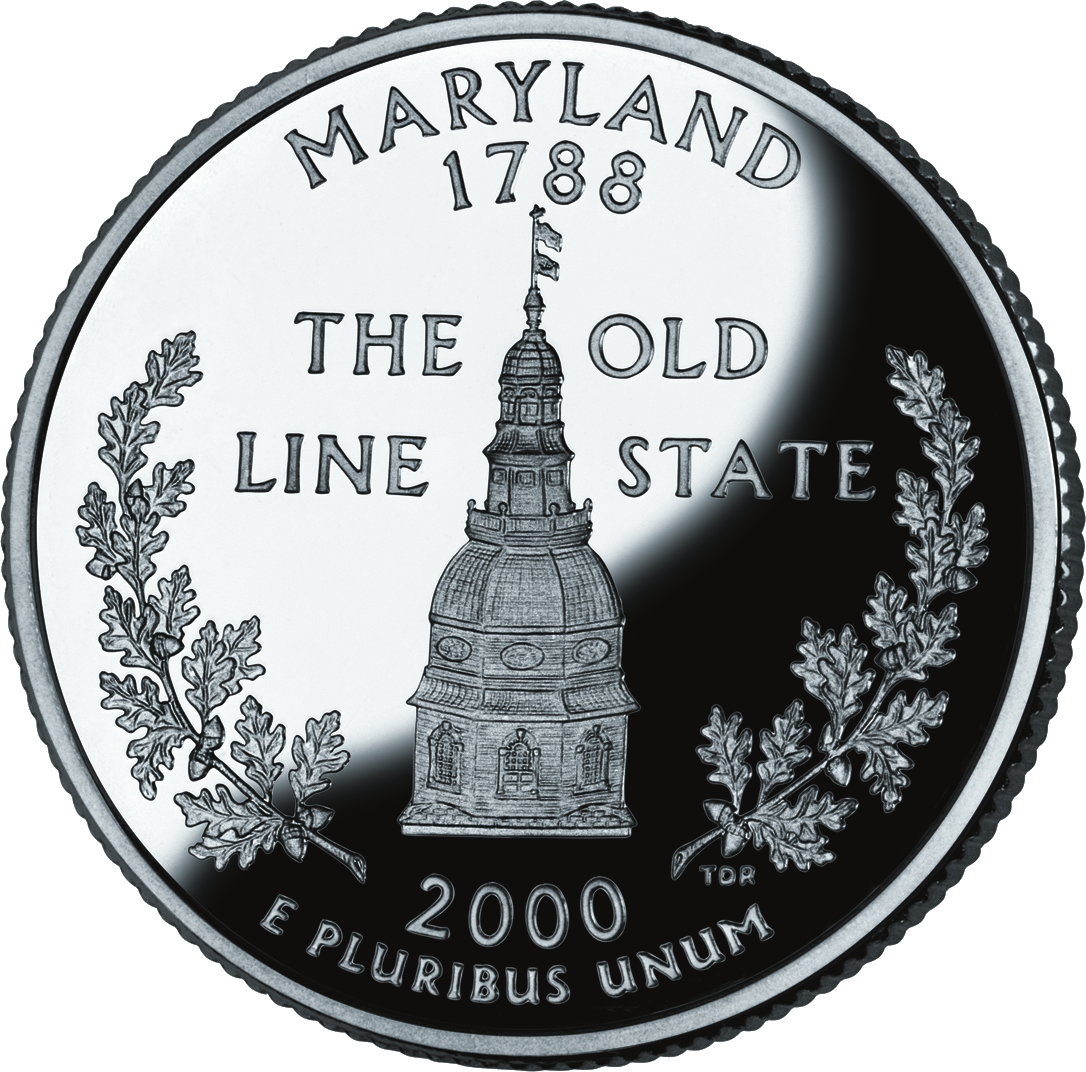
Geography and environment
Although one of the smaller U.S. states by area, Maryland surrounds much of the Chesapeake Bay, the largest estuary in the continental United States. This bay and its tributaries shape local climates, economies, and ecosystems. Wetlands, marshes, and tidal rivers support abundant wildlife and commercial fisheries. Inland, the land rises through farmland and suburban corridors into forested hills and low mountains. The state's varied habitats contribute to a high diversity of bird, fish, and plant species.
History and development
Maryland was settled in the early 17th century by English colonists seeking religious freedom for Catholics as well as economic opportunity. It became one of the original thirteen colonies and later the seventh state to ratify the U.S. Constitution. Because of its border location, Maryland played important roles in several conflicts, including the American Revolution, the Revolutionary War, the War of 1812, and the American Civil War. Fort McHenry's defense of Baltimore during the War of 1812 inspired the writing of the national anthem; the state also preserves battlefields such as Antietam, the site of the Battle of Antietam, among the war's pivotal engagements.
Government, symbols, and identity
Maryland's government follows the standard U.S. state model with an executive led by a governor, a bicameral legislature, and a state judiciary. For official information, the state's executive and administrative offices can be consulted via their web portals. The state has a number of official symbols that reflect local natural history and culture: the Baltimore oriole is the state bird (state bird), the black-eyed Susan is the state flower (state flower / Black-eyed Susan), the diamondback terrapin is the state reptile (state reptile), and the blue crab is celebrated as the state crustacean (state crustacean). Maryland's state motto, "Fatti maschii, parole femine," is in Italian; it is often translated and discussed in cultural histories (motto language).
Economy, cities, and culture
Maryland's economy is diverse: major sectors include biotechnology, services, federal research and defense, shipping, and agriculture. Proximity to Washington, D.C., and numerous federal agencies and military installations influence employment and research investment. Cities and suburbs vary from the dense, historic port and industrial neighborhoods of Baltimore to federal-oriented communities near the national capital. Smaller cities and towns such as Silver Spring, Bethesda, Gaithersburg, Rockville, Frederick, Hagerstown, Cumberland, Salisbury, and Greenbelt contribute different economic and cultural profiles. Annapolis is widely known for the United States Naval Academy and its maritime traditions.
Heritage, recreation, and notable places
Maryland preserves numerous historical and recreational sites. Fort McHenry marks a defining moment in the War of 1812 and remains a focal point for visitors to Baltimore's waterfront. Antietam National Battlefield offers interpretation of Civil War history and remembrance of one of the conflict's bloodiest single days. The state's coastline and waterways support commercial crabbing and recreational boating—blue crabs and crab cakes are culinary hallmarks. Outdoor recreation includes boating, birding, hiking in the Appalachian foothills, and exploring salt marshes and barrier islands.
People and cultural landscape
The region now called Maryland was originally home to native peoples, including Algonquian-speaking groups around the Chesapeake and Iroquoian-speaking peoples in upland areas. Over centuries, immigration, migration, and economic change produced a varied cultural landscape blending Native American heritage, colonial-era influences, African American communities shaped by slavery and emancipation, and modern suburban and urban populations. Maryland continues to balance historic preservation with contemporary economic development and environmental stewardship.
Further reading and resources
- Official state resources and general overview
- Information on the office of the governor
- Civil War sites and interpretation
- Historical context of early 19th-century conflicts
- Wildlife and conservation efforts
For maps, visitor information, and detailed histories, consult regional archives, state agencies, and local historical societies. The placeholders above link to specialized resources and interpretive sites for readers seeking deeper information on Maryland's geography, history, symbols, and institutions.
Related articles
Author
AlegsaOnline.com Maryland (U.S. state): geography, history, symbols, and significance Leandro Alegsa
URL: https://en.alegsaonline.com/art/62508
Sources
- simple.wiktionary.org : simple.wiktionary.org/wiki/Special:Search/Maryland
- commons.wikimedia.org : commons.wikimedia.org/wiki/Special:Search/Category:Maryland
- en.wikinews.org : en.wikinews.org/wiki/Special:Search/Maryland
- en.wikiquote.org : en.wikiquote.org/wiki/Special:Search/Maryland
- en.wikisource.org : en.wikisource.org/wiki/Special:Search/Maryland
- en.wikibooks.org : en.wikibooks.org/wiki/Special:Search/Maryland
- en.wikivoyage.org : en.wikivoyage.org/wiki/Maryland
- en.wikiversity.org : en.wikiversity.org/wiki/Special:Search/Maryland