
Italian language: origin, structure, usage and cultural influence
Overview of the Italian language: history, grammar features, regional varieties, global distribution, cultural influence in music and cuisine, and notable linguistic distinctions.
Overview
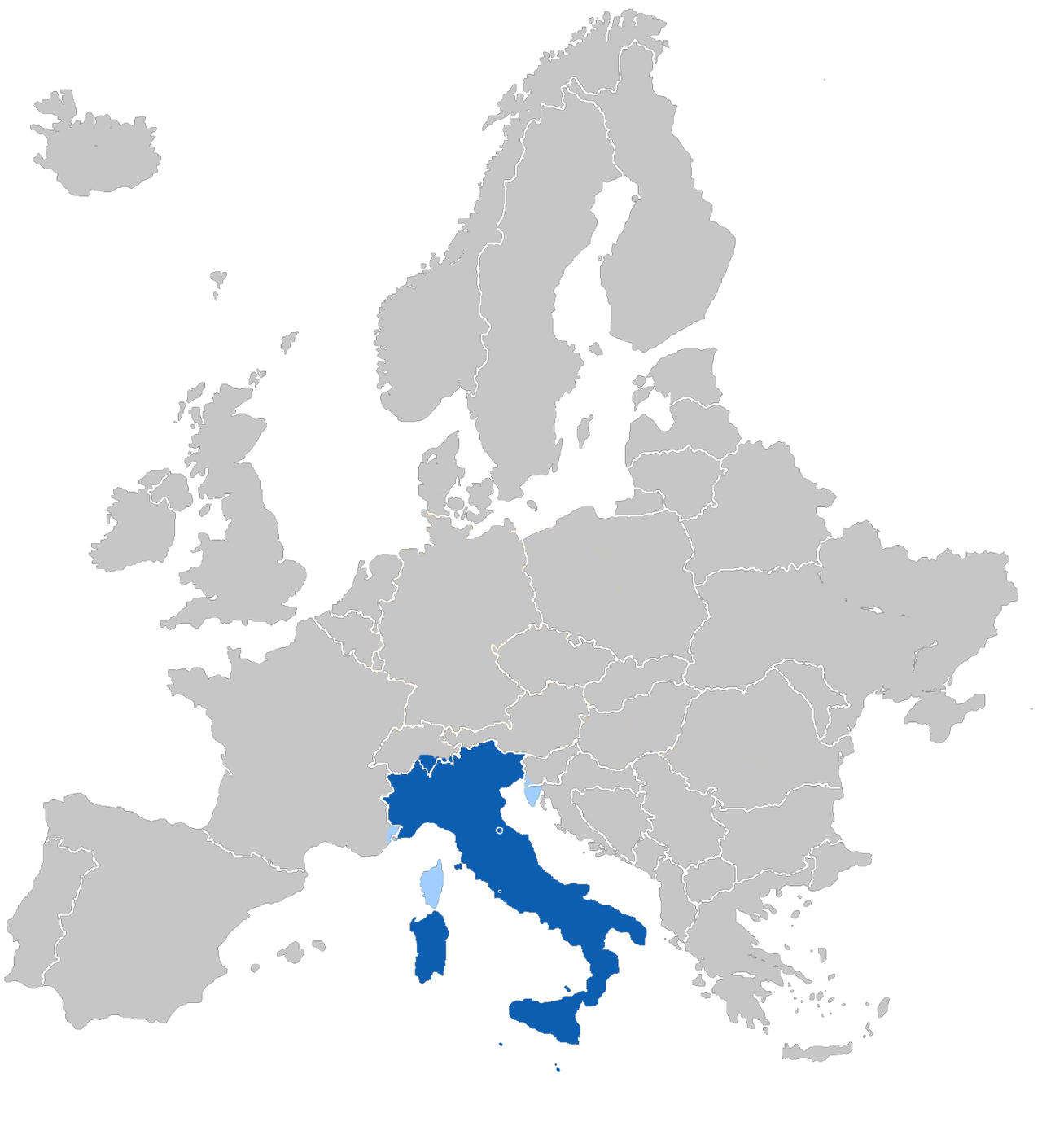
Italian is a Romance language primarily associated with Italy. It is recognised as an official language in a number of states and territories (see list) including San Marino, Vatican City and Switzerland. In parts of Slovenia and Croatia Italian has official status regionally. Smaller communities speak Italian in places such as Monaco, Malta, Albania, Montenegro and on the Dodecanese islands of Greece. Historical presence and colonial-era contacts also left Italian-speaking communities in parts of Eritrea, Libya, Ethiopia, Somalia and Tunisia.
Image gallery
10 Images



Origins and standardisation
Modern Italian developed from spoken forms of Latin, adopting vocabulary and some structures from neighbouring languages and older Mediterranean cultures such as Greek and Etruscan. The literary and standard variety used today traces much of its prestige to the Tuscan speech of writers and poets; the Tuscan model from Tuscany became the basis for educated written Italian, even as numerous regional dialects continued to be used in everyday life. Standardisation accelerated with the spread of mass education, print media and later radio and television.
Core characteristics
Italian is an inflected language: grammatical relationships are often expressed by changing endings. Nouns carry grammatical gender and number; typical patterns are masculine endings in -o for singular and -i for plural, and feminine endings in -a for singular and -e for plural. The system of nouns and grammatical gender is largely grammatical, not strictly biological.
Verbal morphology is richer: Italian verbs are organised by conjugation classes and take different endings depending on person and number. Learners study conjugation patterns across tenses such as past, present and future. Because many grammatical roles are marked on the verb, subject pronouns can often be omitted when the verb form makes the person clear.
Pronunciation, writing and notable features
Italian orthography is largely phonemic: most letters map to a small set of predictable sounds, which makes pronunciation straightforward for learners who know the rules. Stress and vowel quality are important for meaning. The language also preserves rhythmic and syllabic patterns that contribute to its reputation for musicality.
Regional varieties and distinctions
Italy hosts a continuum of regional varieties sometimes described as dialects or separate languages. Forms such as Neapolitan, Sicilian, Venetian and the northern Gallo-Italic groups differ substantially in vocabulary, phonology and grammar from standard Italian. In many areas local speech remains the vehicle for everyday interaction, while standard Italian serves formal, educational and media functions.
Uses and cultural influence
Italian has had a strong cultural impact beyond everyday communication. Many culinary terms have entered other languages—words like pizza, spaghetti and ravioli are internationally recognised. The language’s historic role in Western art music is reflected in widely used musical directions and terms of Italian origin; for example, general references to music often note Italian words such as forte and allegro. Names of instruments like cello and tuba are also of Italian or Italianate origin.
Some Italian words entered other languages through historical and social channels: terms such as mafia and vendetta reflect particular cultural phenomena that became globally known. In former colonial territories small-scale contact languages or pidgin forms incorporating Italian elements developed and can still be traced in certain communities.
Why it matters
- Italian connects modern European culture with a long literary tradition and the legacy of Latin.
- Its predictable pronunciation and transparent spelling make it accessible to learners who already know another Romance language.
- Regional varieties provide rich material for linguistic study of divergence, contact and standardisation.
For more on history, grammar and regional usage consult specialised introductions and linguistic surveys dedicated to Romance languages and to Italian in particular. Online and printed resources from language institutes, universities and cultural organisations also give guidance on learning, teaching and research in Italian.
Questions and answers
Q: What countries use Italian as an official language?
A: Italian is the official language of Italy, San Marino, Vatican City and Switzerland. It is also used as an official language in some regions of Slovenia and Croatia.
Q: How many people speak Italian?
A: About 70 million people around the world speak Italian.
Q: What are some examples of how gender affects nouns in Italian?
A: Most singular masculine nouns end in -o, and most plural masculine nouns end in -i. Most singular feminine nouns end in -a, and most plural feminine nouns end in -e. For example, gatto = male cat; gatta = female cat; gatti = male cats; gatte = female cats.
Q: How does conjugation affect verb endings?
A: The endings of verbs depend upon the tense of the verb (past, present, future etc.) and on the person of the verb (I, you, they etc.). Because Italian grammar uses endings for these inflections, personal pronouns are not always needed when forming a sentence.
Q: Are there any difficult sounds to learn when pronouncing words in Italian?
A: No, pronunciation is simple with just a few rules to learn and hardly any difficult sounds.
Q: What are some examples of words from Italian that have been adopted into English?
A: Examples include pizza, spaghetti and ravioli for food items; forte and allegro for musical terms; cello and tuba for musical instruments; mafia and vendetta from darker aspects of culture.
Q:What pidgin versions were developed from the Italian language?
A:Pidgin versions were developed from the language in colonies such as Eritrea , Somalia , Libya .
Related articles
Author
AlegsaOnline.com Italian language: origin, structure, usage and cultural influence Leandro Alegsa
URL: https://en.alegsaonline.com/art/48595
Sources
- ec.europa.eu : Eurobarometer – Europeans and their languages