
Macromolecule: Large Biological and Synthetic Polymers
Macromolecules are very large molecules built from repeating subunits (monomers). They include proteins, nucleic acids, carbohydrates, lipids and many synthetic polymers and have diverse structures and functions.
A macromolecule is a very large molecule composed of many atoms linked together into a single chemical entity. In practice the term is most often applied to polymers, which are built from repeating small units called monomers. Macromolecules occur in living systems and in synthetic materials; their size, shape and chemical bonds determine physical properties such as strength, flexibility, solubility and biological activity.
Image gallery
3 Images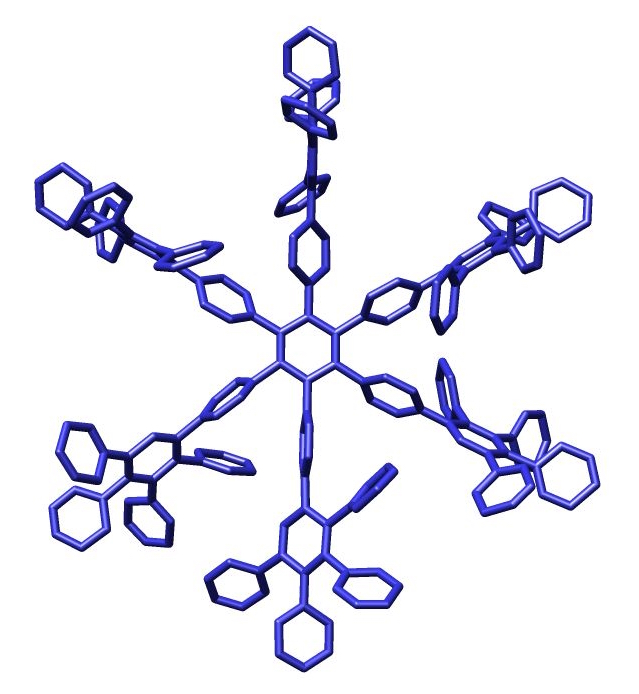


Key characteristics
Macromolecules are defined by their high molecular weight and by structural features that arise when monomers join together. They may be linear, branched or cross‑linked and can form single chains, folded three‑dimensional shapes or networks. Important characteristics include degree of polymerization (how many monomer units), molecular weight distribution, backbone chemistry and the presence of functional side groups that affect reactivity and interactions with other molecules.
Biological macromolecules
In biology, four classes of macromolecules dominate: proteins, nucleic acids, carbohydrates and lipids. Proteins are polymers of amino acid residues that fold into functional enzymes, structural elements and signaling molecules. Nucleic acids such as DNA and RNA store and transmit genetic information using chains of nucleotides. Carbohydrates range from simple monosaccharide units to large polysaccharides that provide energy storage or form structural materials. Lipids are a diverse group of hydrophobic molecules, often built from fatty acid components, that form membranes and store metabolic energy.
Synthetic macromolecules and materials
Man‑made macromolecules include plastics, fibers and elastomers produced by polymerization of designed monomers. Common examples are polyamides such as nylon, polyethylene, polyesters and specialized inorganic polymers. Synthetic macromolecules can be engineered for toughness, thermal resistance, biodegradability or electrical properties, and they underpin modern materials science and manufacturing.
Formation, properties and analysis
Polymerization reactions that form macromolecules include step‑growth and chain‑growth mechanisms. The resulting material properties depend on chain length, tacticity (stereochemistry), crystallinity and intermolecular forces. Characterization techniques commonly used are size‑exclusion chromatography, mass spectrometry, spectroscopy and microscopy; these reveal composition, molecular weight distribution and architecture.
Importance, distinctions and examples
Macromolecules are central to life and technology. Biological macromolecules act as catalysts, carriers of information and structural scaffolds. Synthetic macromolecules enable textiles, medical devices and electronics. Distinctions often drawn are between natural versus synthetic, organic versus inorganic backbones, and between homopolymers (single monomer type) and copolymers (mixed monomers).
Selected examples and related topics
- Proteins — polymers of amino acids that perform most cellular functions.
- Nucleic acids — informational polymers including DNA and RNA, built from nucleotides.
- Carbohydrates — energy and structural polymers of monosaccharide units and various sugars.
- Lipids or fats — hydrophobic macromolecules often formed from fatty acids and glycerol.
- Nylon and other synthetic polymers such as polyamides.
Further reading and resources
- Definition and basic concepts of molecule
- Atomic composition and elements in macromolecules
- Polymers: structure and types
- Monomers and polymerization
- Organic chemistry foundations
- Role of carbon in organic macromolecules
- Hydrogen in biological molecules
- Oxygen-containing functional groups
- Nitrogen as a backbone element in amino and nucleotide chemistry
- Inorganic macromolecules and alternative backbones
The study of macromolecules bridges chemistry, biology and materials science. Understanding how monomers assemble and how macromolecular structure determines function remains a central goal in research and engineering.
Related articles
Author
AlegsaOnline.com Macromolecule: Large Biological and Synthetic Polymers Leandro Alegsa
URL: https://en.alegsaonline.com/art/60393