
Maillard reaction
A non-enzymatic reaction between reducing sugars and amino acids that produces browned color, complex flavors and aromas in cooked foods; central to culinary science and relevant to health.
Overview
The Maillard reaction is a complex, non-enzymatic chemical reaction that occurs between a reducing sugar and an amino compound, most commonly an amino acid or protein fragment. It is the principal process that produces the browned surface, distinctive aromas and rich flavors of many cooked foods — from seared meat and toasted bread crusts to roasted coffee, cocoa and cookies.
Image gallery
5 Images


Chemistry and stages
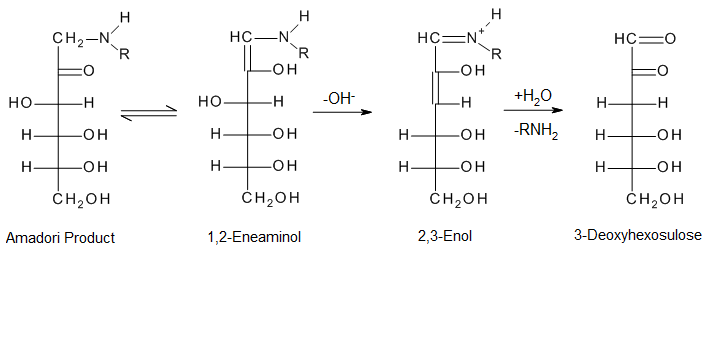
The reaction begins when the reactive carbonyl group of a reducing sugar reacts with a nucleophilic amino group, forming a Schiff base and then Amadori or Heyns rearrangement products. Further transformations yield hundreds of intermediate molecules and, at later stages, high–molecular-weight brown pigments known as melanoidins. At sufficiently high temperatures other thermal processes such as caramelization and pyrolysis can overlap with Maillard chemistry.
Characteristics and controlling factors
- Temperature: reaction rate increases with heat; many desirable flavors form above ~120°C in low-moisture zones.
- pH: alkaline conditions tend to accelerate pathways that produce brown colors and different aromas.
- Water activity: moderate drying often promotes Maillard reactions; too much water dilutes reactants and slows the process.
- Reactant types: the specific sugar (glucose, fructose, lactose) and the particular amino acid or lysine-containing peptide influence flavor outcomes.
Culinary importance and examples
Chefs and food scientists exploit the Maillard reaction to develop desired crusts, savory notes and toasted aromas. Typical examples include:
- Seared steak and roasted poultry — browned crusts that enhance umami and roast flavors.
- Baked breads and cookies — crust color and aroma from reactions at the dough surface.
- Roasted coffee and cocoa — complex bitter, caramel and roasted notes arise from advanced Maillard chemistry.
History, applications and health notes
Named after the French chemist Louis-Camille Maillard, who described the initial steps in the early 20th century, the reaction is now a major focus in food science and industrial flavor manufacture. In biological contexts, related chemistry produces advanced glycation end-products (AGEs) that have been associated with aging and some chronic diseases; the relationships are active areas of research and depend on exposure, metabolism and diet. Food processing strategies balance desirable flavor formation with nutritional and safety considerations.
Notable distinctions
Although often confused with caramelization, the Maillard reaction requires amino groups and produces nitrogen-containing flavors and brown pigments, whereas caramelization is the thermal degradation of sugars alone. Understanding these differences helps cooks and manufacturers control color, taste and texture in diverse products.
Related articles
Author
AlegsaOnline.com Maillard reaction Leandro Alegsa
URL: https://en.alegsaonline.com/art/60771