
Protein: structure, synthesis, functions, and significance
Proteins are polymers of amino acids that fold into functional molecules. This article outlines their structure, synthesis, roles in biology, medical relevance, industrial uses, and distinguishing features.
Overview
Proteins are large biological molecules that act as the primary functional units of cells. They are built from small building blocks called amino acids linked together into long chains or polymers often described as long-chain molecules. Adjacent amino acids in these chains are joined by peptide bonds, forming one or more polypeptide chains that fold into a specific shape. Proteins are a major class of biochemical macromolecules and perform a vast range of tasks that sustain life.
Image gallery
10 Images






Composition and levels of structure
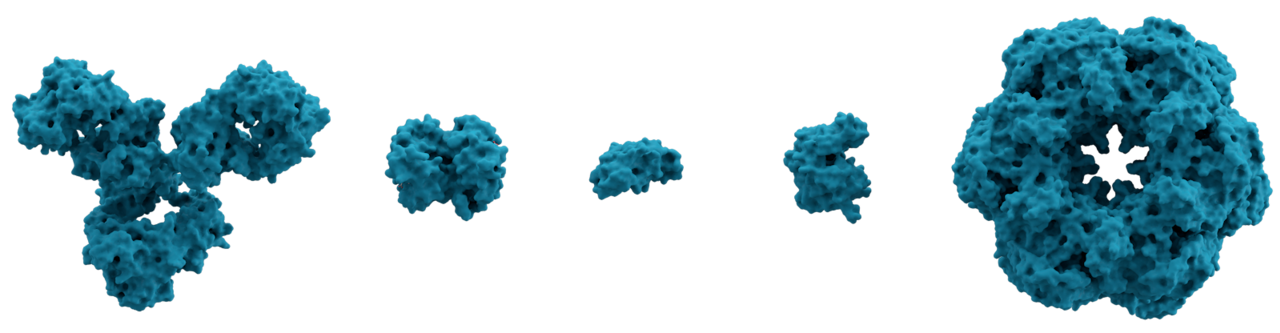
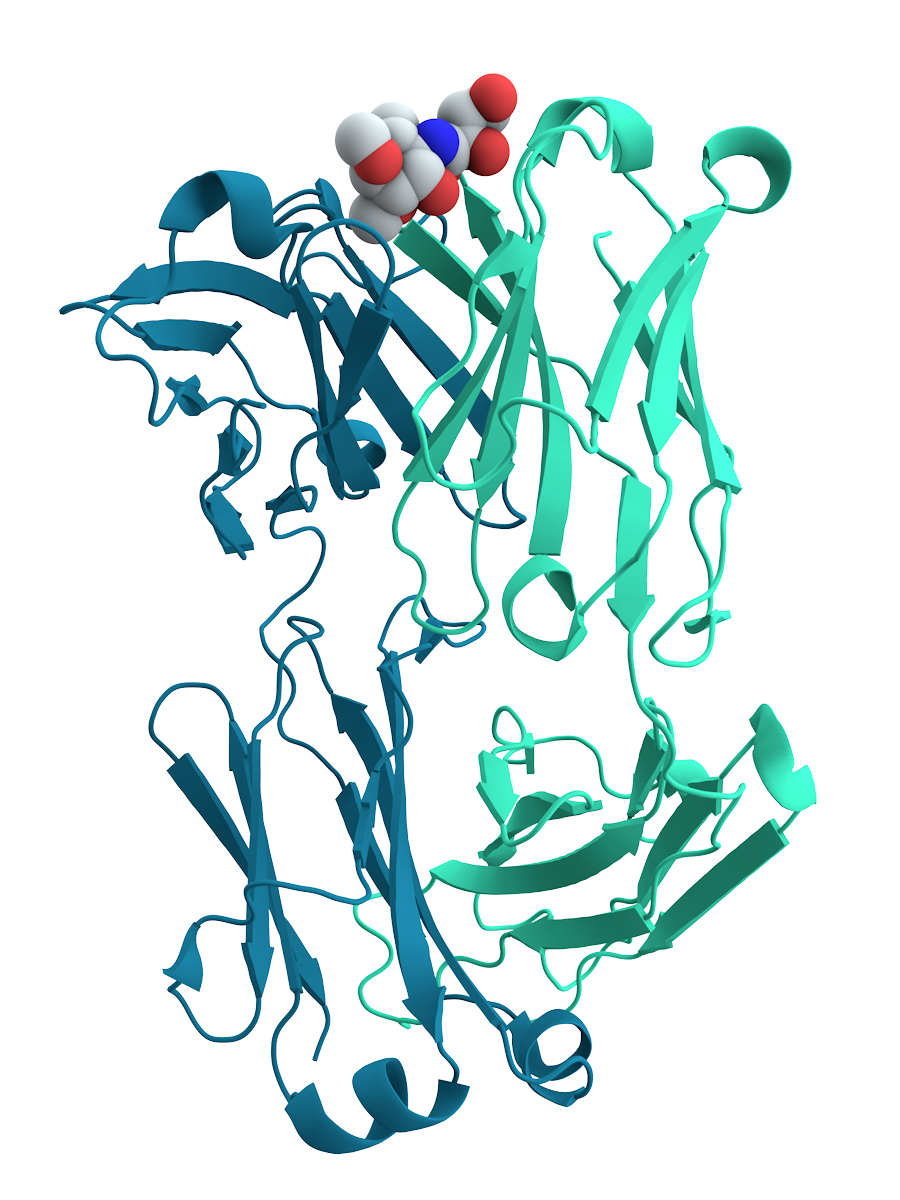
At the simplest level, a protein is a sequence of amino acids assembled into a single chain or multiple chains. Each chain is a single linear polymer known as a polypeptide. The order of amino acids — the sequence — determines how the chain folds. Folding produces recurring local shapes such as helices and sheets, and higher-order arrangements that yield a protein's three-dimensional conformation. Some proteins are compact and globular, while others form fibrous structures. Many proteins also include non-amino acid components (cofactors) or undergo chemical changes after synthesis that affect stability and activity.
Synthesis and modification
Proteins are produced within cells by decoding genetic instructions. The information for the amino-acid sequence resides in the DNA sequence of a gene. Through transcription and translation, the genetic code is read and amino acids are linked into a polypeptide. After synthesis, proteins commonly experience post-translational modifications — such as phosphorylation, glycosylation or cleavage — that alter their function, localization, or lifespan.
Functions and examples
Proteins carry out most cellular tasks. Key functional categories include:
- Enzymes: biological catalysts that accelerate chemical reactions (for example, digestive enzymes).
- Structural proteins: give cells and tissues shape and strength (for example, collagen).
- Transport and storage: move molecules within organisms (for example, hemoglobin transports oxygen).
- Signaling and regulation: receptors, hormones and transcription factors control cellular responses.
- Defense and movement: antibodies and motor proteins support immunity and motion).
Proteins interact closely with other classes of biological macromolecules, including polysaccharides and nucleic acids, forming complexes and pathways essential to life.
Medical, nutritional and industrial significance
In human health, proteins are crucial both as nutrients that supply essential amino acids and as therapeutic targets. Misfolding or mutations in proteins can cause disease — for example, some neurodegenerative disorders involve protein aggregation. In biotechnology and industry, proteins are used as enzymes in laundry detergents, in food processing, and as biologic drugs and diagnostic tools. Techniques such as X-ray crystallography, cryo-electron microscopy and mass spectrometry allow researchers to determine protein structures and functions for medical and technological applications.
Notable facts and context
Proteins were recognized in the 19th century as a distinct class of biomolecules and remain a principal focus of molecular biology. The typical cellular proteome — the full set of proteins expressed by a cell — is dynamic and reflects the cell's state and environment. Investigating proteins, from sequence to structure to function, continues to reveal fundamental principles of biology and to drive innovations in medicine, agriculture and industry.
Further reading and resources: polymers and chain structure, amino acid chemistry, peptide bond formation, biochemical role, compound classification, polypeptide definition, fibrous proteins, polymer concepts, sequence importance, genes and coding, genetic code overview, macromolecules, polysaccharide interactions, nucleic acid relations.
Questions and answers
Q: What are proteins?
A: Proteins are long-chain molecules built from small units known as amino acids.
Q: How are amino acids joined?
A: Amino acids are joined with peptide bonds.
Q: What is a polypeptide?
A: A polypeptide is a single linear polymer chain of amino acids.
Q: Where does the sequence of amino acids in a polypeptide come from?
A: The sequence of amino acids in a polypeptide comes from the DNA sequence of a gene.
Q: What happens shortly after synthesis to some amino acids?
A: Shortly after synthesis, some amino acids are chemically modified.
Q: What does the modification of amino acids in proteins do?
A: The modification of amino acids in proteins alters the folding, stability, activity, and function of the protein.
Q: Are all proteins made up of only amino acids?
A: No, sometimes proteins have non-peptide groups attached, as cofactors.
Related articles
Author
AlegsaOnline.com Protein: structure, synthesis, functions, and significance Leandro Alegsa
URL: https://en.alegsaonline.com/art/79518
Sources
- ncbi.nlm.nih.gov : ncbi.nlm.nih.gov/pubmed/24379683
- medlineplus.gov : medlineplus.gov/ency/article/002222.htm
- nature.com : "Origin of the word 'protein'"