
Nylon: Synthetic Polyamide Fiber
Nylon is a family of synthetic polyamides widely used for textiles and engineering plastics. Developed in the 1930s, it is prized for strength, elasticity, abrasion resistance and versatile applications.
Nylon is a synthetic artificial fibre belonging to the class of polymers known as polyamides. It produces a smooth, often silky fabric when spun into yarns and, depending on formulation and processing, ranges from soft, elastic textiles to hard, wear-resistant engineering plastics.
Image gallery
10 Images

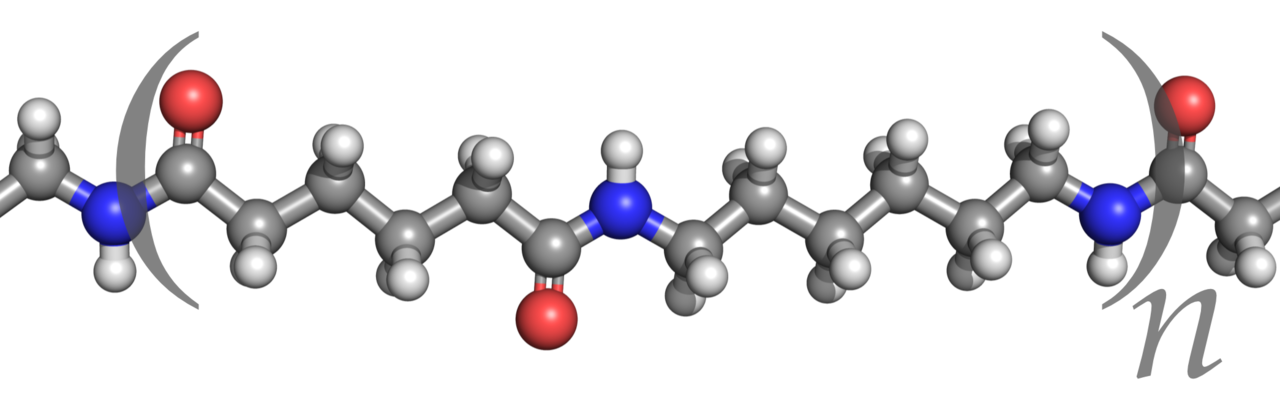


Properties and common types
Nylon fibers are noted for high tensile strength, good abrasion resistance, moderate elasticity and low friction. Two widely used variants are nylon-6,6 and nylon-6: nylon-6,6 is prepared from a diamine and a dicarboxylic acid, while nylon-6 is typically made by ring-opening polymerization of caprolactam. These chemical differences affect melting temperature, moisture uptake and mechanical behavior, so formulations are chosen to match end-use requirements.
History and development
Nylon was developed in the 1930s by researchers at the DuPont company under the direction of Wallace Carothers and his team. It was one of the first fully synthetic fibers to reach large-scale production and entered commercial use in the late 1930s and early 1940s. Early applications included durable consumer items such as toothbrushes and hosiery, which demonstrated nylon's ability to replace or complement natural fibers like silk.
Uses and applications
Nylon has been adopted across apparel, industrial and consumer markets because of its versatility. Typical uses include:
- Clothing and hosiery where stretch and resilience are needed
- Parachutes and textile components in aviation and safety equipment
- Ropes and cordage for marine and industrial use
- Tyre cord and other reinforcement yarns in automotive products
- Carpets and upholstery fibers for high-traffic interiors
- Fishing nets, lines and other outdoor gear
Manufacture, processing and sustainability
Commercial nylon is produced through polymerization processes that yield long-chain polyamides; fibers are formed by extruding molten polymer through spinnerets, then drawing and heat-setting the filaments to align chains and increase strength. Like many synthetic polymers, nylon is durable but not readily biodegradable, which raises concerns about waste and microplastic pollution. Recycling technologies and chemical recovery processes exist and are increasingly applied to reclaim nylon for new products.
Notable distinctions include nylon's role in replacing some natural fibers and its dual identity as both a textile fiber and an engineering plastic. For technical details and materials data consult specialist resources: overview, polyamide chemistry, or manufacturer guides at processing and applications.
Questions and answers
Q: What is nylon?
A: Nylon is an artificial fibre that was first used on February 28, 1935.
Q: Why was nylon invented?
A: Nylon was invented to create a material that is strong, hard, and water-resistant.
Q: What was the first product that used nylon?
A: The first product that used nylon was toothbrushes.
Q: What other products can be made with nylon?
A: Nylon can be used to make clothes, parachutes, ropes, string for tires, carpets, fishing nets, and cloth and socks.
Q: Who invented nylon?
A: Nylon was invented by Wallace Carothers at Du-Pont.
Q: Why is nylon commonly used in synthetic fibres for clothing?
A: Nylon is strong, hard, and water-resistant, which makes it a durable and long-lasting material suitable for synthetic fibres in clothing.
Q: What are polyamides?
A: Polyamides are a type of polymer made of repeating units called amides. They are mostly used for synthetic fibres in clothing, and nylon is one of the most commonly used polyamides.
Related articles
Author
AlegsaOnline.com Nylon: Synthetic Polyamide Fiber Leandro Alegsa
URL: https://en.alegsaonline.com/art/71553
Sources
- dx.doi.org : 10.1002/0471440264.pst251
- acs.org : "Foundations of Polymer Science: Wallace Hume Carothers and the Development of Nylon"
- sciencehistory.org : "Wallace Hume Carothers"