
Irish War of Independence (1919–1921)
Armed campaign by the Irish Republican Army against British rule in Ireland (1919–1921), ending in a truce and the Anglo‑Irish Treaty that created the Irish Free State and partitioned Northern Ireland.
Overview
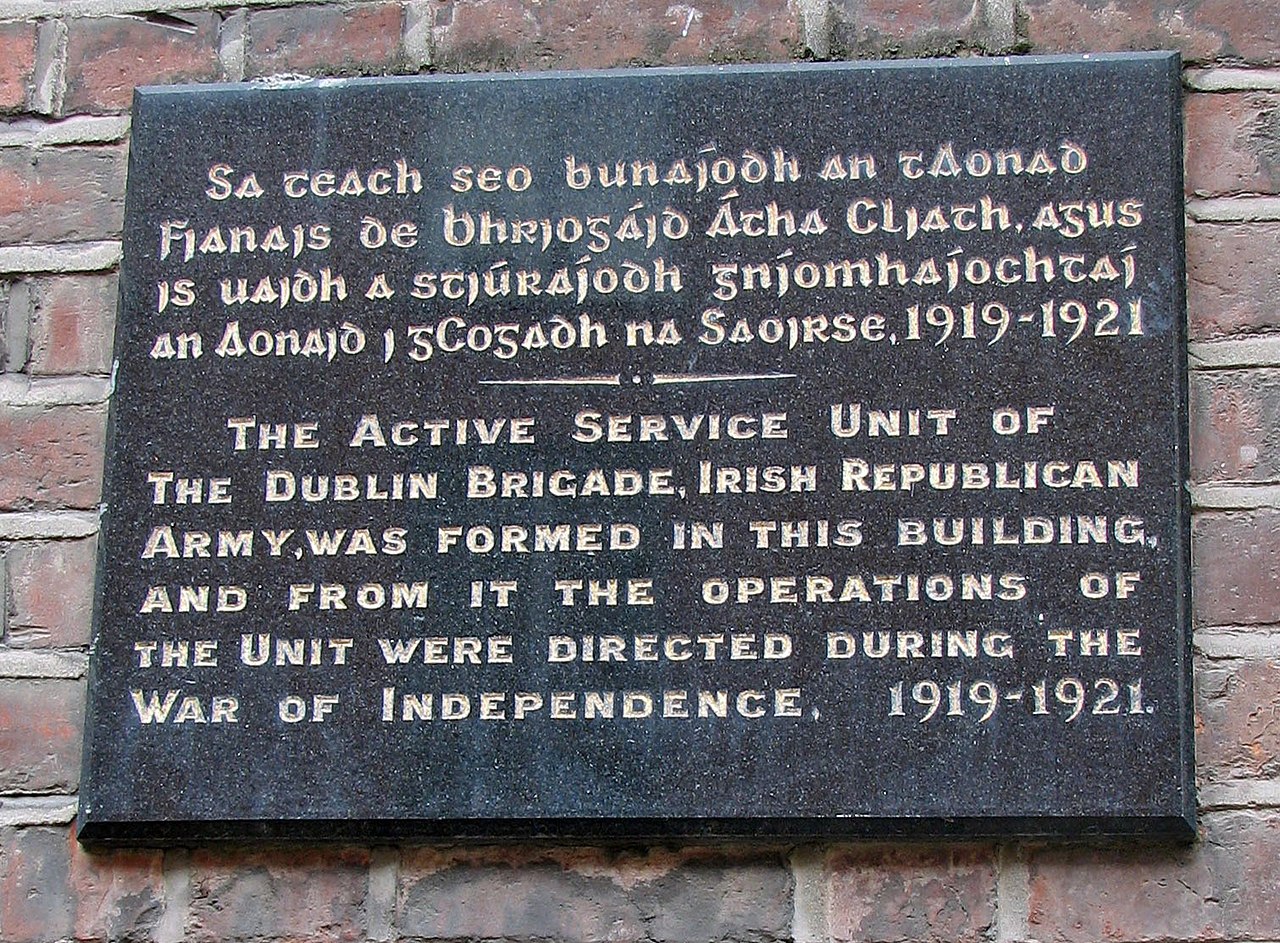
The Irish War of Independence was a conflict fought primarily between the Irish Republican Army (IRA) and forces representing the British state, including uniformed soldiers and other security units. The campaign took place from 1919 until a truce in June 1921, when negotiators began formal peace discussions and later drafted a treaty. The conflict combined guerrilla actions carried out by the IRA with reprisals and countermeasures by British forces, and it transformed Ireland's political landscape.
Image gallery
10 Images


Origins and causes
The immediate catalyst for renewed armed resistance was the 1916 Easter Rising, an insurrection that, despite its military failure, radicalized public opinion after leaders were executed. Many Irish republicans sought full national independence and removal of the British army presence from the island. The movement organized politically under Sinn Féin and militarily as the IRA, which evolved from earlier republican groups that had campaigned for autonomy.
Nature of the conflict
The war was characterized by ambushes, assassinations, intelligence operations, and attacks on symbols of state authority. The Royal Irish Constabulary (RIC) and its auxiliaries were frequent targets; the RIC is often referenced in contemporary accounts and official records as the local police force (RIC). British reinforcement units, including the controversial volunteer recruits commonly called the Black and Tans, were noted for harsh reprisals that intensified public outrage. The IRA operated in cells and used hit‑and‑run tactics rather than set‑piece battles, aiming to undermine British governance and compel negotiation.
Political developments and geography
Support for republican or unionist positions varied across Ireland. Much of the south and west leaned toward republican aspirations for an independent state, while parts of Ulster—shaped by earlier colonization such as the Ulster Plantations—remained strongly unionist and oriented toward continued association with Britain. Sinn Féin's electoral victories and an alternative republican government increased pressure on London to seek a settlement. Prominent political actors from both sides engaged in talks that culminated in a negotiated settlement.
Outcome and consequences
Negotiations produced the Anglo‑Irish Treaty, agreed by delegates in late 1921. The agreement led to the creation of the Irish Free State, a self‑governing dominion within the British Commonwealth, and set the conditions that left six counties in the north as a separate entity, Northern Ireland, remaining part of the United Kingdom. The treaty resolved some matters of sovereignty and governance but also provoked a bitter split among Irish leaders, contributing to the subsequent Irish Civil War.
Key participants and terms
- Sinn Féin – the political party that advanced republican aims in parliament and public life.
- Independence – the principal objective of republican forces seeking a sovereign Irish state.
- Ireland – the island and political entity at the center of the dispute.
- British soldiers and auxiliary forces involved in security operations.
Legacy
The war fundamentally altered relations between Ireland and Britain, ending most direct British rule in most of Ireland and institutionalizing partition. Its legacy remains central to Irish political memory, law, and commemorations. Discussions of the period emphasize both the guerrilla campaign of the IRA and the political negotiations that produced a compromise settlement, while historians continue to examine causes, conduct, and consequences with care and attention to contested interpretations.
For further reading and primary documents, consult archival collections and scholarly treatments that place the military, social, and diplomatic aspects of the conflict into broader modern Irish history contexts. Contemporary accounts, local records, and later analyses all contribute to understanding how the events between 1919 and 1921 reshaped the island.
Related articles
Author
AlegsaOnline.com Irish War of Independence (1919–1921) Leandro Alegsa
URL: https://en.alegsaonline.com/art/48189