
Iron Curtain: political, military and social divide in Europe during the Cold War
The Iron Curtain describes the political, military and ideological boundary separating the Soviet-led Eastern Bloc from Western Europe after World War II and its legacy in memory and politics.
Overview
The term Iron Curtain became a widely used shorthand for the broad political, military and ideological division that emerged in Europe after World War II. It denoted the growing separation between states aligned with the Soviet Union and those aligned with or influenced by Western democracies during the Cold War. The phrase referred both to tangible frontiers—walls, fences, watchtowers and checkpoints—and to barriers of information, trade and diplomacy that limited contact across the continent.
Image gallery
10 Images





Origins and early development
The division took shape in the chaotic aftermath of the 1939–1945 conflict. Wartime allies divided defeated territories and occupation zones; after the common enemy, Nazi Germany, was defeated in 1945, the Allies administered Germany, Austria and parts of Central Europe in separate zones. These arrangements hardened into distinct blocs as the Soviet zone developed different institutions and political systems from those in the west. International agreements and later treaties, including the 1955 Austrian State Treaty, helped codify zones of influence and the status of neutral states.
Geography and border features
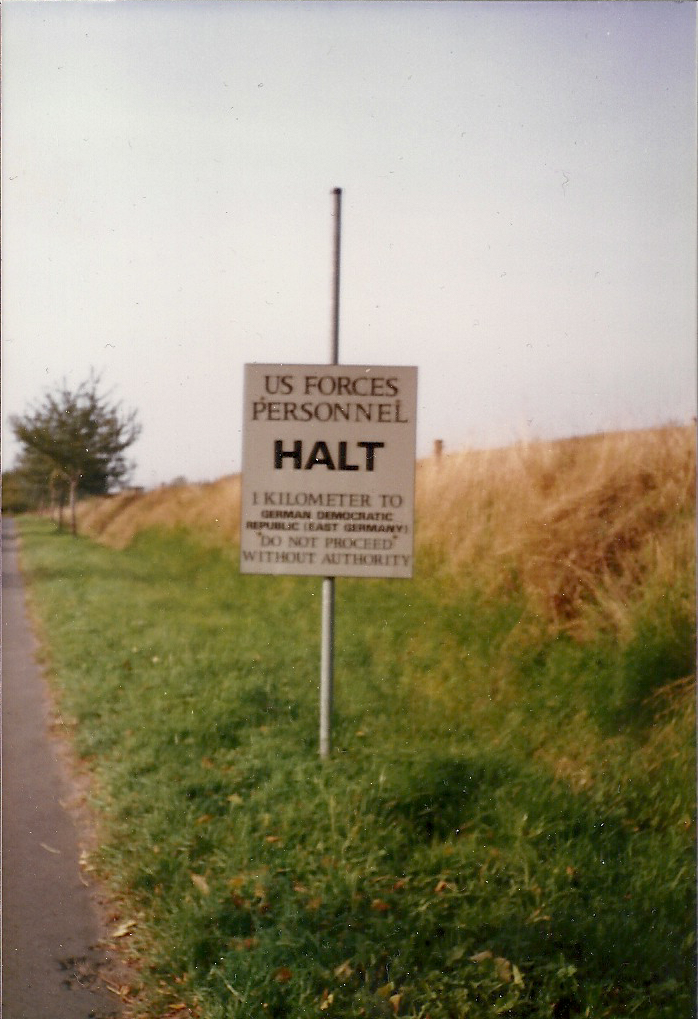
On maps the Iron Curtain ran roughly from the Baltic Sea in the north to the Adriatic in the south, crossing national boundaries. Prominent segments included the fortified frontier between East Germany and West Germany, the division around Berlin, the frontier between Czechoslovakia and Austria, and barriers along the border of Hungary with western neighbours. Physical defenses ranged from concrete walls and watchtowers to minefields, barbed wire, patrol roads and heavily controlled crossing points; these were reinforced by administrative measures such as exit permits and travel bans.

Political meaning and satellite states
Politically, the Iron Curtain signalled that many governments in the east were under the political, military or economic influence of the Soviet Union. Countries in this sphere were often called satellite states. Examples include Poland, Romania and Bulgaria, where policy and security priorities were aligned with Moscow and where public life was shaped by one-party rule, planned economies and limits on free expression. In response, western states strengthened alliances and institutions to deter perceived expansion, exemplified by NATO and other cooperative measures.

Key events and crises
The Iron Curtain was the setting for numerous Cold War crises and episodes that illustrated the human and political costs of division. Early tensions included the Berlin Blockade and airlift, and later flashpoints included uprisings and reforms inside the Soviet bloc. Notable episodes such as the Hungarian uprising of 1956 and the Prague Spring of 1968 exposed limits to sovereignty in the eastern bloc and led to repression. The construction of the Berlin Wall in 1961 became an especially powerful symbol of the curtain's physical and psychological effects.
Public discourse and Churchill's speech
The phrase itself was popularised in western public discourse after a 1946 address by Winston Churchill, a former leader of the United Kingdom. Delivered in the United States at American University with the support of U.S. leadership, the speech described a descending barrier across Europe and helped crystallize western perceptions of a deepening East–West divide. U.S. president Harry S. Truman and successive American administrations treated the divide as central to diplomatic and strategic planning, while Soviet leaders such as Nikita Khrushchev reacted with alarm to such rhetoric.

Movement, refugees and daily life
The curtain constrained travel, trade and family ties. Many people attempted to flee east–west restrictions, and refugee flows had political as well as humanitarian consequences. Escape attempts ranged from legal emigration to risky border crossings; some became internationally known and influenced public perceptions of the regimes on both sides. Internal controls also affected everyday life in the east through surveillance, censorship and economic limitations.
The decline and legacy
By the late 1980s political change, economic strain and popular movements weakened the structures that sustained the Iron Curtain. Reformers in several eastern states, along with shifting Soviet policies, led to the opening of borders, the collapse of communist governments in many countries and symbolic events such as the fall of the Berlin Wall in 1989. Formal institutions and alliances that had embodied the division were dissolved or transformed in the years that followed.

Remembrance and study
The Iron Curtain remains an important topic in history, memory and public commemoration. Former border installations have been preserved as museums and memorials that illustrate the human costs of division. Scholars study the curtain to understand geopolitical rivalry, the dynamics of occupation and control, and the social consequences of long-term separation. Comparative work examines how different communities experienced restrictions and adapted to shifting political circumstances.
Further reading and resources
- Overviews of the Cold War provide essential context for the curtain's origins and effects.
- Studies of the Eastern Europe region and accounts of satellite states illuminate local experiences and policies.
- Regional histories of Germany and the status of Berlin show how occupation zones shaped postwar politics.
- Documentation on the 1955 treaty affecting Austria explains arrangements that produced neutrality in part of Europe.
- Biographical and diplomatic studies of figures such as Churchill, Truman and Soviet leaders offer insight into policymaking.
- Country-specific accounts of places such as East Germany, West Germany, Czechoslovakia and Hungary provide detail on border regimes and everyday life.
- Comparative resources consider how the Europe of the twentieth century was reshaped by division and later reintegration.
For further archival materials, maps and photographic collections see national and academic repositories and the specialised collections that document the history of the Warsaw Pact, the political development of Bulgaria and other states, and the diplomatic interactions between the Soviet Union and western governments. These resources complement museum sites and oral histories that preserve how the Iron Curtain affected millions across the continent.
Additional points of reference include policy papers from western capitals on the West and country studies that examine the institutional forms of rule and resistance that defined the eastern bloc.
Related articles
Author
AlegsaOnline.com Iron Curtain: political, military and social divide in Europe during the Cold War Leandro Alegsa
URL: https://en.alegsaonline.com/art/48209