
Italian irredentism in Dalmatia: history, aims, and legacy
The movement among some Italian-speaking communities in Dalmatia advocating annexation to Italy from the Napoleonic era through World War II, and its political and cultural consequences.
Italian irredentism in Dalmatia refers to political and cultural efforts by Italian-speaking communities and their supporters to bring parts of the Dalmatian coast into the Italian state. Those efforts drew on a long history of Venetian influence along the Adriatic and became a distinct strand of Italian nationalism in the 19th and early 20th centuries. Discussions of territorial affiliation intensified during periods of great geopolitical change.
Image gallery
5 Images


Background and identity
Dalmatia is a coastal region on the eastern Adriatic long marked by a mix of Slavic and Romance-speaking populations. Many urban centers kept an Italianate culture after centuries of rule by the Republic of Venice. Members of the Dalmatian Italians promoted cultural institutions, newspapers and schools that preserved Italian language and customs while the countryside remained predominantly Slavic.
Historical development
Irredentist sentiment developed in several phases and was shaped by international events:
- Venetian legacy and local Italian culture before the 19th century;
- Reorganization under the Napoleonic era and later Austrian rule, which stimulated new national awareness;
- Risorgimento-era Italian nationalist currents that argued some Adriatic coasts belonged with Italy;
- World War I and the diplomatic promises and disputes over an accession to Italy of certain territories, which led to partial Italian gains;
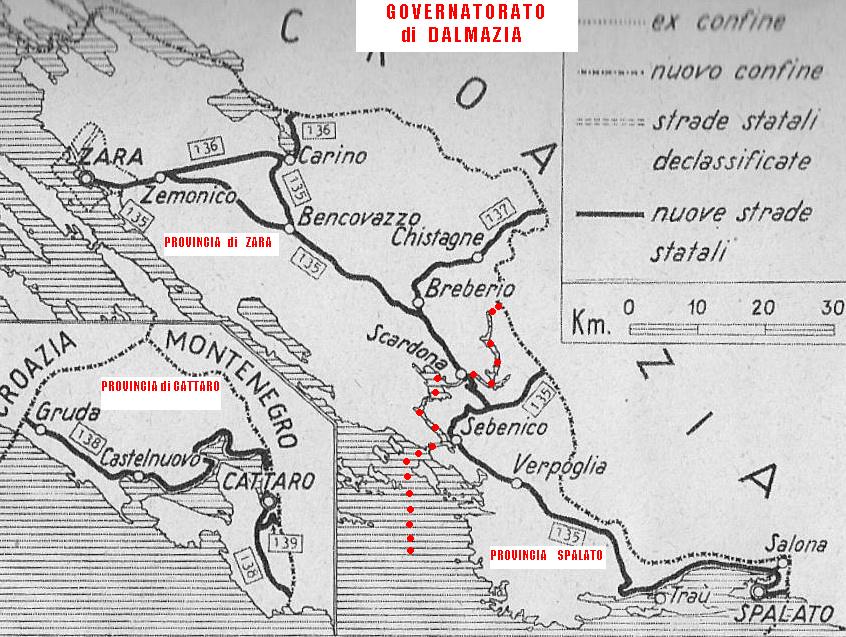
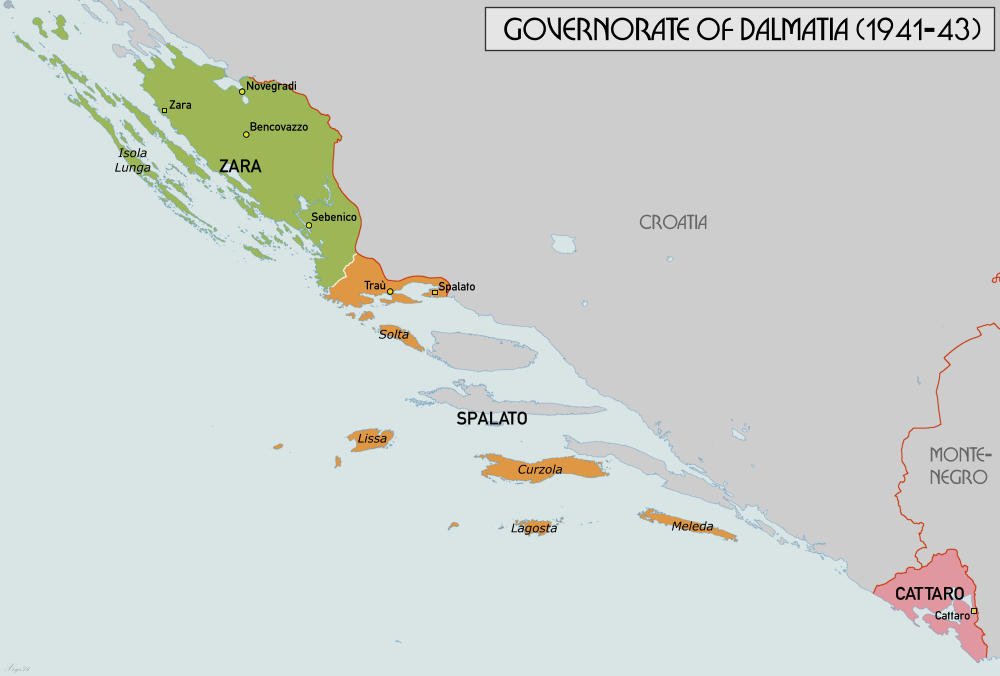
- Interwar Fascist claims and the occupation of coastal zones in World War II (World War II), followed by wartime upheaval and postwar boundary settlements.
Consequences and legacy
The irredentist campaign had tangible political effects: after 1918 some coastal towns came under Italian administration, while most of Dalmatia remained outside Italy. The wartime occupations and postwar realignments led to population movements, property disputes and strained relations between Italian and South Slavic communities. In the decades after 1945 many people of Italian language and culture left or migrated, and the region's ethnic map changed considerably.
Notable distinctions and modern perspective
Important distinctions include the difference between urban Italian-speaking communities and the rural Slavic majority, and between cultural advocacy and state-backed expansionist policies. Today the subject is studied as part of broader European nationalist movements, imperial competition in the Adriatic, and the cultural history of the Venetian and Austro-Hungarian spheres. Contemporary scholarship and local institutions emphasize historical complexity and reconciliation while preserving the multilingual heritage of coastal Dalmatia.
For further context see cultural histories and collections of primary documents on the topics of national movements, minority rights and regional memory, which explore how concepts of nationhood and territory intersected with everyday life along the Adriatic shores.
Related resources and archival materials are available in studies that address the Italian-speaking communities, their institutions, and the political debates from the 19th century through the aftermath of World War II. Additional timelines and regional surveys can be found in reference works on the Adriatic basin and on the histories of Italy and the South Slavic states.
Scholars and readers may consult specialized bibliographies and local museum collections for documentary evidence and firsthand accounts of how irredentism affected towns, ports and islands in the region.
Summary: Italian irredentism in Dalmatia was a historically situated nationalist current rooted in a Venetian cultural legacy, given intensity by 19th- and 20th-century geopolitics, and leaving a mixed legacy of cultural persistence, conflict and demographic change.
See also: archival records on the Dalmatian Italians and diplomatic correspondence concerning territorial arrangements, and recent historical analyses that reassess nationalist claims in light of local social realities and postwar transformations. Napoleonic-era reforms and the later diplomatic episodes continue to be key reference points for understanding this history.
For primary sources and curated collections consult regional archives and institutional repositories that document the lives of Italian-speaking communities in Dalmatia and their interactions with wider imperial and national authorities.
Relevant entry points for readers: cultural identity, Venetian heritage, nationalist politics, wartime occupations, postwar migrations. Further reading can be sought in works addressing the Adriatic's complex multilingual and multiethnic past, and the political movements that sought to redraw its borders in the age of nationalism.
Additional links: accession debates, coastal geography, community histories, Napoleonic reforms, World War II events.
Questions and answers
Q: What is Italian irredentism in Dalmatia?
A: Italian irredentism in Dalmatia refers to the effort made by Dalmatian Italians to annex the coastal Dalmatia region to Italy from the Napoleonic era to World War II.
Q: Who were the promoters of Italian irredentism in Dalmatia?
A: The promoters of Italian irredentism in Dalmatia were the Dalmatian Italians.
Q: When did the Dalmatian Italians start promoting Italian irredentism in Dalmatia?
A: The Dalmatian Italians began promoting Italian irredentism in Dalmatia during the Napoleonic era.
Q: What region did the Dalmatian Italians try to annex to Italy?
A: The Dalmatian Italians tried to annex the coastal Dalmatia region to Italy.
Q: Was Italian irredentism in Dalmatia only a historical movement?
A: No, Italian irredentism in Dalmatia was not just a historical movement. It lasted until World War II.
Q: Have the Dalmatian Italians ever succeeded in their effort to annex coastal Dalmatia to Italy?
A: No, the Dalmatian Italians did not succeed in their effort to annex coastal Dalmatia to Italy.
Q: What was the goal of Italian irredentism in Dalmatia?
A: The goal of Italian irredentism in Dalmatia was to annex the coastal Dalmatia region to Italy.
Related articles
Author
AlegsaOnline.com Italian irredentism in Dalmatia: history, aims, and legacy Leandro Alegsa
URL: https://en.alegsaonline.com/art/48592