
Great Plains (North America): geography, ecology, history and uses
Overview of the Great Plains: extent, climate zones, soils, vegetation and wildlife, human history, agriculture and ongoing conservation and restoration efforts in this central North American grassland.
The Great Plains is a broad expanse of relatively flat to gently rolling land in central North America. Long described as a level land or open prairie, it functions ecologically as a temperate steppe or extensive grassland that stretches eastward from the rise of the Rocky Mountains toward river systems and lowlands of the interior, including drainage into larger basins such as the Mississippi River.
Image gallery
10 Images


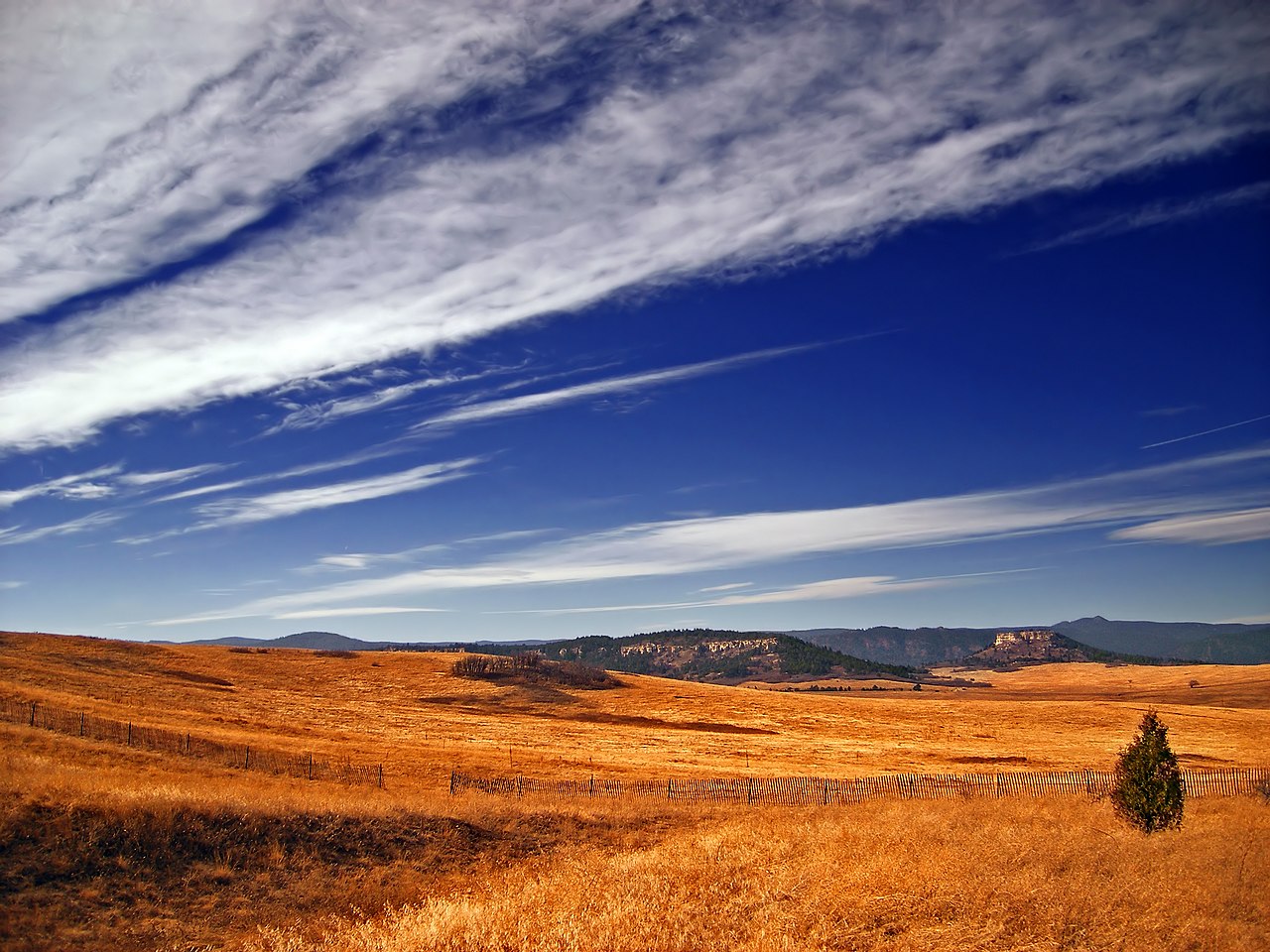


Geography and extent
The region does not follow political borders: parts of the plains lie within many U.S. states and extend into southern Canadian provinces, creating a transnational landscape with shared physical and climatic characteristics. Administratively the area overlaps roughly with about a dozen U.S. states and the southern reaches of several Canadian provinces (U.S. states and provinces). Boundaries are transitional, marked by changes in elevation, rainfall and soil types rather than by sharp lines.
Climate and soils
Climate on the plains varies on a pronounced east–west gradient. Eastern zones receive more rainfall and support taller grasses, while drier western zones near the mountains support shortgrass and mixed-grass communities. Summers are typically warm to hot and can be humid in the east, while winters are cold and may include severe arctic outbreaks. Soils are often deep and fertile where native grasses have supported long-term accumulation of organic matter, though local soil textures and moisture regimes vary widely.
Vegetation and wildlife
Historically, the plains were dominated by diverse prairie types ranging from tallgrass to shortgrass communities, with fire and grazing playing important ecological roles. Native fauna adapted to open country included large grazers and wide-ranging species; among the most iconic were vast herds of bison. Grassland bird species, small mammals such as prairie dogs, and a suite of predators and scavengers formed interconnected ecological networks.
Human history and land use
Indigenous peoples lived across the Great Plains for thousands of years, developing cultural practices and economies closely tied to grassland resources, seasonal movement and trade networks. From the 19th century onward the region experienced large-scale change as Euro-American settlement, railroads and market agriculture expanded. Native prairie was converted to cropland and grazing lands, and many river valleys and upland areas were transformed by farming and ranching.
Agriculture and economy
Today much of the Great Plains supplies grain and livestock for regional, national, and international markets. Large tracts of land are used for cereal crop production and cattle grazing, with irrigation employed where water resources permit. Crops such as wheat and corn are commonly grown in rotation with other commodities, and ranching remains an important economic activity across drier zones.
Conservation, threats and restoration
Conversion to cropland, suppression of natural fire regimes and intensive grazing have reduced original prairie to a small fraction of its former area. Soil erosion, groundwater depletion in irrigated areas, loss of native habitat and declines of grassland-dependent species are ongoing concerns. Conservation efforts focus on protecting remaining prairie remnants, promoting sustainable farming and grazing practices, restoring native vegetation, and reconnecting habitat for wildlife. Strategies include rotational grazing, reduced tillage to conserve soil, and targeted habitat restoration projects carried out by governments, landowners and conservation organizations.
Research and cultural significance
Scientists study the Great Plains to understand grassland ecology, climate impacts, and sustainable land management. The region also holds strong cultural significance: it has shaped literature, art and regional identities tied to open horizons and agricultural life. Ongoing dialogue among stakeholders aims to balance productive land use with biodiversity conservation and resilience to climatic variability.
For further reading and regional resources see landform and ecology references (e.g., landform, prairie ecology, continental geography, steppe comparisons, grassland science, Rockies influence, river systems, administrative regions, bison history, agricultural production).
Related articles
Author
AlegsaOnline.com Great Plains (North America): geography, ecology, history and uses Leandro Alegsa
URL: https://en.alegsaonline.com/art/40534