
Fruitafossor — a termite‑eating mammal from the Late Jurassic
Fruitafossor is an extinct, chipmunk-sized mammaliform from the Upper Jurassic of North America, known from a well-preserved skeleton and notable for convergent adaptations to eating termites.
Fruitafossor is an extinct small mammal-like animal from the Late Jurassic sediments of North America. Its fossils were recovered from rocks of the Upper Jurassic epoch and indicate a specialized insectivorous lifestyle. The specimen that defined the genus was found in 2005 near Fruita, Colorado and is unusually complete for mammals of its age. Paleontologists interpret Fruitafossor as a burrowing or digging forager that fed on social insects such as termites.
Image gallery
9 Images
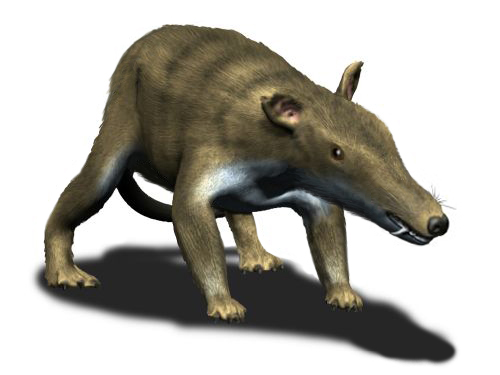


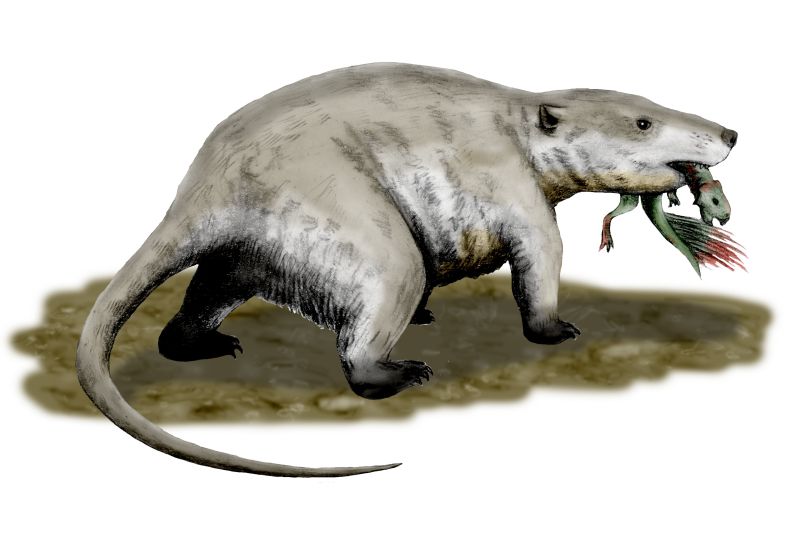

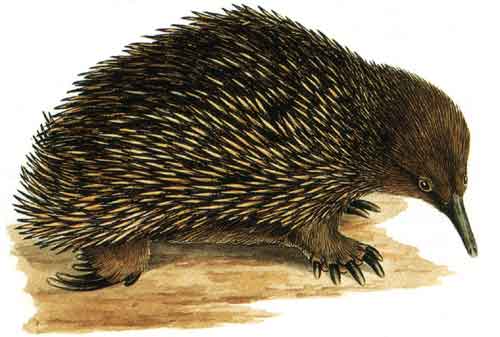
Physical characteristics
The animal was about the size of a chipmunk-sized rodent and had a low, compact body. Its skeleton shows robust forelimbs and strong grips for digging, with broad hand bones and large claws. The dentition is markedly simplified compared with many contemporaneous mammals: the teeth are small and peg‑like, consistent with a diet of soft-bodied insects rather than plant material or large prey. Overall, its silhouette has been compared to modern digging insectivores such as an armadillo or an anteater, though these comparisons reflect similar roles rather than close kinship.
Diet and ecological role
Based on its jaw, teeth, and forelimb anatomy, Fruitafossor is interpreted as a specialist on social insects. In the Jurassic the dominant eusocial insects available were termites, and Fruitafossor’s morphology fits a pattern of probing into nests and consuming many small, soft-bodied prey items. Ecologically, such an animal would have occupied a niche similar to that of modern myrmecophagous (ant- and termite-eating) mammals, breaking into insect nests and using powerful digging motions to expose food.
Evolutionary significance and convergence
One of the most interesting aspects of Fruitafossor is that it displays a suite of traits found in unrelated modern insect‑eating mammals. This is a clear example of convergent evolution: unrelated lineages independently evolve similar adaptations when occupying comparable ecological niches. Modern analogues include the numbat, the aardvark, the scaled pangolin, and the spiny echidna, among others. Despite outward similarities in lifestyle and some anatomy, Fruitafossor is not closely related to these living groups and instead represents an independent mammaliform experimentation with termite‑eating.
Discovery and research context
The nearly complete skeleton discovered in Fruita provided much of the anatomical detail that allowed scientists to infer behavior, diet, and locomotor habits. Because Jurassic mammal fossils are often fragmentary, Fruitafossor has been valuable for understanding the range of ecological roles early mammals and their relatives occupied alongside dinosaurs. Its discovery highlighted that specialized feeding strategies—such as myrmecophagy—had already evolved in the Mesozoic, long before many modern mammal groups existed.
Notable distinctions
- Convergent adaptations: Fruitafossor shows repeated evolutionary solutions (strong forelimbs, reduced teeth) also seen in modern termite-eaters.
- Ecological implication: it demonstrates that diverse diets and lifestyles were present among early mammaliforms.
- Phylogenetic caution: despite similarities to animals like an anteater or armadillo, Fruitafossor is not part of those modern groups and represents a separate branch of Mesozoic mammal evolution.
For further reading on the fossil site, comparative anatomy, and broader implications for mammalian evolution see resources linked to the discovery and subsequent studies: termites, mammal, North America, Upper Jurassic, epoch, chipmunk-sized, Fruita, Colorado, armadillo, anteater, numbat, aardvark, pangolin, and echidna.
Related articles
Author
AlegsaOnline.com Fruitafossor — a termite‑eating mammal from the Late Jurassic Leandro Alegsa
URL: https://en.alegsaonline.com/art/36861
Sources
- doi.org : 10.1126/science.1108875
- pubmed.ncbi.nlm.nih.gov : 15802602