
Galápagos penguin
A concise overview of the Galápagos penguin (Spheniscus mendiculus): appearance, habitat on the Galápagos Islands, behavior, breeding, diet and conservation challenges.
Overview
The Galápagos penguin (Spheniscus mendiculus) is the only penguin species that lives north of the equator in the wild. It is endemic to the Galápagos Islands and is adapted to a tropical marine environment despite the common association of penguins with cold climates. Unlike many penguin species, Galápagos penguins are non-migratory and remain close to their breeding sites year-round.
Image gallery
6 Images



Physical characteristics
These penguins are relatively small, with a streamlined body suited for diving. Key features include a black head with a narrow white border that runs from the eye, around the black ear-coverts and chin, and joins at the throat. Adults have a black back and white front, with a series of small black spots on the chest that vary individually.
Habitat and distribution
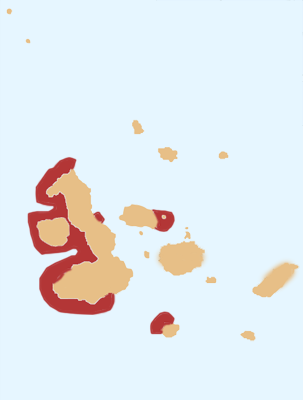
Galápagos penguins are found on a few islands in the archipelago where cool, nutrient-rich currents reach the shoreline. Their distribution is concentrated where shaded rocky crevices and caves are available for nesting and where nearby waters provide abundant small fish. Their presence so close to the equator is enabled by periodic upwellings of cold water.
Behavior and diet
They are social birds that feed mainly on small schooling fish and sometimes crustaceans. Hunting is usually done in shallow coastal waters. Galápagos penguins often forage in cooperative groups and return to the same roosts and nesting crevices to avoid heat stress during the day.
Reproduction
Breeding can occur at various times of year and is often tied to food availability rather than a strict season. Pairs typically lay two eggs, and both parents share incubation and chick-rearing duties. Nest sites are commonly rock crevices, lava tubes or under lava overhangs that offer shade and protection.
Conservation and threats
The species is vulnerable to population fluctuations caused by climate variability, particularly El Niño events that warm surface waters and reduce prey. Other threats include introduced predators, disease, human disturbance and habitat degradation. Conservation efforts focus on habitat protection, monitoring, research and limiting human impacts in key nesting areas.
Related articles
Author
AlegsaOnline.com Galápagos penguin Leandro Alegsa
URL: https://en.alegsaonline.com/art/37253