
Galapagos shark (Carcharhinus galapagensis)
A large tropical requiem shark associated with oceanic islands; known for reef-associated habits, wide tropical distribution, and important ecological role as a predator.
Overview
The Galapagos shark (Carcharhinus galapagensis) is a large, oceanic island–associated member of the requiem sharks. It is considered a distinct species of requiem shark in the order Carcharhiniformes and is commonly referenced among ground sharks. Adults may reach lengths of roughly 3.8 m (about 12 ft) and are more powerfully built than many reef species, reflecting their role as generalist predators.
Image gallery
10 Images






Identification and characteristics
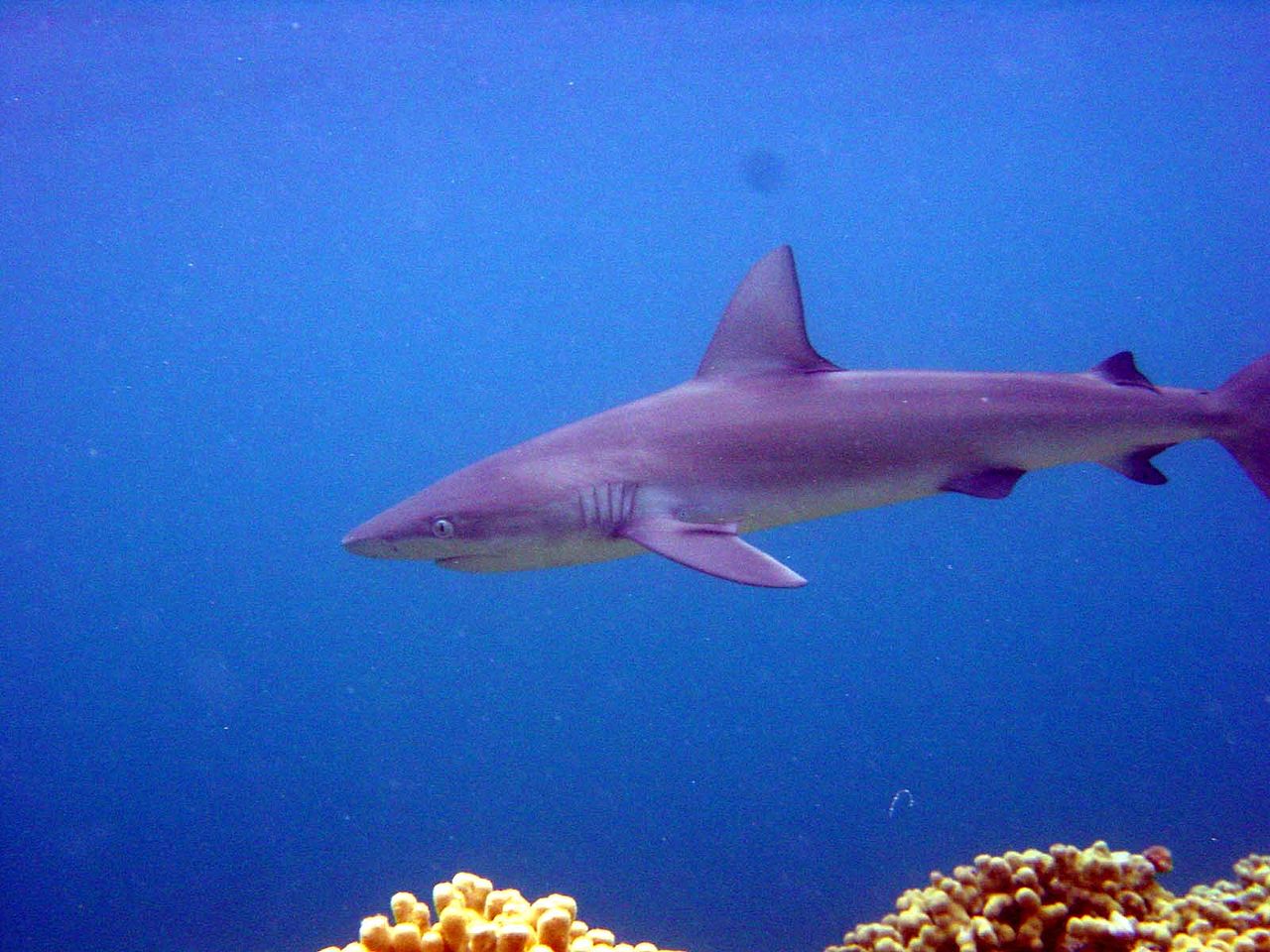
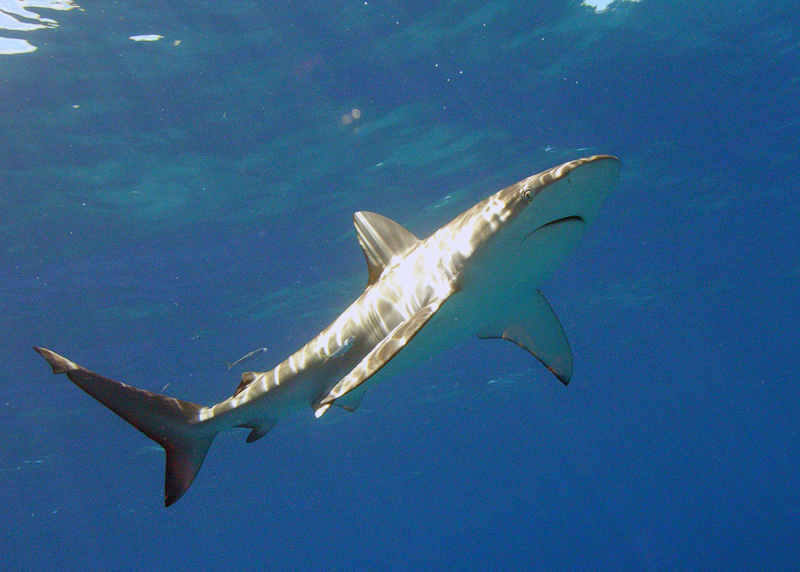
Galapagos sharks have a streamlined, muscular body, a broad, notched dorsal fin and relatively short, pointed snout. Their teeth are triangular and serrated, suited to slicing through fish and other prey. Coloration is typically grey to olive above with a lighter belly; juveniles can resemble other Carcharhinus species, which complicates field identification.
Distribution and habitat
This shark is closely tied to oceanic islands and offshore reefs and has been recorded across tropical regions of the Pacific, parts of the Atlantic and the western Indian Ocean. It frequents shallow coastal shelves, drop-offs, and reef slopes but will also patrol deeper waters near islands, often forming loose aggregations around pinnacles and seamounts.
Diet, behavior and reproduction
Galapagos sharks are opportunistic predators that feed on bony fishes, cephalopods, rays and smaller sharks. They are known to show social tendencies, sometimes forming groups that hunt or investigate food sources. Reproduction is viviparous with a placental connection; females give birth to multiple live pups after a gestation period characteristic of requiem sharks. Juveniles remain in shallow habitats where they find refuge from larger predators.
Human interactions and conservation
While not typically considered aggressive to humans, the Galapagos shark can be curious and bold around divers, and interactions should be managed cautiously. It is affected by fishing, bycatch and habitat degradation around islands. Conservation attention focuses on monitoring populations around key island systems and reducing unsustainable coastal fishing practices.
Notable facts
- Named for the Galápagos Islands, where it was first recognized as common around offshore reefs.
- Often mistaken for similar Carcharhinus species; accurate identification may require close inspection of fin shape and teeth.
- Plays a key ecological role as a mid-to-top level predator on island reef systems.
Questions and answers
Q: What is the Galapagos shark?
A: The Galapagos shark is a species of Requiem shark in the order of Carcharhiniformes.
Q: How large can a Galapagos shark grow?
A: A Galapagos shark can grow up to a maximum length of 12.1 feet (3.8 metres) and weigh up to 86 kg.
Q: Where is the Galapagos shark found?
A: The Galapagos shark is found in tropical waters surrounding oceanic islands and can be found in the Pacific, Atlantic, and western Indian Ocean.
Q: What family does the Galapagos shark belong to?
A: The Galapagos shark belongs to the Requiem shark family.
Q: What is the order of the Galapagos shark?
A: The Galapagos shark belongs to the order of Carcharhiniformes.
Q: How much can a Galapagos shark weigh?
A: A Galapagos shark can weight up to 86 kg.
Q: What type of waters can the Galapagos shark be found in?
A: The Galapagos shark can be found in tropical waters surrounding oceanic islands.
Related articles
Author
AlegsaOnline.com Galapagos shark (Carcharhinus galapagensis) Leandro Alegsa
URL: https://en.alegsaonline.com/art/37255
Sources
- flmnh.ufl.edu : "FLMNH Ichthyology Departmentː Galapagos shark"
- doi.org : 10.1111/j.1096-0031.1992.tb00073.x
- marinebio.org : "Galapagos Sharks, Carcharhinus galapagensis ~ MarineBio.org"
- arkive.org : "Galapagos shark videos, photos and facts - Carcharhinus galapagensis"