
Chipmunk: small striped squirrel-like rodents
Chipmunks are small, striped rodents in the squirrel family (Sciuridae), known for cheek pouches, burrowing, food hoarding and a distribution across much of North America and parts of Asia.
A chipmunk is a small, striped, squirrel-like rodent in the family Sciuridae. The group commonly called chipmunks includes about two dozen related species; most live in North America and a few occur in parts of Asia. Chipmunks are noted for their bold facial and dorsal stripes, expandable cheek pouches for carrying food, and a habit of collecting and storing provisions for colder months. For general background and related topics see related pages.
Image gallery
6 Images
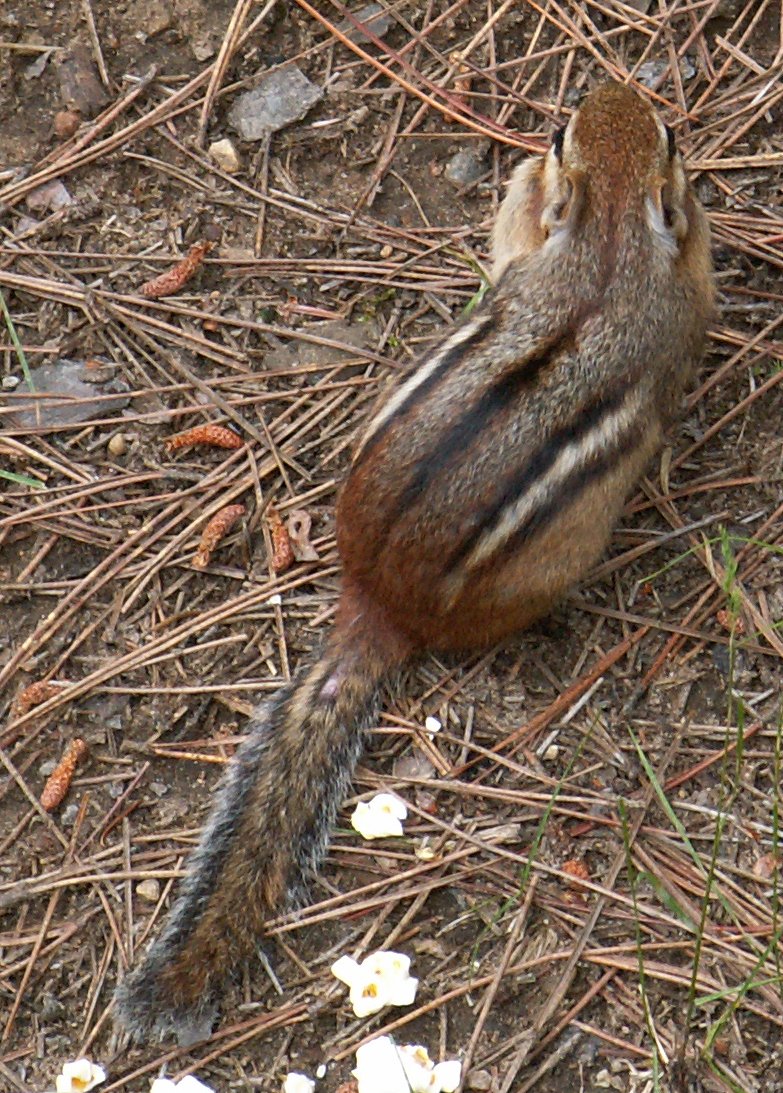


Description and behaviour
Chipmunks are small, agile mammals with compact bodies, short legs and bushy tails. Typical features include longitudinal stripes on the head and back, prominent cheek pouches, and sharp incisors for gnawing. They are primarily diurnal and often solitary outside the breeding season. Chipmunks are alert and vocal; they use a variety of chirps and trills to warn of predators or to communicate with nearby individuals.
- Size: Small-bodied, with body length and tail varying by species.
- Markings: Longitudinal stripes distinguish chipmunks from many other small rodents.
- Cheek pouches: External or internal pouches allow rapid transport of seeds and nuts to caches.
- Burrowing: Many species dig complex tunnel systems with nesting and storage chambers.
Diet and ecological role
Chipmunks are omnivorous. Their diet commonly includes seeds, nuts, fruits, fungi, insects and occasionally small vertebrates or eggs. By caching seeds and fungi, they contribute to seed dispersal and fungal spore distribution; their digging activity also affects soil aeration and nutrient mixing. Predators include raptors, foxes, weasels and snakes, and chipmunks rely on vigilance and rapid retreats to burrows for protection.
Burrowing, hibernation and seasonal behaviour
Many chipmunk species excavate burrows with multiple chambers for nesting and food storage. Seasonal strategies vary: some species enter true hibernation, spending extended periods in torpor and periodically arousing to feed on cached food, while others reduce activity without deep hibernation. The extent of winter dormancy depends on species and climate.
Reproduction and lifespan
Breeding typically occurs in spring and sometimes again later in the year. Litters usually contain a few young that develop rapidly and are weaned within weeks. In the wild, lifespan is often a few years but can be longer where predation and environmental pressures are reduced.
Taxonomy and distribution
Chipmunks are traditionally placed in the genus Tamias, though authors sometimes divide them into subgenera or separate genera to reflect regional groups. For species lists and range details see consolidated species references. Most species inhabit forests, woodland edges, rocky areas and human-altered landscapes; their distribution is centered on North America with a smaller number of species in parts of Asia.
Name and human interactions
The English name has appeared in historical variants such as "chipmonk," "chipmuck" and "chipminck"; linguistic evidence traces the word to Native American sources, with early citations recorded in the Oxford English Dictionary (entry). People commonly encounter chipmunks in parks and gardens where they are appreciated for their activity, though they can sometimes raid bird feeders or garden plots. Conservation status varies by species; many are common, while a few have restricted ranges and deserve monitoring and habitat protection.
For further reading on ecology, identification and regional natural history consult field guides and specialist summaries available through general resource pages such as related pages and comprehensive species lists at species references.
Related articles
Author
AlegsaOnline.com Chipmunk: small striped squirrel-like rodents Leandro Alegsa
URL: https://en.alegsaonline.com/art/19813
Sources
- etymonline.com : "Online Etymology Dictionary"