
Fur seals — biology, distribution, and conservation
Fur seals are otariid pinnipeds: nine species (one northern, eight southern) recognized for dense underfur, external ears, coastal breeding colonies, varied diets, and a history of sealing and recovery efforts.
Overview
Fur seals are marine mammals in the family Otariidae, a group that also includes sea lions. The common name "fur seal" groups nine species: a single northern species (the northern fur seal, Callorhinus ursinus) and eight species of southern fur seals placed in the genus Arctocephalus. The label describes an ecological and morphological grouping rather than a single, monophyletic lineage; the northern and southern species belong to different evolutionary branches within the otariids.
Image gallery
10 Images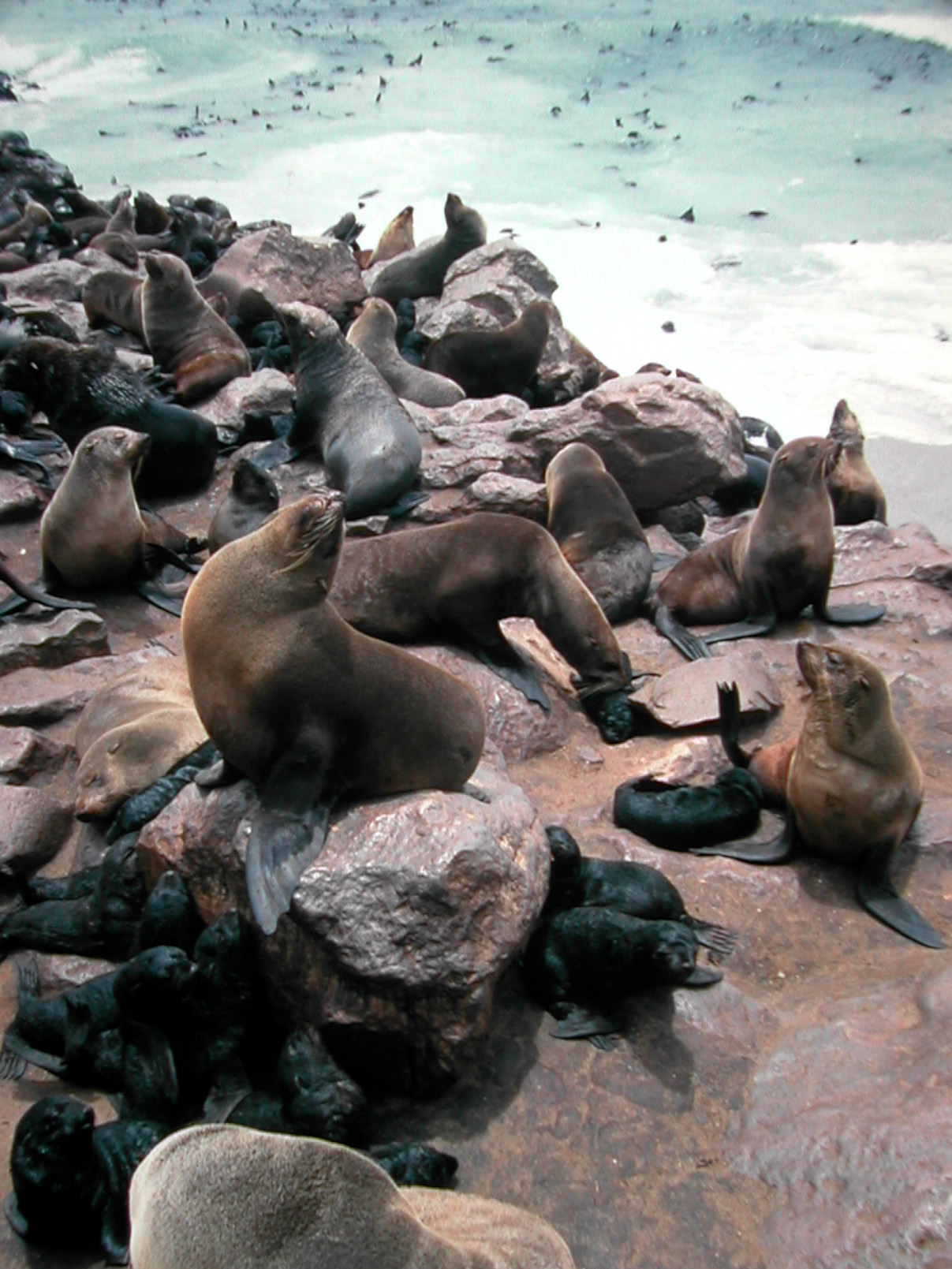




Taxonomy and notable species
Most southern fur seals are placed in the genus Arctocephalus and occur on subantarctic islands and temperate coasts of the Southern Hemisphere. Well-known examples include the Antarctic fur seal (Arctocephalus gazella), the New Zealand fur seal (Arctocephalus forsteri), the South American or southern fur seal (Arctocephalus australis) and the Galápagos fur seal (Arctocephalus galapagoensis). The northern fur seal, Callorhinus ursinus, breeds on islands in the North Pacific. Species limits and relationships within Otariidae have been clarified by genetic studies but common usage still groups these animals by shared characteristics such as dense underfur.
Physical characteristics
Fur seals are distinguished by a dense underfur layer beneath longer guard hairs, which historically made their pelts valuable. They possess external ear pinnae and long fore flippers that provide propulsion in water; unlike true seals, otariids can rotate their hind flippers beneath the body and move on land with a walking gait. Many species show marked sexual dimorphism: adult males are larger, with bulkier necks and often conspicuous crests or a blockier head used in male–male competition.
Behavior, reproduction and life cycle
Most fur seals are colonial breeders that form large rookeries on islands and rocky coasts. Breeding seasons are seasonal and males commonly defend territories and mate with multiple females (polygyny). Females give birth on land and nurse pups for periods that vary by species; like other pinnipeds, fur seals typically exhibit delayed implantation (embryonic diapause) so that births occur at an advantageous time each year. Pups are dependent on maternal care ashore before learning to swim and forage at sea.
Feeding, diving and ecology
Fur seals are carnivorous predators that feed largely on fish, squid and other marine invertebrates; some southern species also take krill or small schooling prey seasonally. They are active, agile swimmers that use their fore flippers for propulsion and can dive repeatedly to pursue prey. Foraging ranges and dive behaviour vary among species and populations according to prey availability and oceanographic conditions.
Predators and threats
Natural predators include large sharks and killer whales, and pups may fall prey to terrestrial predators where they occur. Human-caused threats include historical commercial sealing, bycatch and entanglement in fishing gear, oil pollution, disturbance at breeding sites, disease and reductions in prey due to overfishing or climate-driven ecosystem changes.
Human history and conservation
Intensive sealing for fur from the 18th to early 20th centuries greatly reduced many fur seal populations. Legal protection, changes in markets and active management allowed several populations to recover, though recovery is uneven across species and regions. Conservation measures include protected breeding sites, fisheries management to reduce bycatch, monitoring of populations and research into the effects of climate change and human activities. The conservation status of individual species varies; some are considered of least concern while others are classified as vulnerable or endangered depending on population trend and threats.
Research and management
Scientists study fur seals to understand marine food webs, animal movement and the effects of environmental variability on marine predators. Techniques include population surveys, tagging and tracking, diet analysis and genetic studies. Effective management typically blends habitat protection, regulation of fisheries interactions, and international cooperation where species range across national jurisdictions.
Distinctions and notable facts
- Fur seals differ from true seals (Phocidae) by having visible external ears and greater mobility on land.
- Their dense underfur made them a prime target during the commercial sealing era; modern conservation focuses on habitat protection and reducing human-caused mortality.
- "Fur seal" is a common-name grouping: the northern and southern fur seals are treated as distinct groups within Otariidae rather than one single taxonomic unit.
Questions and answers
Q: How many species of fur seals are there in the Otariidae family?
A: There are nine species of fur seals in the Otariidae family.
Q: Where is the northern fur seal found?
A: The northern fur seal is found in the North Pacific.
Q: How many species of fur seals are found in the Arctocephalus genus?
A: Eight species of fur seals are found primarily in the Southern hemisphere in the Arctocephalus genus.
Q: Are fur seals a single taxonomic unit?
A: No, fur seals are not a single taxonomic unit.
Q: Which family do fur seals belong to?
A: Fur seals belong to the Otariidae family.
Q: What type of mammals are fur seals?
A: Fur seals are pinnipeds, which are aquatic mammals.
Q: What is the scientific name of the northern fur seal?
A: The scientific name of the northern fur seal is Callorhinus ursinus.
Related articles
Author
AlegsaOnline.com Fur seals — biology, distribution, and conservation Leandro Alegsa
URL: https://en.alegsaonline.com/art/37057